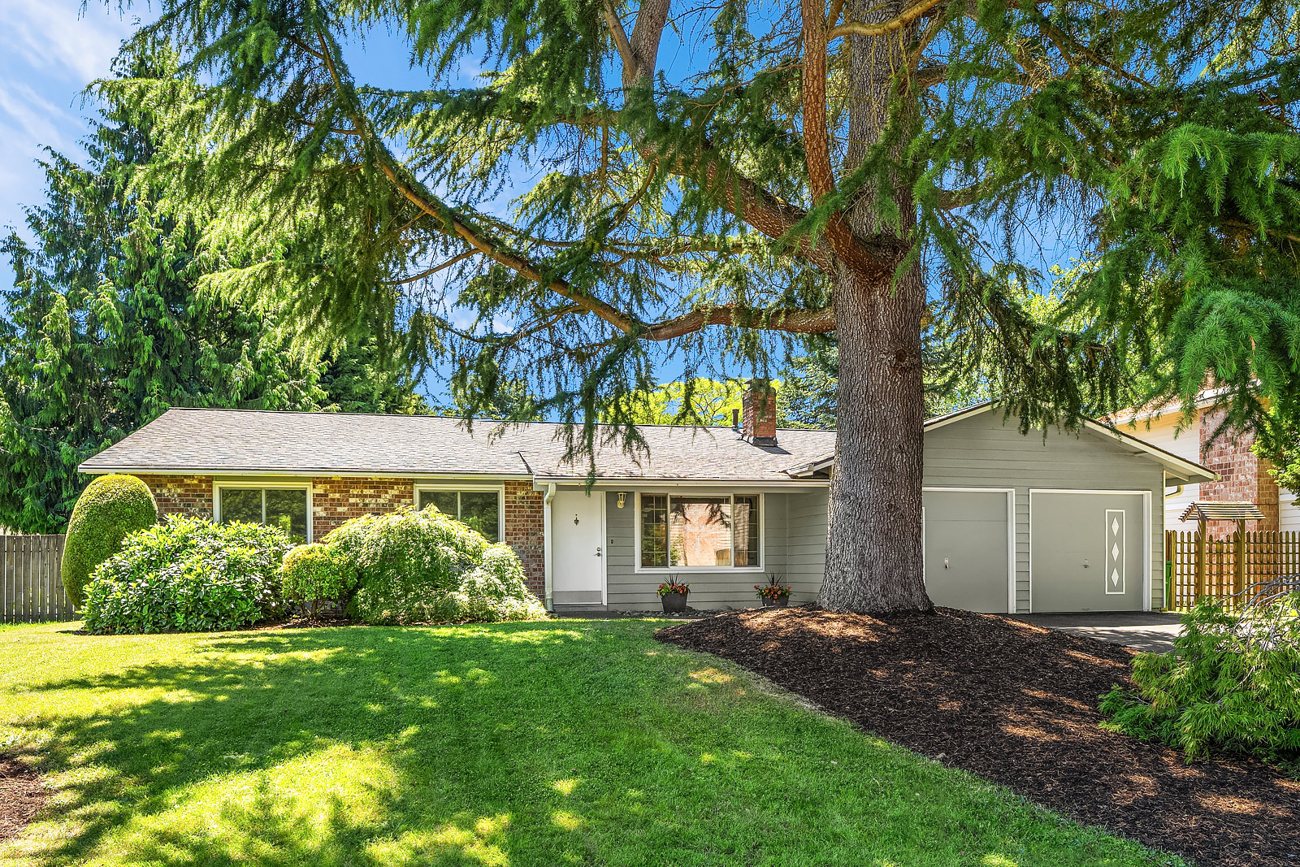
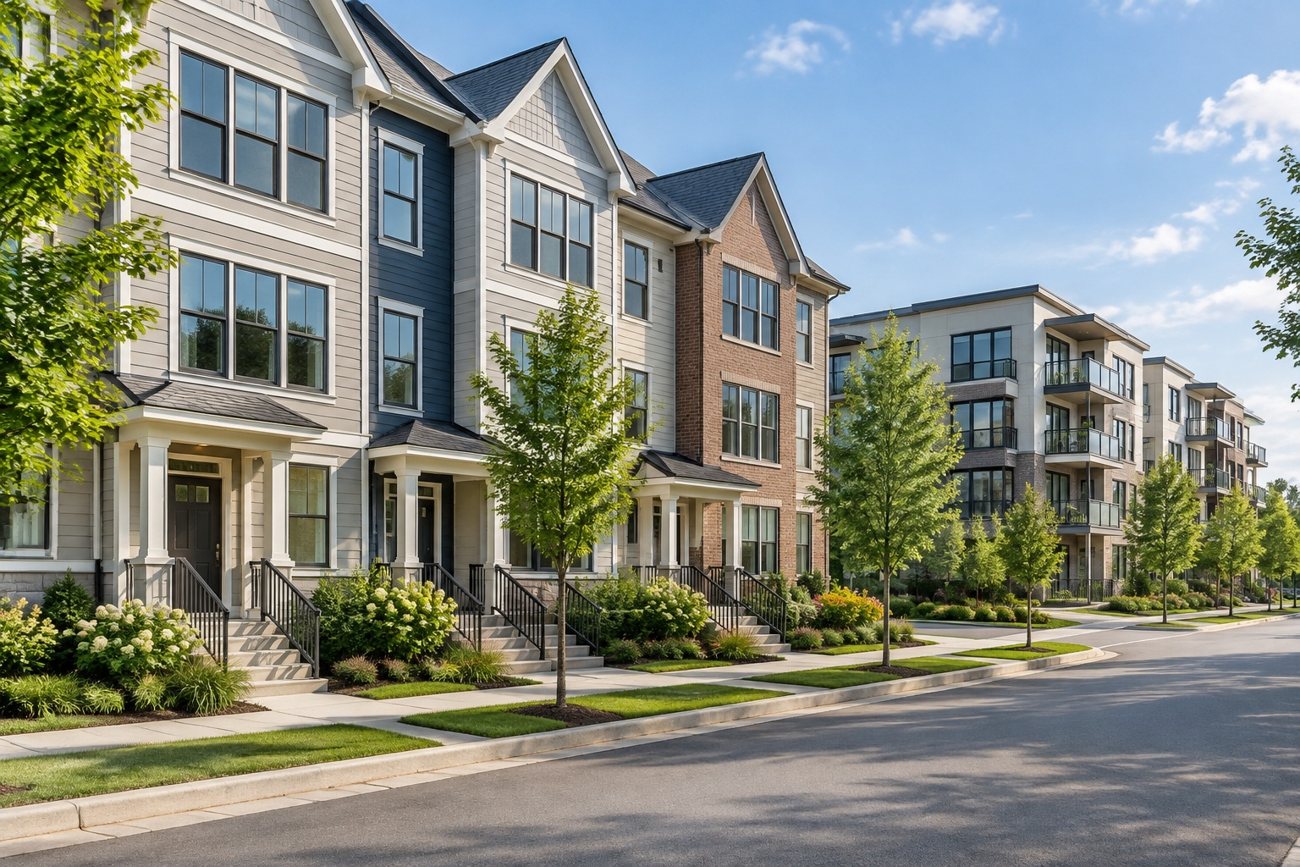
Choosing between a townhouse and a condo in Seattle starts with a distinction that listing photos cannot resolve. A townhouse describes a building form, commonly a multilevel home with its own entrance and shared walls. A condominium describes a legal ownership arrangement. The same property can be both a townhouse in design and a condominium in title.
That overlap matters in Bellevue, Kirkland, Bothell, and Seattle because the label does not tell you who maintains the roof, what land you own, or whether the lender needs a condominium project review. Compare the actual properties through their recorded documents, condition, and full ownership budgets. Neither label guarantees lower taxes, better appreciation, or fewer maintenance surprises.
1. Start with building form and legal ownership separately
When you tour a townhouse-style home, evaluate its layout first: stairs, private entry, outdoor space, shared walls, parking, and storage. Then establish the ownership structure independently. It may be an individually owned lot subject to covenants and shared-maintenance agreements, or a unit in a condominium. A private front door and an individual street address do not settle that question.
For a condominium, avoid reducing ownership to the phrase “interior airspace.” Unit boundaries can vary, as can the allocation of common elements and limited common elements. Washington's unit-boundary statute expressly makes its default provisions subject to the declaration. The recorded declaration and map are therefore central to determining what a particular unit includes.
Ask your title professional and broker to help identify the deed, legal description, recorded map or plat, declaration, and amendments. If a boundary or responsibility is ambiguous, obtain advice from a Washington real estate attorney. Assessor records can help locate a parcel and tax history, but a listing category or parcel summary should not replace the governing recorded documents.
The same caution applies to apparently private space. A fenced yard, deck, driveway, or parking stall might be part of the unit, a limited common element assigned for exclusive use, or shared property subject to rules. Exclusive use does not necessarily mean unrestricted ownership, and it does not by itself establish who must maintain, insure, or replace that component.
2. Trace maintenance duties to the exact documents
A low monthly assessment can mean fewer shared services, not necessarily lower lifetime costs. An individually owned townhouse lot may leave the owner responsible for roofing and siding while an association handles a driveway. Another townhouse-style community may allocate major exterior work collectively. Read the declaration, covenants, maintenance agreements, and amendments instead of importing assumptions from a different development.
Create a responsibility worksheet for the roof, exterior walls, windows, decks, plumbing lines, drainage, landscaping, and shared access. For each item, identify who arranges routine work, who pays for replacement, who approves changes, and how emergency access works. These can be different parties. A right to use an area does not necessarily carry either the right to alter it or the obligation to fund every repair.
For communities governed by the Washington Uniform Common Interest Ownership Act, the declaration-content requirements illustrate why legal descriptions, unit boundaries, and limited common elements matter. Washington communities can fall under different statutory provisions and transition rules, so ask which law applies to the specific property rather than assuming every association has identical obligations.
Do not skip a physical inspection because an association maintains the exterior. Shared responsibility does not establish good condition or sufficient funding. Ask what accessible areas the inspector will examine and how common-area concerns will be documented. If roof or building-envelope issues appear, connect the physical findings with the association's repair plans and budget before deciding the risk is manageable.

3. Review HOA finances, insurance and restrictions together
Read the resale certificate with the budget, financial statements, reserve study, meeting minutes, governing documents, and insurance information. Under applicable RCW 64.90.640 resale-certificate requirements, disclosures address matters including assessments and certain anticipated expenditures. Confirm the applicable statutory framework and any exceptions with your professionals. A packet is a starting point for investigation, not a guarantee against future expenses.
Look for consistency across the documents. If minutes discuss recurring leaks but the budget includes no meaningful repair plan, ask how the problem will be funded. Review the reserve study's component list, assumptions, timing, and funding recommendations. A reserve percentage alone cannot tell you whether bids are current, the scope is complete, or future owners will avoid a special assessment.
Insurance deserves a separate review with an insurance professional. Compare the association's master policy, declaration, deductibles, exclusions, and the coverage you would purchase personally. Ask about responsibility for unit improvements, personal property, liability, loss assessment, and potential deductible allocation. Washington's common-interest-community insurance statute includes coverage requirements and declaration-dependent details; neither “the HOA insures it” nor a townhouse label establishes your personal coverage needs.
Rental plans also belong in the document review. Check restrictions on leasing, minimum terms, occupancy, approval procedures, and any applicable rental cap or waiting list. Confirm amendments and actual availability rather than relying on a seller's recollection. Local rental rules are a separate layer. An association's permission to lease does not establish that a proposed short-term rental is lawful.
4. Compare total monthly ownership costs, not just dues
Use the same categories for both homes, including mortgage principal and interest, property tax, owner insurance, association assessments, separately paid utilities, and a private maintenance allowance. Separate cash outlays from expected investment returns. A maintenance allowance is money you plan to set aside, not a bill or a prediction that repairs will occur evenly each month.
The following comparison is entirely hypothetical. It is not a current rate quote, listing comparison, tax estimate, insurance proposal, or Seattle market average. The mortgage payments are assumed inputs rather than calculations from a stated interest rate. The two columns compare a condominium unit with a townhouse on an individually owned lot solely to show how different cost responsibilities can offset different dues.
| Budget item | Condominium example | Individually owned townhouse-lot example |
|---|---|---|
| Mortgage principal and interest | $3,000 | $3,250 |
| Property tax allowance | $500 | $550 |
| Owner insurance | $100 | $180 |
| Association dues | $650 | $150 |
| Separately paid utilities | $100 | $220 |
| Private maintenance savings allowance | $150 | $350 |
| Total planned monthly outflow | $4,500 | $4,700 |
Here the $500 difference in association dues becomes only a $200 difference in total planned monthly outflow. Different actual mortgage terms, taxes, insurance, maintenance duties, and utility inclusions could reverse the result. Avoid double-counting a utility already included in dues, and do not count an owner's private reserve as a replacement for the association's reserve obligations.
Add irregular costs outside the baseline: special assessments, major privately funded replacements, insurance deductibles, moving expenses, and transaction costs. For illustration, a hypothetical $12,000 assessment paid over 24 equal monthly installments adds $500 per month during that period, before any financing charge. That arithmetic is not evidence that a particular community will impose an assessment or offer installments.
Use actual parcel tax information and discuss potential changes rather than assuming condos have inherently lower taxes. A property's tax bill cannot be inferred simply from the fact that land is shared. Likewise, obtain an insurance quote for the exact coverage and deductible exposure. A cheaper listing is not automatically the less expensive home to carry.
5. Confirm financing before relying on the townhouse label
A townhouse-style condominium may require condominium-specific lender analysis even when it looks like a small house. Give the lender the legal ownership information early, together with the association contact and available documents. Ask which project-review route applies, what materials are missing, who obtains them, and whether the expected closing date leaves time to resolve questions.
Fannie Mae's accessible Selling Guide project standards distinguish project types and review methods. Its Full Review guidance addresses eligible attached condominium projects. This is more useful than assuming a marketing label determines financing. Your lender must apply the applicable program requirements to the actual property and transaction.
Not every condo transaction follows the same review process. Fannie Mae also provides project-review waivers for specified project and transaction types, with conditions. A waiver is not blanket approval of the property or borrower. Ask the lender to identify the applicable requirements rather than trying to self-classify a project from its appearance or number of doors.
Keep borrower approval and property approval distinct. A buyer can have adequate income and assets while unresolved association documentation, insurance, or property conditions delay financing. Conversely, a previously financed unit does not guarantee approval under your loan program today. Coordinate inspection, association-document review, and financing milestones so that an unanswered property question does not surface only just before closing.
6. Choose for daily use and a defensible resale plan
Visit at times that reveal ordinary living conditions. Listen near shared walls, test the route from parking to the kitchen, and consider stairs with groceries or mobility limitations. A townhouse's private entrance can be appealing, but a multilevel layout may not suit every household. A condo building may offer accessible circulation or amenities, but those benefits and their costs vary by property.
Evaluate privacy specifically rather than assuming a detached home always offers perfect privacy or an end unit guarantees quiet. Window placement, adjacent outdoor space, street noise, wall assemblies, and building rules all matter. Ask about planned construction and verify relevant land-use questions with the city for the particular parcel. Existing appearance does not guarantee surrounding development will remain unchanged.
For resale, compare genuinely similar legal ownership types, layouts, locations, conditions, and association obligations. Neither townhouse design nor direct lot ownership guarantees stronger appreciation. Building condition, future assessments, rental flexibility, financing eligibility, and buyer preferences can all affect marketability. A responsible decision still needs to work if values do not rise during your expected ownership period.
Bring the documents and a full-cost worksheet to a consultation with Maggie Real Estate Group. Start with how you want to live, then verify what you would own and pay for. That sequence is more dependable than choosing a category first and discovering its obligations after an offer is accepted.
Frequently asked questions
Can a townhouse also be a condo?
Yes. Townhouse refers to building form, while condominium refers to legal ownership. A multilevel home with a private entrance can be a condominium unit. Review its deed, declaration, map, and amendments to establish the actual unit boundaries and shared interests.
Do condo dues always cover the roof and insurance?
No universal package applies. Review the declaration, maintenance allocations, budget, and master insurance policy to determine responsibilities and coverage. Even when an association arranges roof replacement, owners may fund it through dues or assessments and still need individual insurance for separate exposures.
Is a townhouse always a better investment than a condo?
No. Compare total ownership costs, condition, association finances, legal restrictions, financing, and similar local sales. Neither category guarantees appreciation or lower taxes. Choose a property whose risks and ongoing costs remain acceptable without depending on a future price increase.
For broader purchase preparation, review the Buyer’s Guide and arrange a property-specific consultation.
Sources and scope
Policy and source review: November 2026. Sources describe general requirements; applicability depends on the property, transaction and governing documents. Any hypothetical figures are illustrations, not market statistics or product offers.