A mud-colored line on a foundation or a small pile of wings can change the questions you ask about a house. Neither finding, by itself, tells you what organism is present, whether it is active, or how much wood has been damaged. For Seattle and Eastside buyers, recognizing possible signs of termites is useful because it prompts qualified investigation—not because it turns a showing into a pest diagnosis.
The practical goal is to move from an observation to a documented explanation, then from that explanation to a realistic repair and transaction plan. Keep photographs, avoid disturbing evidence, and tell your broker promptly if you are under contract. Treatment, structural safety, and your contractual deadlines are related concerns, but they require different answers from different professionals.
1. Treat visible signs as clues, not a diagnosis
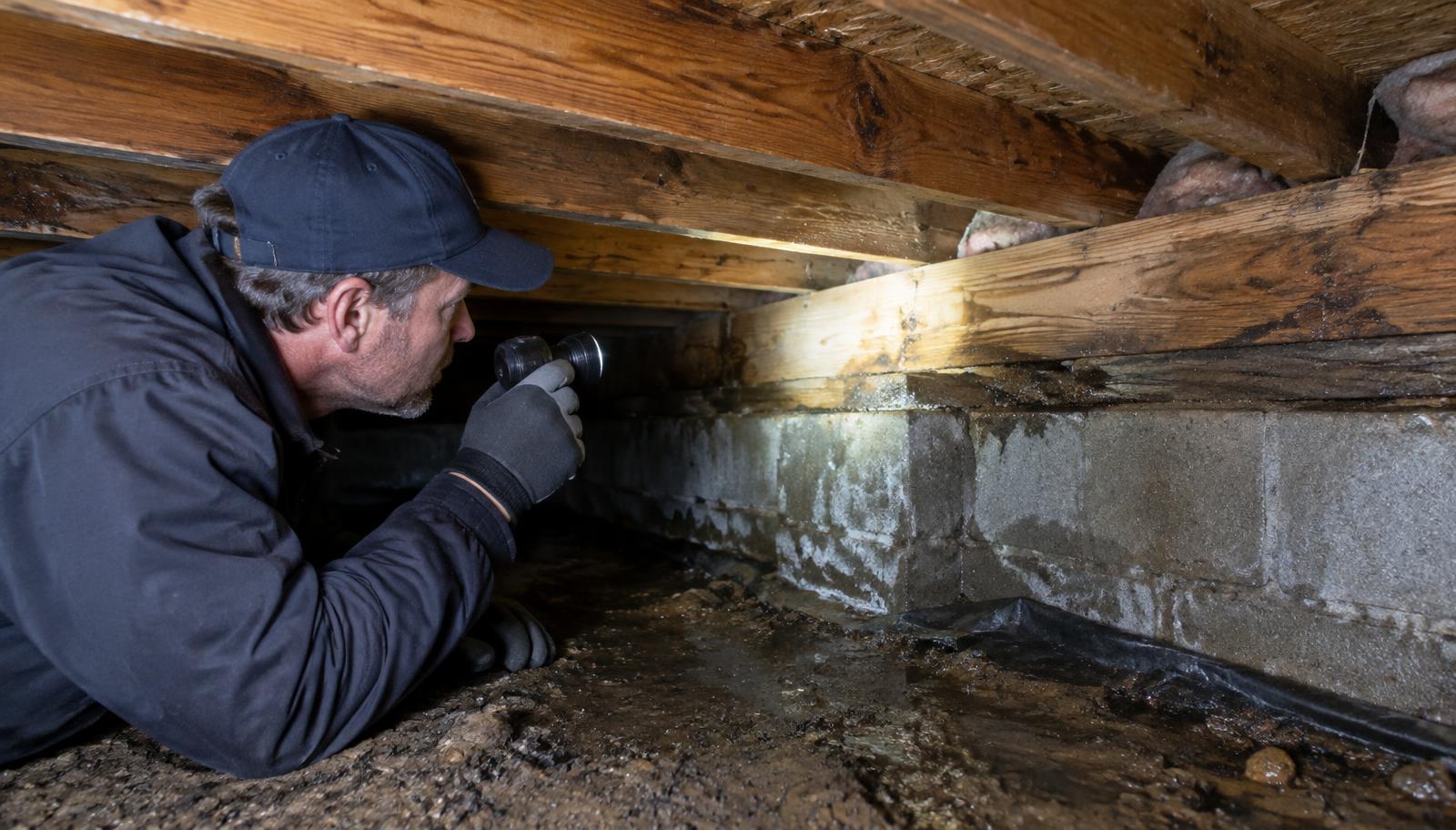
Mud-like shelter tubes along foundation surfaces can suggest subterranean termite activity. Photograph their location and surrounding conditions without breaking them open. An apparent tube does not establish current activity or reveal the condition of concealed framing. Similarly, wings near a window may merit identification, but a photograph of scattered wings cannot establish that termites are nesting inside the building.
Soft trim, blistered finishes, sagging flooring, and wood that sounds hollow deserve attention, but they are not specific to termites. Moisture, fungal decay, installation defects, and other insects can produce overlapping symptoms. Do not probe someone else's framing with a screwdriver during a tour. Destructive investigation requires permission and a plan, particularly where finishes conceal wiring or structural components.
Look at the surrounding conditions as carefully as the suspicious material. A leaking downspout, wood touching soil, or persistent crawlspace moisture can help explain why further investigation is warranted. Record what you observed in neutral language: where it was, whether it appeared wet, and whether insects or debris were visible. Leave the identification and attribution of insect damage to a licensed structural pest inspector.
A tidy exterior is not evidence that concealed spaces are clear. Conversely, an outdoor swarm or decaying landscape timber is not proof of an infestation in the home. Washington State University's termite guidance describes the different habitats of local termites, reinforcing why location and moisture context matter.
2. Separate dampwood termites, subterranean termites, ants and rot
Dampwood and subterranean termites should not be treated as interchangeable problems. WSU explains that dampwood termites live and feed in wet or rotting wood and do not nest in dry, sound wood. Their presence can therefore point toward an underlying moisture or wood-to-soil-contact problem. Subterranean termites live in soil, travel to wood sources, and can attack sound wood in homes. See WSU's biology and management overview.
That distinction affects the next questions, not just the name on a report. For suspected dampwood termites, ask how the wetting source will be corrected and which damaged materials need replacement. For subterranean termites, ask the pest professional about colony management, the treatment area, monitoring, and access. Do not assume that drying one piece of wood will resolve every kind of termite problem.
Carpenter ants are another important possibility. They excavate wood for nesting rather than eating it, and their activity can weaken structural wood. Debris or visible ants should prompt identification rather than a homeowner's conclusion about the source of every damaged surface. WSU's carpenter ant guidance explains their nesting behavior and why a house may contain a satellite nest.
Rot is a separate wood-destroying process, although moisture problems and insect activity can coexist. A report that identifies decay does not automatically establish termites, and a pest treatment does not restore decayed lumber. Ask the professionals to distinguish observed organisms, moisture conditions, and damaged components instead of collapsing them into a single phrase such as “termite damage.”

3. Know who can perform a Washington WDO inspection
A general home inspection and a complete wood-destroying organism inspection answer overlapping but different questions. WSDA explains that a home inspector without an SPI license reports rot and conducive conditions, while identification of wood-destroying insects and attribution of their damage belong with a licensed structural pest inspector. Some professionals hold both credentials; confirm rather than assume. See WSDA's explanation of the licensing boundary.
For a complete transaction-related WDO inspection, verify the individual's Structural Pest Inspector endorsement and the licensed inspection company through which the work is performed. WSDA distinguishes complete inspections used in real estate transactions from specific inspections associated with pest management. A treatment estimate should not be assumed to substitute for the complete inspection you intended to order. WSDA describes these scopes and licensing requirements.
Washington's rule specifies how a WDO inspection conducted pursuant to a sale, exchange, or refinancing must be performed. It does not mean every real estate transaction automatically requires a WDO inspection. Whether one is requested may depend on the contract, property observations, and the lender's requirements. Read WAC 16-228-2035 as an inspection standard, not a blanket transaction mandate.
Before booking, ask about detached buildings, crawlspace and attic access, reporting turnaround, and any exclusions. Confirm whether the quoted service includes a complete WDO report rather than only a pest-treatment proposal. If structural damage is suspected, ask separately whether an appropriately qualified contractor or engineer should evaluate load-bearing components; an insect identification is not an engineering assessment.
4. Read the report for evidence, access and uncertainty
A useful report tells you not only what was found, but also what could not be inspected. Under WAC 16-228-2035, accessible areas not specifically excluded must be thoroughly inspected, and inaccessible substructure crawl areas must be explained and annotated. Inspectors are not required to expose themselves to unsafe conditions. Concealed or inaccessible areas therefore remain a meaningful limitation.
Ask the inspector to walk you through the photographs and diagram. Which findings show infestation or damage, and which describe conditions that could encourage future problems? What evidence supports the insect identification? Does the report establish activity, or does it leave that question unresolved? These distinctions help you avoid purchasing a treatment package that does not match the actual findings.
The rule also limits a complete inspection to conditions present at the time, including the limits of visible evidence under seasonal or environmental constraints. A report with no observed infestation is not a guarantee that concealed damage is absent or that pests will never appear. Review any separate warranty carefully for duration, exclusions, transferability, and whether it covers retreatment, repairs, or neither.
When access is restricted, consider whether permission can be obtained to inspect again before making an irreversible decision. Removing stored items or opening an authorized access panel may answer a major question. Cutting finishes or exposing framing is a different step and should be coordinated with the owner, inspector, and relevant contractor.
5. Budget separately for treatment, structure and approvals
Start with an itemized pest-management scope describing the identified organism, proposed method, areas covered, follow-up, and any monitoring obligations. Do not substitute a generic online cost range for a property-specific proposal. Access, extent of activity, construction, and the selected method can change the work substantially. Ask which moisture corrections are included and which require another trade.
Next, obtain a separate structural-repair scope. Replacing cosmetic trim is different from repairing a beam connection or damaged subfloor beneath a bathroom. A contractor may need an engineer's design or authorized exploratory work before pricing the full repair. Keep the uncertain portion visible in your budget rather than presenting a preliminary estimate as a fixed final cost.
Permit and inspection requirements must be checked with the jurisdiction for the proposed work. Pest treatment, demolition, framing repairs, plumbing corrections, and final inspections may follow different schedules. A treatment appointment completed this week does not establish that permitted structural work can finish before closing. Ask who obtains approvals and what documents will demonstrate completion.
Finally, discuss the findings with the lender early. Ask whether it needs repair completion, additional reports, or other documentation before funding. A negotiated credit is not automatically an acceptable substitute for a required repair. Build a written sequence connecting investigation, estimates, permissions, work, and lender review, with a fallback if the timeline slips.
6. Make transaction decisions from the actual agreement
A buyer's ability to request repairs, seek a credit, obtain more time, or end a transaction depends on the signed agreement and timely compliance with its requirements. Seller agreement is not automatic. Have your broker explain the applicable inspection response process and consult a Washington real estate attorney when rights or deadlines are unclear. A pest finding alone does not guarantee an earnest-money refund.
Avoid treating a reference to Form 35R as a promise that repair costs shift to the seller. The executed documents and current applicable forms need to be read in context. A repair request should be specific about scope, professional qualifications, completion evidence, and timing, while remaining consistent with the lender's requirements. Oral assurances about a “clearance” are not a substitute for agreed documentation.
Sellers can prepare by preserving prior reports, treatment records, warranties, permits, and repair invoices. Discuss disclosure obligations and the applicable seller disclosure statement with the appropriate professionals rather than assuming treatment erases the history. A pre-listing inspection may clarify issues, but it does not eliminate a buyer's independent investigation or guarantee financing approval.
For help coordinating the real estate side of the next steps, contact Maggie Real Estate Group. The objective is a clear decision based on documented conditions, realistic costs, and the agreement—not a promise that every infestation can be resolved on a standard closing calendar.
Frequently asked questions
What are the earliest signs of termites in a house?
Possible clues include shelter tubes, discarded wings, insects, or damaged wood. None establishes the organism, activity level, or structural impact by itself. Photograph the finding, avoid disturbing it, and arrange qualified identification. Moisture and decay deserve attention even if the eventual explanation is not termites.
Is a WDO inspection required for every Washington sale?
No. The rule governs qualifying WDO inspections, rather than ordering one for every sale. Your contract, lender, and property conditions may create specific requirements. When commissioning a complete transaction-related inspection, use a properly licensed SPI working through a licensed structural pest inspection company.
Does termite treatment mean the house is structurally repaired?
No. Treatment addresses pest management, while damaged framing, moisture sources, and required permits or inspections need separate evaluation. Obtain the relevant scopes and completion records, and ask the lender what it requires before funding. Do not assume a treatment warranty covers rebuilding or establishes structural safety.
For broader purchase preparation, review the Buyer’s Guide and arrange a property-specific consultation.
Sources and scope
Policy and source review: November 2026. Sources describe general requirements; applicability depends on the property, transaction and governing documents. Any hypothetical figures are illustrations, not market statistics or product offers.