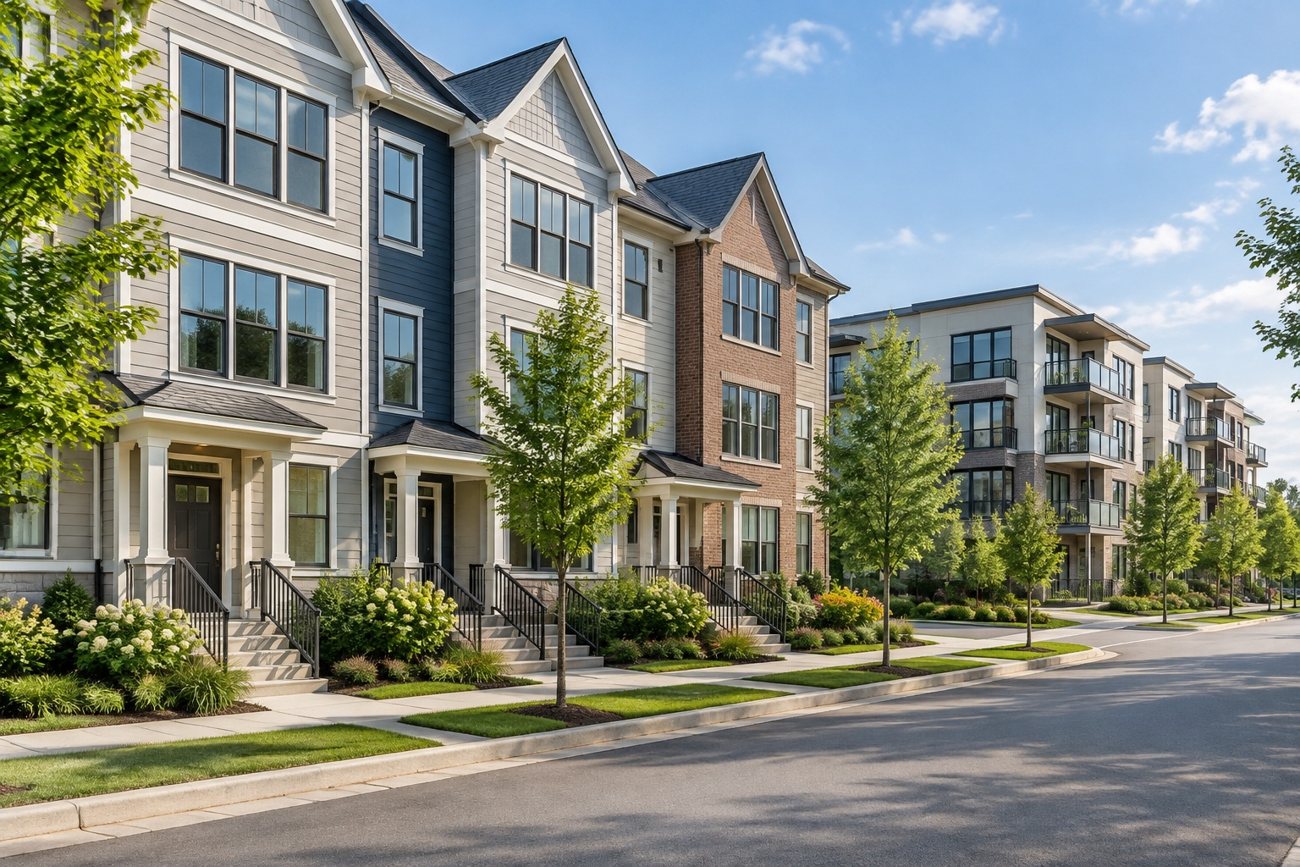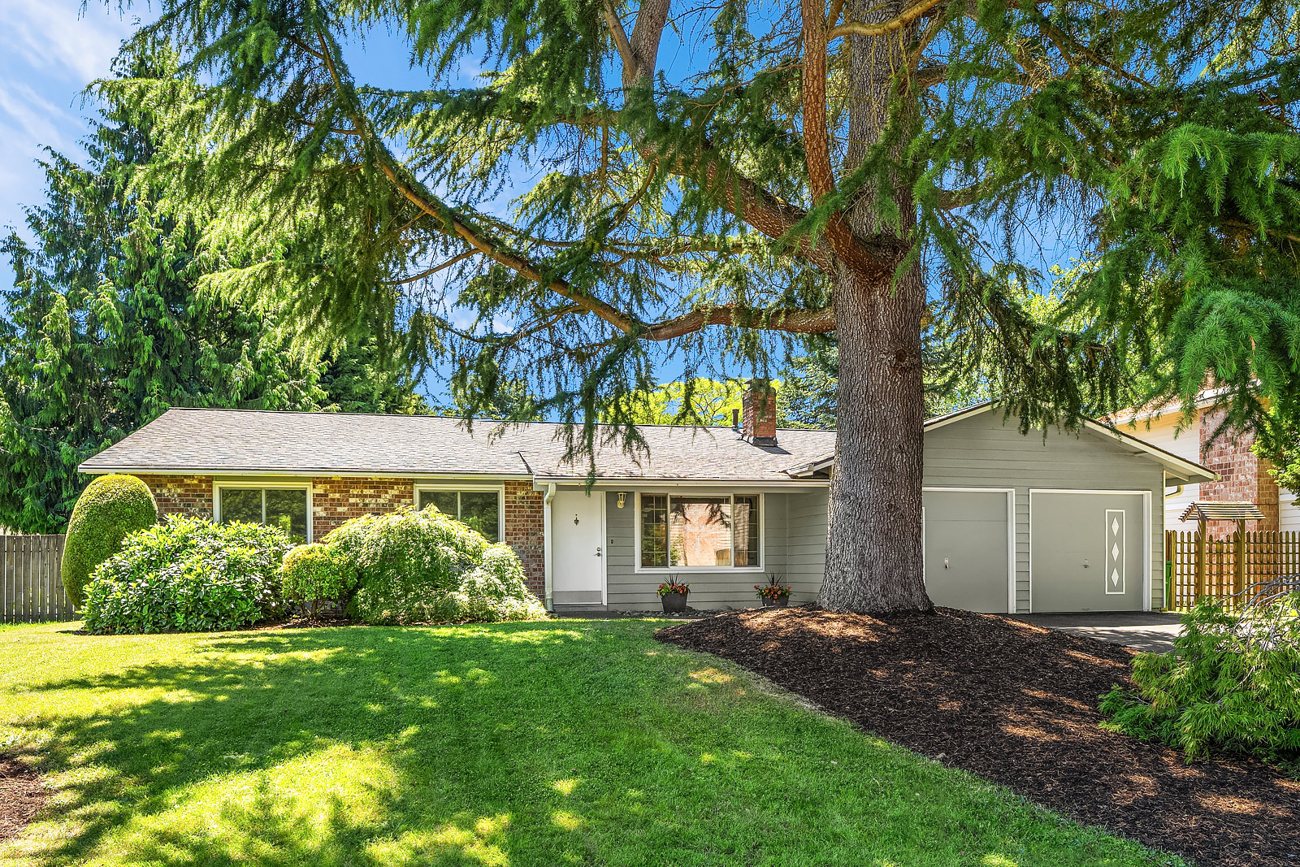

How much are HOA fees? The useful answer is the current assessment for the specific home, together with what it pays for and what the association expects to spend next. A Seattle condominium, a Bellevue elevator building and a Redmond townhouse can have very different responsibilities. A citywide number cannot tell you whether one property's dues are adequate or affordable.
Compare three separate figures: regular dues, your share of any special assessment, and expenses you must still pay directly. Then examine the reserve study and financial statements to understand costs that have not yet become a bill. This approach is more useful than treating either low dues or expensive amenities as proof of value.
1. What determines an individual home's HOA dues?
Regular dues are assessments paid to the association, not property taxes. Start with the approved operating budget and the allocation assigned to your home in the declaration. Do not assume every owner pays equally: the governing documents may allocate costs by ownership interest or another stated method. Ask for the actual unit ledger and current assessment notice rather than dividing the total budget by the number of homes.
Building systems matter as much as location. Elevators, shared garages, staffed facilities and extensive landscaping create different obligations from a small community maintaining only a driveway. Building age is relevant, but age alone does not prove that dues should be higher or lower. A recently repaired older building and a newer building approaching its first major replacement cycle require different questions.
Also establish payment frequency. Convert quarterly assessments to a monthly equivalent, and separate base dues from parking, storage, utility charges and temporary assessments. Ask whether the quoted amount is already effective or merely proposed. A listing figure without its effective date is not enough to establish next year's cash requirement.
2. Compare coverage, not just the monthly amount
Compare HOA fees with a property-level worksheet rather than a single citywide average. Fill in the following items for each shortlisted home using the same documents and dates. Record a separate dollar figure for anything the owner must purchase independently so a more inclusive association is not unfairly compared with a bare-bones one.
| Cost category | Verify in association records | Potential separate owner expense |
|---|---|---|
| Regular dues | Current unit assessment and approved budget | Charges outside base dues |
| Utilities | Which services and meters are included | Electricity, internet or individually billed services |
| Building maintenance | Declaration's responsibility boundaries | Owner-maintained windows, decks or equipment |
| Insurance | Master policy scope, exclusions and deductibles | Unit coverage and applicable loss assessment coverage |
| Reserves | Budgeted contributions and actual balances | Personal contingency savings |
| Special assessments | Approved amount, allocation and payment schedule | Buyer's contractual share, if any |
Do not infer insurance coverage from the word “master.” The association's policy and declaration help determine where association protection ends and owner protection begins. Ask an insurance professional to review improvements, personal belongings, liability, deductibles and loss assessment limits. Washington's Office of the Insurance Commissioner homeowner guide explains that condominium coverage works alongside association insurance; neither the dues amount nor a policy nickname establishes complete protection.
A townhouse is a building form, not a complete description of legal ownership or maintenance duties. Read the recorded documents before assuming the owner maintains the entire roof or that the association maintains every exterior surface. Likewise, confirm whether an amenity is included, optional or operated by a separate organization with a separate membership charge.

3. Separate the operating budget from reserve funding
The operating budget addresses recurring costs such as management, routine maintenance, utilities and insurance. Reserves address anticipated major maintenance, repair and replacement. A reserve study estimates component costs and useful lives and develops funding information; it is not cash in the bank and does not itself complete repairs. Compare its proposed contributions with the adopted budget and actual transfers.
Where applicable, RCW 64.90.550 requires reserve-study information including funding measures, projections and known special assessments. A budget contribution percentage and a reserve funding percentage answer different questions. Neither should be treated as a universal pass/fail score, and a 70-percent-funded figure does not guarantee freedom from future assessments.
Read the study date, inspection basis and assumptions before relying on its headline balance. Check when expensive components are expected to fail, whether estimated costs reflect current bids, and whether recent projects or withdrawals are incorporated. A roof scheduled for replacement next year creates a different liquidity problem from a similar projected expense twenty years away.
Ask the manager to explain discrepancies in writing. If the study recommends increased contributions but the budget holds dues flat, identify the alternative funding plan. If a study is absent or outdated, request the association's explanation and available engineering reports. An individual home inspection does not replace a financial or building-wide condition review.
4. Understand special assessments before negotiating
A special assessment is a separate association charge outside regular assessments. It is not necessarily unexpected, nor does it always mean reserves have reached zero. It may fund a planned project, an uninsured expense or a shortfall. The essential questions are what has been approved, what remains under discussion, and which portion will be payable by the buyer after closing.
Request the resolution, owner notices, project scope, bids and payment schedule for an approved assessment. For a hypothetical $600,000 project divided equally among 40 units, the allocation is $15,000 per unit. If payable in 24 equal installments without interest, that is $625 monthly. Actual allocations, financing costs and payment options must come from the governing documents and assessment terms.
Review recent meeting minutes for projects that have not reached a formal vote. Under RCW 64.90.640, applicable resale certificates address levied unpaid assessments, certain reasonably anticipated costs and other financial information, and include the last twelve months of meeting minutes subject to disclosure exceptions. An absence of a billed assessment is not proof that no major work is being discussed.
Put any negotiated allocation between buyer and seller into the purchase agreement with professional help. Do not rely on a verbal promise that the seller will “take care of it.” Ask the closing professional how installments, association payoff information and any outstanding balance will be handled. Separately ask the lender whether project condition, litigation or insurance issues affect the proposed loan.
5. Apply the correct Washington resale-review deadline
There is no single five-day rule for every Washington HOA. For a 2026 transaction, first identify the community's creation date, legal structure and any election into chapter 64.90. Under RCW 64.90.360, before January 1, 2028, chapter 64.90 generally applies to communities created on or after July 1, 2018, and older communities that elect into it, subject to stated exceptions. Limited-applicability communities and communities added to older developments require separate checking.
For a resale governed by RCW 64.90.640, subject to its public-offering, exemption and unavailable-certificate waiver provisions, the cancellation clock is five business days after first receiving the certificate. Receipt more than five business days before contract execution removes this statutory right to cancel the executed contract. Receipt five business days or less before signing permits cancellation before conveyance by timely delivered notice. If first receipt is less than five business days before closing, the purchaser may, before conveyance, extend closing to no more than five business days after receipt.
For a condominium resale still governed by RCW 64.34.425, subject to its public-offering and exemption provisions, the contract is voidable until the certificate is provided and for five days thereafter, or until conveyance, whichever occurs first. Do not substitute “business days.” RCW 64.34.010 also extends its resale section to certain older condominiums; it is not confined to post-1990 construction.
Older communities do not automatically acquire the newer resale clock merely because some chapter 64.90 provisions apply to them. Confirm applicability, receipt evidence, notice method and the precise deadline with your broker and Washington counsel before signing or attempting cancellation. The certificate is disclosure, not a warranty that future expenses will be limited to today's figures.
6. Calculate monthly cash needs with explicit assumptions
Consider a hypothetical purchase with monthly principal and interest of $3,200, a hypothetical property-tax budget input of $600, owner insurance of $80, regular dues of $550, excluded utilities of $120 and personal maintenance savings of $150. The planned monthly cash requirement is $3,200 + $600 + $80 + $550 + $120 + $150 = $4,700. These are illustrative inputs, not Seattle or Eastside averages or a countywide tax rate.
Add the hypothetical $625 assessment installment above and the temporary requirement becomes $5,325. Do not add the association's reserve contribution again if it is already inside the $550 dues. Personal maintenance savings are a separate budgeting choice, not a second HOA bill. Test a possible dues increase separately so its effect remains visible.
For a rent-versus-buy comparison, compare equivalent services and include purchase and eventual sale costs, financing, expected ownership duration and cash reserves. Principal repayment can build equity but still consumes monthly cash. Appreciation is uncertain and should not be subtracted from the payment needed to remain current. A fixed-rate mortgage does not freeze taxes, insurance or association charges.
7. Frequently asked questions
Are low HOA fees always better?
No. Low dues may reflect fewer shared services, adequate existing reserves or insufficient funding. Determine which explanation fits the documents. Higher dues can also reflect expensive operations rather than stronger finances, so compare coverage and upcoming obligations together.
How do I find a pending special assessment?
Read the certificate, current budget, reserve study, project notices and meeting minutes together. Ask management about approved projects and proposals not yet voted on. Keep written answers, and obtain professional review if the financial or engineering explanation is unclear.
What should I request before making a final decision?
Request current unit dues, financial statements, governing documents, insurance information, reserve materials and assessment records early enough for meaningful review. For help organizing a Seattle or Eastside purchase comparison, contact Maggie Real Estate Group. Direct legal, insurance and building-condition questions to the appropriate licensed professionals.
For broader purchase preparation, review the Buyer’s Guide and arrange a property-specific consultation.
Sources and scope
Policy and source review: November 2026. Sources describe general requirements; applicability depends on the property, transaction and governing documents. Any hypothetical figures are illustrations, not market statistics or product offers.