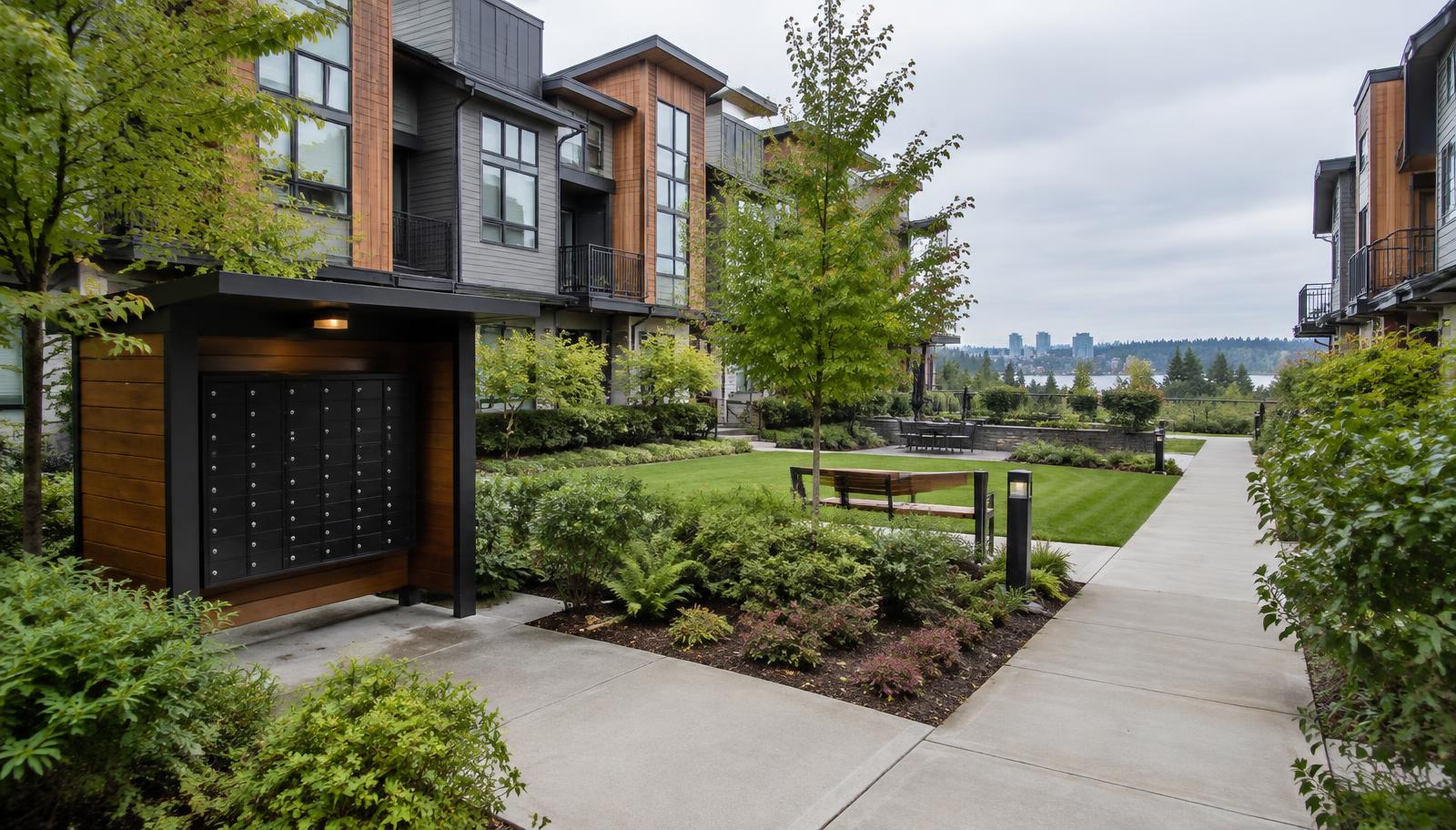

A mixed-use property can combine a place to live with a place to work, or residential rentals with separately leased business space. Those arrangements can look similar from the sidewalk while presenting very different legal, lending and operating questions. Before buying, establish what the parcel may legally accommodate, what financing fits the actual occupancy, and what income remains after realistic operating costs.
Do not start with an assumed commercial-space percentage or a promise of two income streams. Start with the address, parcel number, approved plans, current leases and intended use. A successful review connects those documents rather than treating a listing description as proof that everything is permitted.
1. Separate physical layout, legal use and loan classification
“Mixed use” is a useful description, not a complete due-diligence conclusion. An upstairs apartment over a shop, a house containing a professional office, and a building leased entirely to unrelated residential and retail tenants require different questions. Record who occupies each space, who operates any business, and whether the buyer intends to live there.
Three separate decisions follow. The permitting authority determines which uses and alterations are authorized. The lender determines whether the collateral and borrower qualify for its product. The appraiser develops an opinion of value for a defined assignment. A favorable answer in one category does not settle the other two.
For example, a tax record describing office space is not a substitute for permission to operate a particular business. Likewise, a permitted use does not establish eligibility for a residential mortgage. Keep an unresolved-questions list covering occupancy, alterations, access, parking and the proposed business activity, and seek written answers before treating the purchase as financeable.
2. Verify the governing jurisdiction before checking zoning
Within an incorporated city, consult that city's zoning and permitting authority; King County administers zoning in unincorporated areas. A mailing address alone should not determine which rules you apply. Confirm the parcel's jurisdiction first, then investigate its specific zone and applicable regulations. The county's research page explains the municipal-versus-unincorporated distinction: King County zoning guidance.
Replace broad city comparisons with a parcel-level research table. A label such as “Seattle commercial” or “Bellevue mixed use” does not establish a permitted floor-area split, allowed tenant type or right to add another dwelling. Ask the responsible authority which regulations and existing approvals control the intended arrangement.
| Property location | Primary review route | Documents and questions |
|---|---|---|
| Inside Seattle | Seattle zoning and permitting authority | Parcel zoning, overlays, approved residential and business occupancy, alteration history |
| Inside Bellevue | Bellevue zoning and permitting authority | Applicable district rules, use approvals, site conditions and proposed tenant activity |
| Inside Kirkland or another city | The relevant city's authority | Current zoning, approved plans, unresolved permits and proposed changes |
| Unincorporated King County | King County zoning and permitting authority | County zoning, use conditions, approved occupancy and site-specific restrictions |
Use assessor information to identify the parcel and support tax research, not to certify legal use. Request available permit records and approved plans, then reconcile them with the space actually delivered. If the seller says a use is grandfathered, ask the authority and qualified counsel what documentation establishes that status and whether a change of operator or activity affects it.

3. Match financing to occupancy and business ownership
Fannie Mae has a limited mixed-use eligibility provision, not a general residential-loan pathway for commercial strips with rental apartments. Its conditions include a one-unit dwelling occupied by the borrower as a principal residence, a borrower who owns and operates the business, primarily residential character, and no modification adversely affecting residential marketability. These conditions appear in Fannie Mae B2-3-04.
A buyer leasing the storefront to an unrelated business cannot assume that this owner-operator provision applies. Nor should a buyer assume that a building with several residential rentals becomes eligible merely because most floor area is residential. Present the actual use and occupancy to the lender rather than trying to fit the property into a convenient label.
For properties outside that limited pathway, discuss commercial or portfolio options with appropriate lenders. Ask about their own occupancy criteria, income analysis, equity requirement, repayment structure, reserves, guarantees and maturity terms. Do not import residential underwriting rules into a commercial proposal or assume a future refinance will be available.
Obtain a written preliminary assessment before paying for lender-specific reports. Clarify whether the lender accepts current leases, how it treats vacant space, and which physical or legal conditions must be resolved. If stock sales will fund closing, request the lender's documentation requirements; do not assume every product requires proceeds to sit in an account for a universal sixty-day period.
4. Review leases, building systems and operating obligations
The rent roll is only a starting point. Compare each entry with the signed lease, amendments, payment history, concessions, deposits and any arrears. Identify renewal rights, termination options, responsibility for repairs and reimbursement provisions. A stated rent can overstate collectible income when concessions or owner-paid expenses are omitted.
Inspect residential and commercial components together. Ask qualified inspectors to evaluate the systems relevant to the actual building and proposed use. Shared heating, utility meters, entrances, roofs or service areas can make cost allocation more complicated than the listing suggests. Obtain insurance quotations for the disclosed activities rather than budgeting from an unrelated homeowner policy.
Review prior and proposed business activities for potential environmental concerns, using qualified specialists to determine the appropriate scope. A generic inspection should not be treated as an environmental clearance. Also investigate whether deferred maintenance or a tenant turnover will require work before the space can earn the projected rent.
Keep tenant deposits separate from recurring operating income in the acquisition model. For residential rental tax reporting, refundable security deposits generally are not income when received, while retained deposits and advance rent can receive different treatment. That distinction is explained in IRS Publication 527; a mixed-use owner's tax allocation still needs review for the actual activities.
5. Define the appraisal assignment and exclude enterprise value
Real property and an operating enterprise are not interchangeable assets. A business's sales, customer relationships, equipment and goodwill do not automatically belong in the building's value. If a transaction includes both a business and real estate, identify exactly what is being purchased and obtain advice on separate valuation and allocation needs.
For the limited Fannie Mae mixed-use residential category, the appraisal must address the mixed-use characteristics, support residential marketability and base value on the residential characteristics rather than special business-use modifications. Review the applicable requirements in Fannie Mae B4-1.4-07. This is not permission to capitalize a tenant's business revenue as though it were building rent.
Other financing may call for a different appraisal scope. Ask the lender who engages the appraiser and which property interests, approaches and reports are required. There is no reason to describe every mixed-use transaction as requiring a mandatory “dual appraisal.” Multiple reports may be appropriate for a particular assignment, but the need must be established.
Property taxes also require property-specific research. Washington requires residential and commercial property to be assessed at true and fair market value; that does not establish a uniform commercial tax premium. Review the actual assessment, tax statement and applicable levies instead of adding an invented surcharge: Washington DOR valuation guidance.
6. Calculate NOI before financing and capital spending
Separate residential rent from commercial rent so a vacancy in either component can be tested. The following annual model is entirely hypothetical: it is not a Seattle-area rent survey, quote or projected transaction. It assumes no other income, no expense reimbursements and operating expenses that remain unchanged in the stress case.
| Annual item | Base assumption | Commercial vacancy stress |
|---|---|---|
| Residential scheduled rent | $48,000 | $48,000 |
| Commercial scheduled rent | $36,000 | $36,000 |
| Residential vacancy and collection loss, 5% | −$2,400 | −$2,400 |
| Commercial vacancy and collection loss | −$3,600 (10%) | −$18,000 (50%) |
| Effective gross income | $78,000 | $63,600 |
| Operating expenses | −$30,000 | −$30,000 |
| Net operating income | $48,000 | $33,600 |
| Annual debt service | −$32,000 | −$32,000 |
| Planned capital reserve | −$6,000 | −$6,000 |
| Cash remaining before income tax | $10,000 | −$4,400 |
The $30,000 operating budget assumes $12,000 property tax, $4,000 insurance, $5,000 utilities, $5,000 routine repairs and $4,000 management and administration. NOI is effective gross income minus operating expenses: $78,000 − $30,000 = $48,000. Neither debt service, including principal and interest, nor the planned capital reserve is deducted in NOI. They are separate cash-flow lines.
Debt-service coverage is $48,000 ÷ $32,000 = 1.50 in the base case and $33,600 ÷ $32,000 = 1.05 under stress. These are calculations, not approval thresholds. The model shows why two tenant categories do not guarantee stronger cash flow. Test longer vacancy, leasing costs and major repairs before deciding what price or financing is affordable.
7. Bring a document checklist and focused questions
Before removing purchase protections, assemble the parcel identification, jurisdiction confirmation, permit history, approved plans, leases, rent collections, operating statements, tax records, insurance quotation, inspection findings and lender conditions. Reconcile contradictions rather than averaging conflicting numbers. Assign each unresolved question to the authority, lender, inspector, appraiser, attorney or tax professional equipped to answer it.
Does the assessor's description prove the use is legal?
No. Treat it as property research, then verify the intended occupancy and activity with the appropriate permitting authority. A mismatch between records and the building deserves investigation, not an assumption that one record cures the others.
Must every mixed-use purchase have two appraisals?
No universal two-appraisal rule is established here. Confirm the lender's scope and distinguish any separate business valuation from the appraisal of the real property.
Where should a buyer begin?
Start with the parcel and intended occupancy. You can browse Maggie Real Estate Group's website or contact the team to confirm the scope of property-related assistance available. Specialized commercial lending, legal, environmental and appraisal questions require the appropriate professionals.
Sources and scope
Policy and source review: November 2026. IRS publications cited here are the 2025 tax-year editions available at review. Hypothetical figures are not market statistics or product offers.