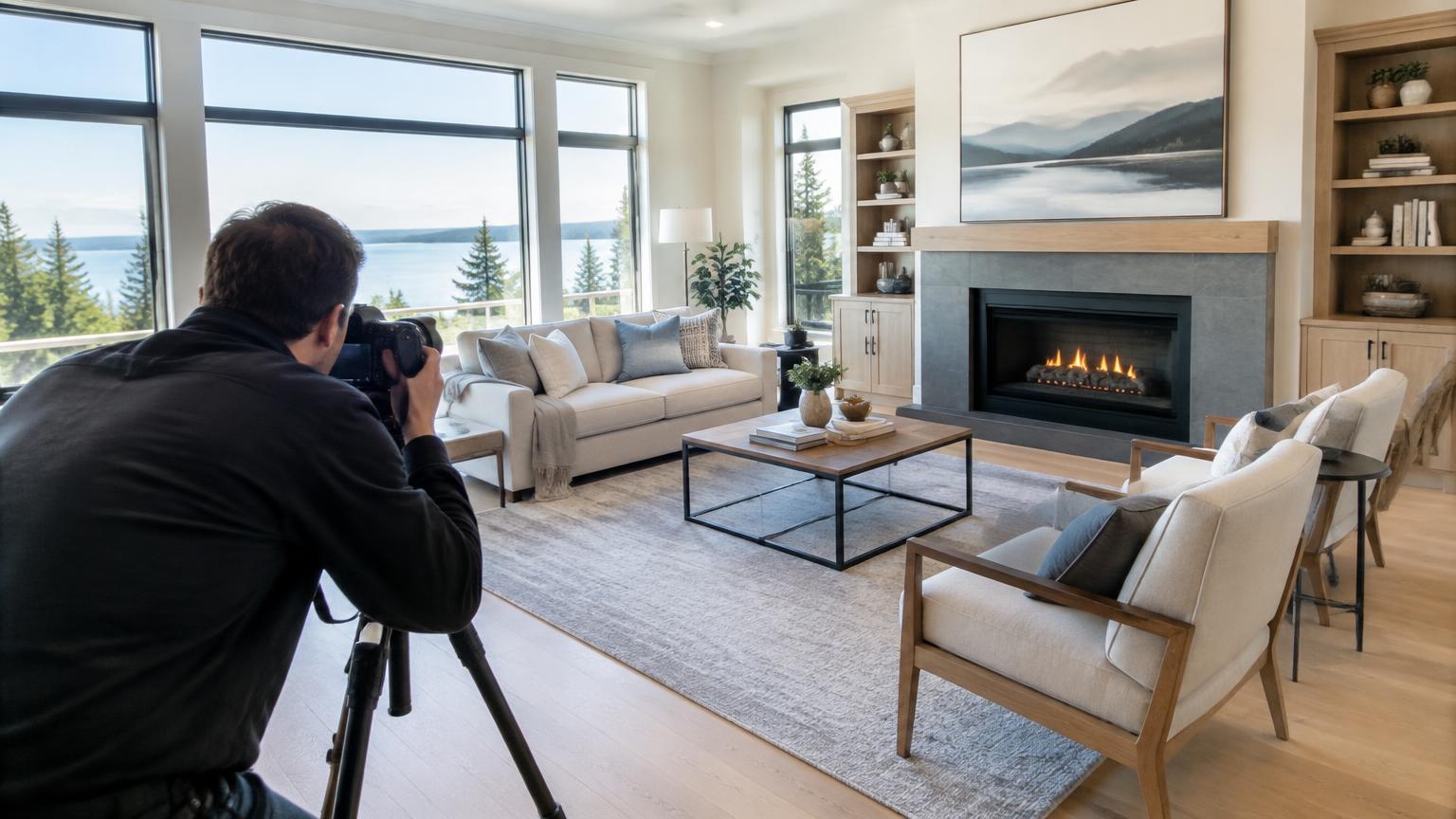
Virtual staging changes the marketing image; physical staging changes the space buyers tour. Choose based on the home’s condition, room scale, likely buyer questions, duration and written costs—not a universal promise of higher sale price.
Compare the buyer’s online view with the showing
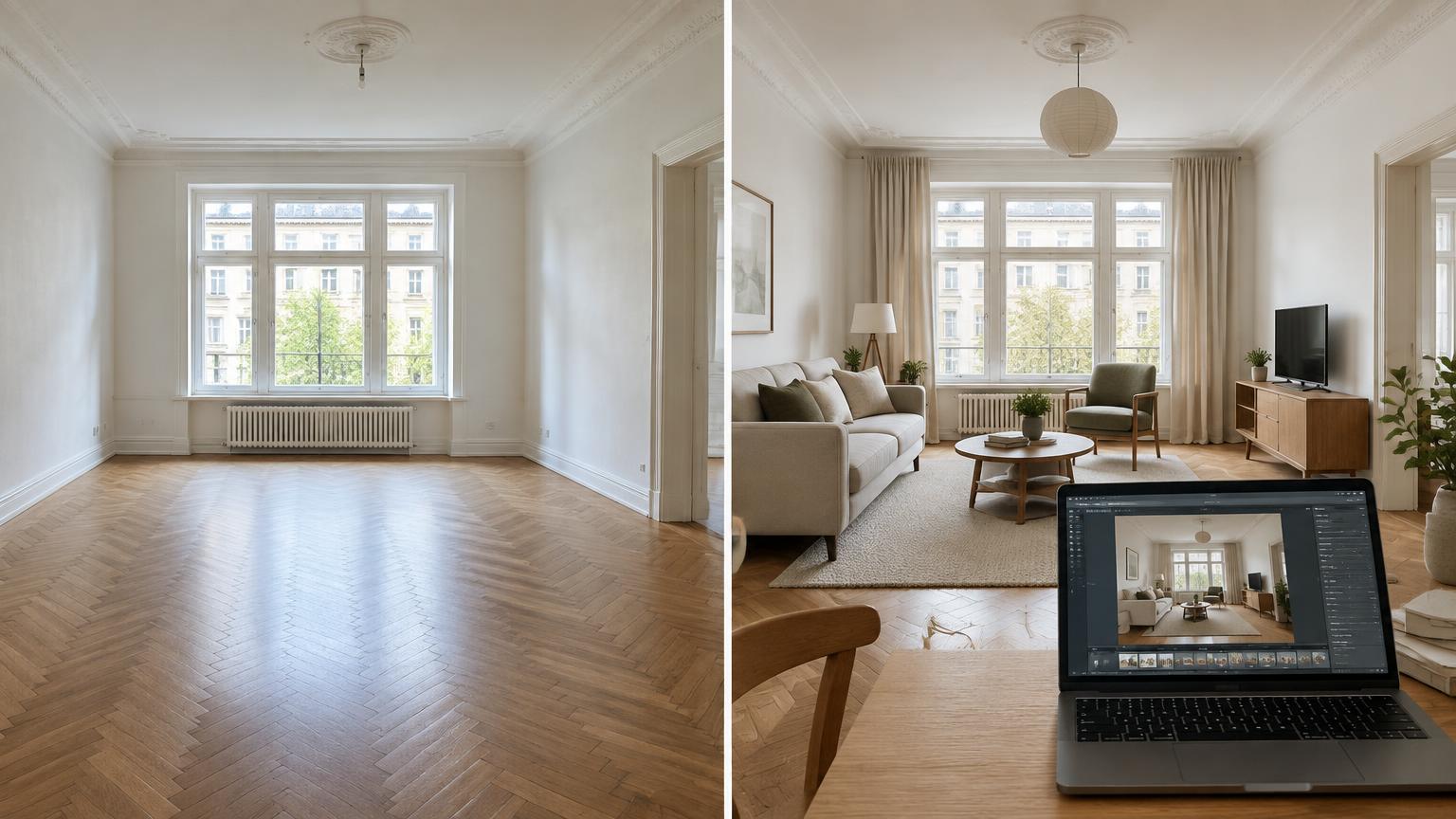
Virtual furniture can make an empty room easier to interpret online, especially if the photo clearly states that it has been altered. It cannot make that furniture appear at the showing. Real staging can demonstrate circulation and room scale in person, but it requires delivery, styling, rental and removal.
An occupied home may only need decluttering and a photo plan rather than either paid option. A vacant home with unusual dimensions may benefit from select physical pieces while keeping other rooms empty. Ask what misunderstanding each option is supposed to solve.
| Option | What changes | Primary caution |
|---|---|---|
| Virtual staging | Listing image only | Accurate labeling and unedited originals |
| Physical staging | Photographed and toured room | Rental and installation costs |
| Hybrid | Selected physical rooms plus labeled edits elsewhere | Consistent disclosure and total budget |
| No staging | Existing condition | May leave room use harder to see |
Build a true apples-to-apples budget
Request written quotes including photography, image editing, furniture install, monthly extension, removal, damage or storage terms and minimum rental duration. The apparent per-image price of virtual staging should not be compared with a full-service physical-staging package without noting what each includes.
Hypothetical: six digital images at $50 each plus $100 revisions total $400, excluding photography. Physical staging quoted at $2,500 install plus $700 for each of two months totals $3,900, excluding removal if billed separately. This is arithmetic only; it does not prove either approach adds a particular amount to the closing price.
| Illustrative item | Virtual | Physical |
|---|---|---|
| Base / installation | 6 × $50 = $300 | $2,500 |
| Other assumed amount | $100 revisions | 2 × $700 = $1,400 rental |
| Example total | $400 | $3,900 |
| Excluded | Photography | Potential removal and damage terms |
Protect listing accuracy
Washington DOL’s real-estate advertising guidance requires marketing not to be false, deceptive or misleading. Do not digitally hide water damage, a power pole, an obstructed view or permanent finishes. Put a clear virtual-staging label on edited images and retain truthful originals. Verify current NWMLS-specific image requirements with the broker; public summaries are not a substitute for current rules.
Avoid broad statements that virtual staging is ‘legal on NWMLS’ under a specific unverified numbered rule. Honest representation is the baseline whichever vendor or technology is used.
- Use consistent room angles for original and edited versions.
- Show meaningful defects and fixed features accurately.
- Identify renderings of proposed renovations as concepts, not existing conditions.
Measure useful signals, not invented ROI
Choose a test tied to the listing: are buyers misunderstanding a room, not booking showings, or disappointed when they arrive? Record views, tours and feedback before and after a photo change, while noting that other market and pricing changes affect outcomes. A single sale cannot prove a 400% staging return.
Select the least costly option that fixes the actual presentation problem. If price or condition is the barrier, staging alone will not cure it.
Frequently asked questions
Which staging method is cheaper?
Compare written total bids with the same time horizon and photography scope; digital images often involve fewer physical logistics, but prices vary.
Will physical staging improve appraisal?
Do not assume furniture changes the underlying appraised value.
Can virtual staging replace repairs?
No. It must not conceal condition or permanent features.
Should luxury homes always use physical staging?
Not automatically. Decide based on room scale, audience, condition and actual quotes.
Can I mix both?
Yes, provided the edited photos are clearly labeled and accurately represent the room’s current features.
Compare three plans rather than forcing a binary choice
Plan A is honest photographs of the existing condition; plan B adds clearly identified virtual furnishings; plan C uses rented furniture in rooms buyers physically tour. A hybrid can stage one difficult living space in person and render a separate empty room digitally. These alternatives differ in execution, logistics and what buyers see at a showing. Do not compare a low-cost virtual quote with a premium full-house physical package as though the scope is identical.
Collect written quotes listing delivery, furniture rental period, setup, removal, photo editing and damage responsibilities. For an occupied home, temporary rearrangement and professional photography may be more relevant than either virtual or rental furniture. The right comparison depends on the condition, access, planned listing period and type of space buyers need to understand.
| Plan | Online listing | In-person showing |
|---|---|---|
| Unstaged accurate photos | Actual condition | Same condition |
| Virtual furnishing | Illustrated potential; label edits | Usually unfurnished unless separately staged |
| Physical staging | Photographed staged condition | Furniture can be toured |
| Hybrid | Mixed labeled image set | Only designated rooms physically staged |
Use a decision scorecard tied to the property
List the rooms whose layout is genuinely difficult to understand and rank how important they are to the intended buyer. Add constraints such as narrow delivery access, occupied rooms, timing, budget and how long rental furniture would stay. Record the cost of each option from vendors rather than assuming a fixed local staging rate. If a digital image changes finishes or conceals permanent fixtures, do not use it as a substitute for a true photograph.
After publication, monitor inquiry quality and buyer comments, not only page views. A change in showings after staging is not proof that staging caused it when price, season and competing inventory also changed. Use actual offer terms and final net proceeds to judge the complete listing strategy. The safest choice is the least misleading plan that solves the particular buyer-interpretation problem within the seller’s budget.
How to scope a hybrid plan room by room
Begin with a photographed floor plan and label each room as naturally understandable, difficult to size or central to the first impression. For a central living area where buyers will linger, physical furniture may help at the showing. For an empty secondary bedroom, a labeled digital furnishing example may be enough. Where a room’s dimensions or condition cannot be represented honestly, leave it unstaged and provide accurate photos instead.
Ask the physical-staging provider when furniture can arrive and leave, whether the quote includes a rental extension, and who handles damage or access. Ask the virtual provider whether you receive original and edited files, revision rights, prompt deletion of incorrect imagery and permission to use the work on the brokerage site. These are purchase-scope questions, not statements about a universal return on investment.
A controlled comparison of costs and trade-offs
Place each written quote on the same time horizon. If physical furniture is rented monthly but virtual editing is charged per image, model the expected listing period and a slower-sale extension separately. Add photography, moving or storage charges only to the paths that actually incur them. If the home is already furnished, compare a decluttering quote as a third option; it may be wasteful to pay to recreate a room already fit to photograph.
Keep likely closing proceeds separate from staging expense. Without a controlled study for this home, an increase in offers cannot be attributed to staging alone. Price, listing date and the competing inventory may have changed. A useful decision is whether a particular staging plan communicates the floor plan accurately and removes an obstacle at an acceptable documented cost.
Review the images as a buyer would
Open the listing on a phone, then compare each staged image with its original and with what a visitor will see upon entry. Check reflections, windows, doors, built-ins, outlets and room proportions. Label the altered images in a way that remains understandable when they appear outside the brokerage website. A caption lost in syndication may not be enough; consult the current platform’s image field and brokerage policy.
After launch, record actual objections and whether buyers ask for measurements, floor plans or additional unedited images. Those questions are useful signals for revising presentation, but not evidence of a proven price premium. Keep the unaltered files and editing record for future corrections or disputes.
How our team approaches virtual and physical staging
In a September 2026 livestream Maggie explained the team’s practice: AI or virtual staging is normal and the team uses it often, more commonly for homes below roughly $800,000; for higher-priced homes they generally do not rely on it alone. Because fully staging a large house is expensive, the team may physically stage several key rooms rather than the whole house (livestream, September 5, 2026, ASR transcript, paraphrased). That is a description of a working practice, not a fixed price threshold, and it should be revisited for each listing.
The decision should follow how buyers evaluate this particular home, not a price-based stereotype. For buyers who primarily shortlist homes online, clear, accurately labeled virtual images can help explain possible furniture placement, alongside unedited photos and reliable dimensions. Buyers who place greater weight on verifying existing finishes, layout and condition need accurate current-condition images, explicit disclosure of digital additions and an opportunity to inspect the actual space, whether through an in-person showing or a suitably documented live tour. Physical staging may help demonstrate room scale during a visit, but neither method replaces disclosure or inspection. Partial physical staging can concentrate the budget on rooms that shape the first impression, such as the living area, kitchen sightline and primary bedroom.
Presentation problems staging cannot fix
Staging is not a substitute for basic preparation. In a July 2026 livestream Maggie described a listing where strong warm-toned walls, dated lighting and worn carpet hurt the marketing: buyers say they will repaint themselves, but in practice they find it hard to imagine the home in neutral colors (July 4, 2026). In another, she noted staging that was well styled but used too much furniture, making rooms look smaller (July 18, 2026). She also commented on listings that appeared to use virtual images in some rooms and real furniture in others, which made them harder to read online (July 25, 2026).
- Neutral paint, replaced carpet and updated light fixtures often come before either staging method.
- Furniture should be scaled to the room; fewer, smaller pieces usually photograph better.
- If virtual and physical staging are mixed, label each virtual image and keep the style consistent.
- Virtual images must not hide defects or change permanent features, consistent with Washington advertising rules.
Sources and further reading
Sources below support the linked general rules and lookup methods. Numerical tables in this article are explicitly labeled hypothetical illustrations, not market statistics or client outcomes. Confirm current forms, fees and transaction-specific advice with the appropriate professional before use.