
AI Summary
By the second half of 2026, Seattle's homebuying logic has shifted from "fear of missing out" to "fear of making mistakes." King County's active listings reached 8,512 in June, up 20.9% year-over-year; months of inventory stood at 4.4 months, a 25.7% YoY increase. Buyers now have more options, sellers are more open to negotiation, but 30-year fixed mortgage rates remain above 6%, requiring joint evaluation of home prices, monthly payments, asset quality, and holding periods.
Key takeaway: In 2026 Seattle, opportunities exist—but buyers must shift from "bidding wars mentality" to "asset selection mindset."
Market Snapshot: June 2026 Seattle Real Estate Overview
| Metric | June 2026 Data | Change | Implications |
| King County Active Listings | 8,512 | YoY +20.9% | Significantly more buyer choices, increased seller competition |
| King County New Listings | 4,364 | YoY +11.8% | Continued new supply entering market, more options for comparison |
| King County Months of Inventory | 4.4 months | YoY +25.7% | Market nearing balance, some areas favoring buyers |
| King County Median Sold Price | $889,500 | YoY -1.8% | Modest price correction—past peaks shouldn't dictate decisions |
| King County Price per Sqft | $534 / sqft | YoY -4.8% | Price pressure intensifies—buyers prioritizing asset quality and fair pricing |
| King County Sold-to-List Ratio | 97.8% | YoY -1.1% | Seller leverage weakening, negotiations becoming standard |
| King County Avg Days on Market | 26 days | YoY +13.0% | Longer sales cycles allow more time for due diligence |
| King County Median Days on Market | 12 days | YoY +33.3% | Market slowing—sellers must prioritize accurate pricing and home condition |
| King County Avg Showings per Listing | 3.9 | YoY -13.3% | Buyer enthusiasm cooling—market shifts from speed to selectivity |
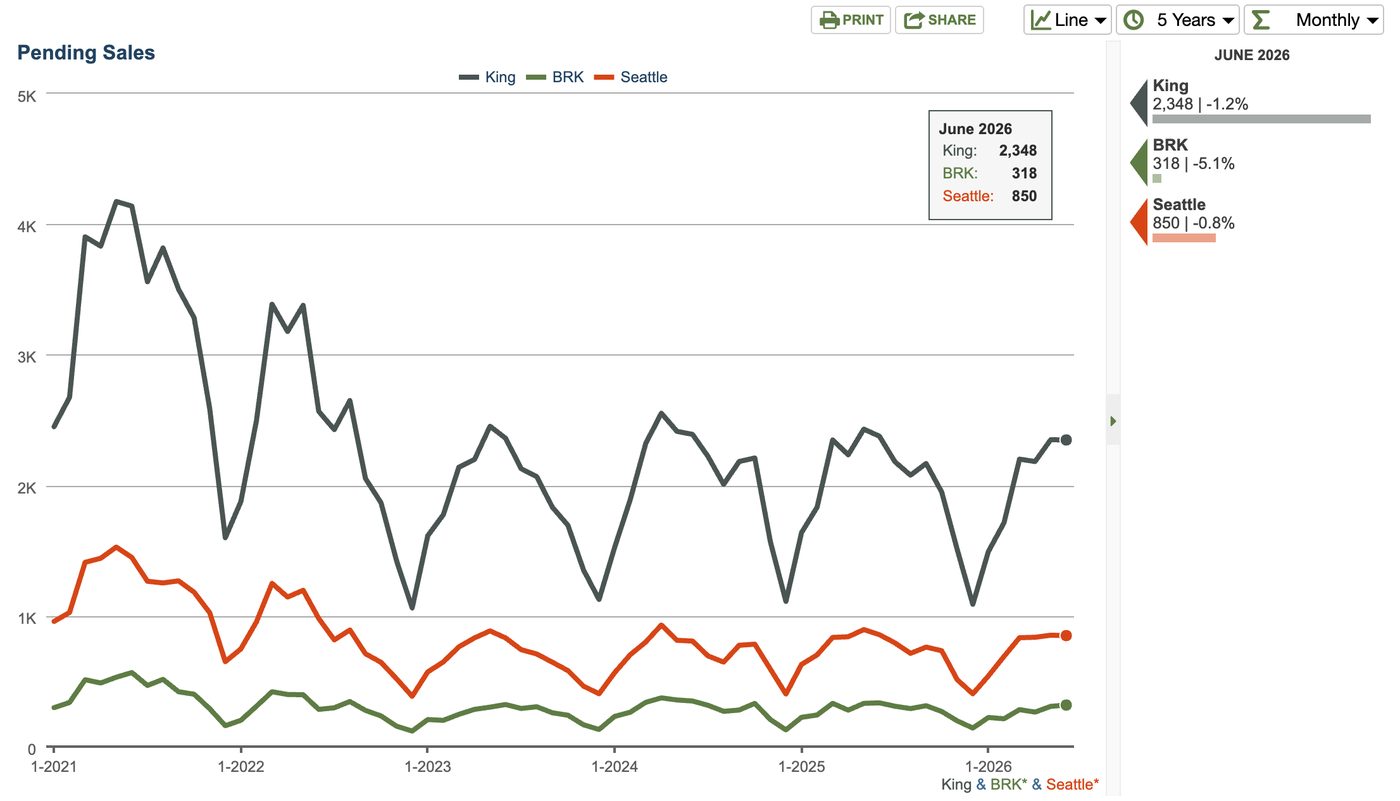
| King County Pending Sales | 2,348 | YoY -1.2% | Demand remains subdued with cautious buyers |
Source: NWMLS / King County local data, June 2026; Official link: NWMLS June 2026 Market Snapshot; King County PDF: Breakouts_King-June2026.pdf.
Should You Wait for Further Price Drops in Seattle's 2026 Market?
Many buyers now face this key question: Purchase in Seattle during 2026, or wait for potential further price declines?
The answer isn't binary. Seattle's market today differs from the extreme frenzy of 2021-2022, yet not every property presents equal opportunity.
More precisely, the 2026 second-half narrative has changed. Where buyers once feared losing out, they now risk poor selections. Inventory has risen, seller flexibility increased, and negotiations are common—yet rates may not drop soon, and price appreciation isn't guaranteed.
For those establishing a buying framework, start with our Seattle Homebuying FAQ. Comparing Seattle and Eastside? Consult our Seattle Neighborhood Guide, Bellevue Neighborhood Guide, Redmond Neighborhood Guide, and Kirkland Neighborhood Guide.
The 2026 priority isn't timing the market bottom—it's recognizing five pivotal shifts.
Five Signals from June 2026 Market Data
| June Market Data | 2026 Second-Half Implications |
| Growing Inventory | Buyers gain selection and decision time—no need for rushed offers like prior years |
| Expanded Seller Concessions | Price reductions and terms flexibility rise—but true value lies in underpriced assets, not all discounted homes |
| Persistently High Mortgage Rates | Monthly payment pressures won't ease soon—budget based on current rates, not future cuts |
| Price Divergence | Performance gaps widen across areas, home types, and price tiers—avoid relying solely on market averages |
| Market Enters "Selection Phase" | The greatest risk shifts from availability to asset quality—location, condition, and resale potential outweigh speed |
Shift #1: Rising Inventory Tilts Market Toward Buyers
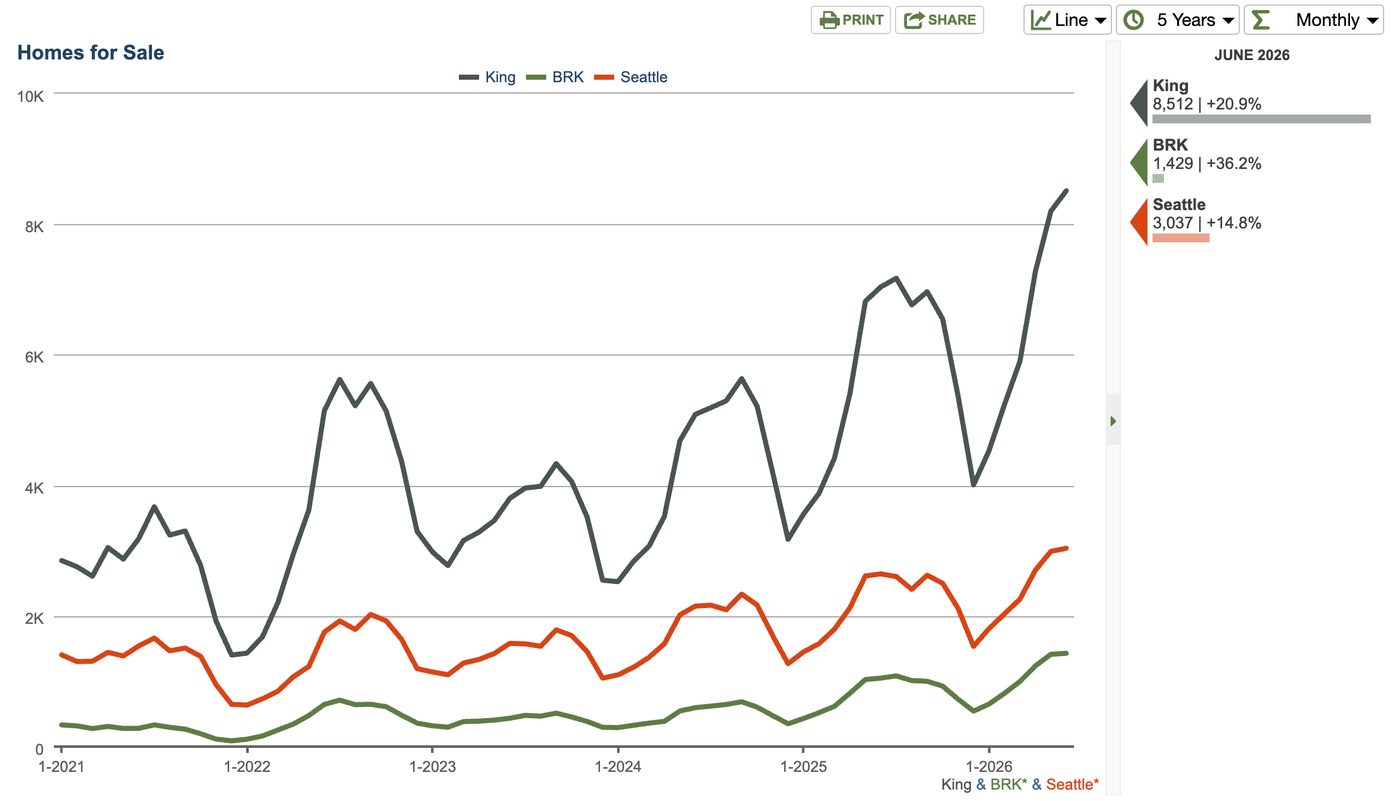
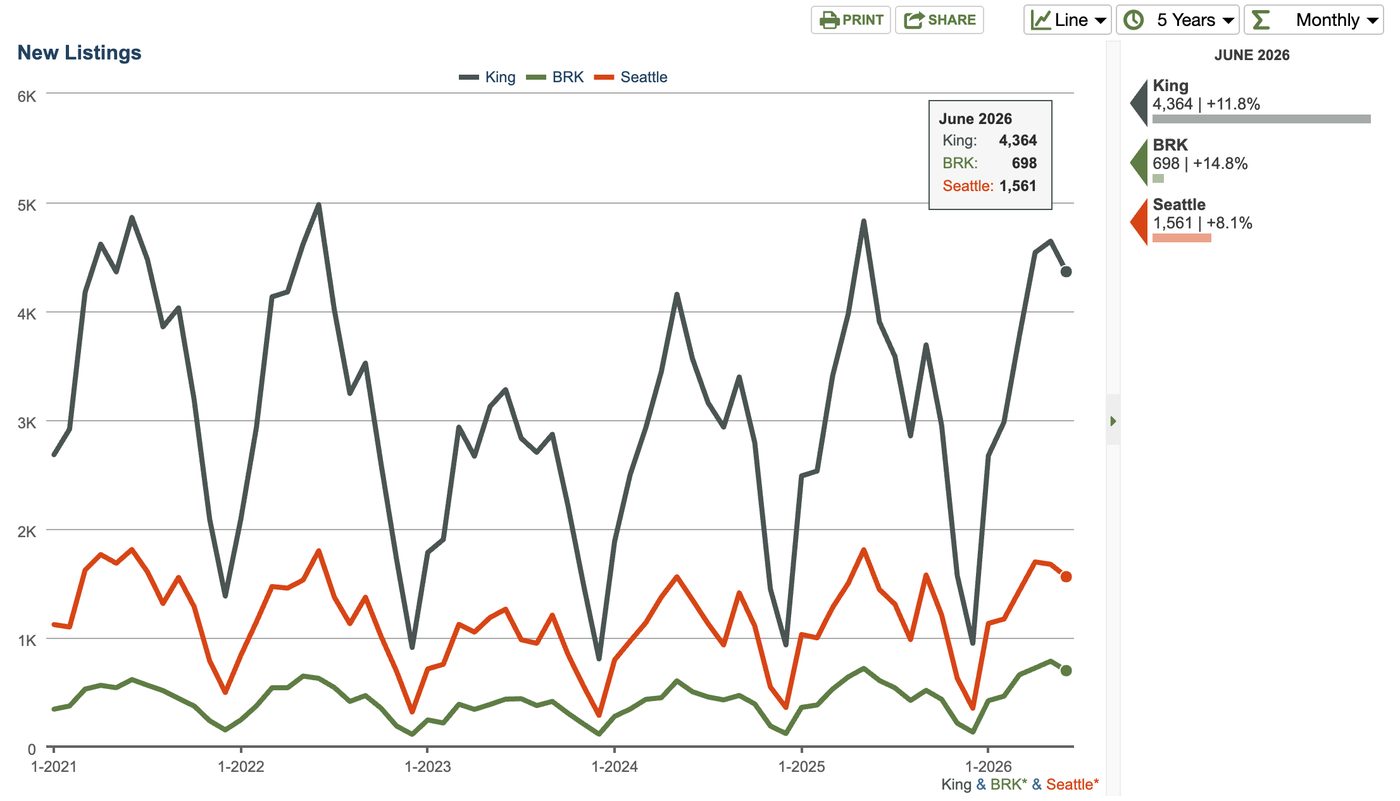
In June 2026, King County had 8,512 active listings, a 20.9% year-over-year increase. New listings totaled 4,364, up 11.8% YoY. Months of inventory reached 4.4 months, rising 25.7% YoY. (Source: NWMLS / King County June 2026 local market data)
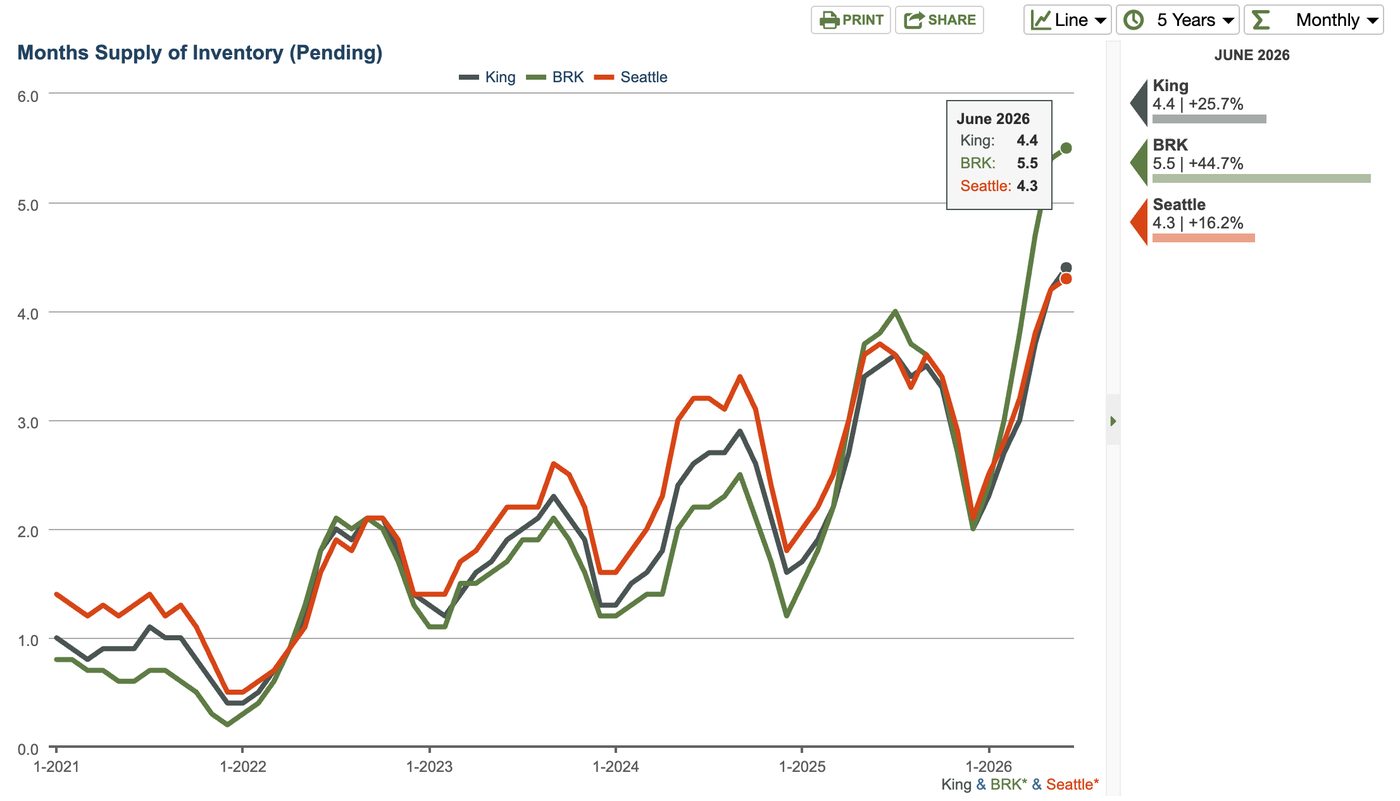
Focusing on Bellevue, Redmond, and Kirkland (BRK area), months of inventory hit 5.5 months—a 44.7% YoY increase. Seattle proper recorded 4.3 months of inventory, up 16.2% YoY. (Source: NWMLS / BRK / Seattle June 2026 local market data)
These numbers indicate buyers finally have time to view homes, compare options, and negotiate terms. Gone are the days when listings went live on Friday, showings happened over the weekend, and offers were due Monday—forcing rushed decisions. The market has shifted.
Redfin's supply-demand data shows Seattle metro sellers outnumber buyers by 44.1%. (Source: Redfin Data Center screenshot / user-generated content) This confirms market leverage is transitioning from sellers to buyers.
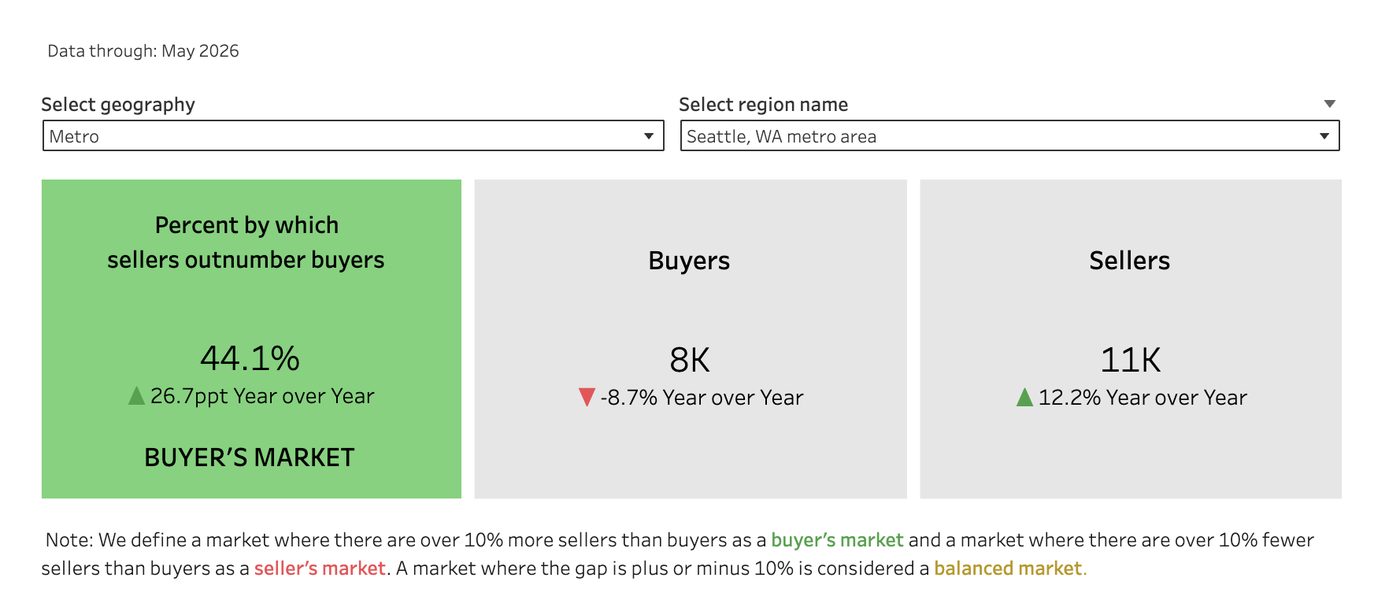
However, not all homes sit ignored. Well-located, reasonably priced properties in good condition with broad resale appeal still attract buyers. Increased inventory doesn't mean "everything's a bargain"—it means buyers can finally shop deliberately.
Shift #2: Seller expectations are softening—but not all price drops signal value
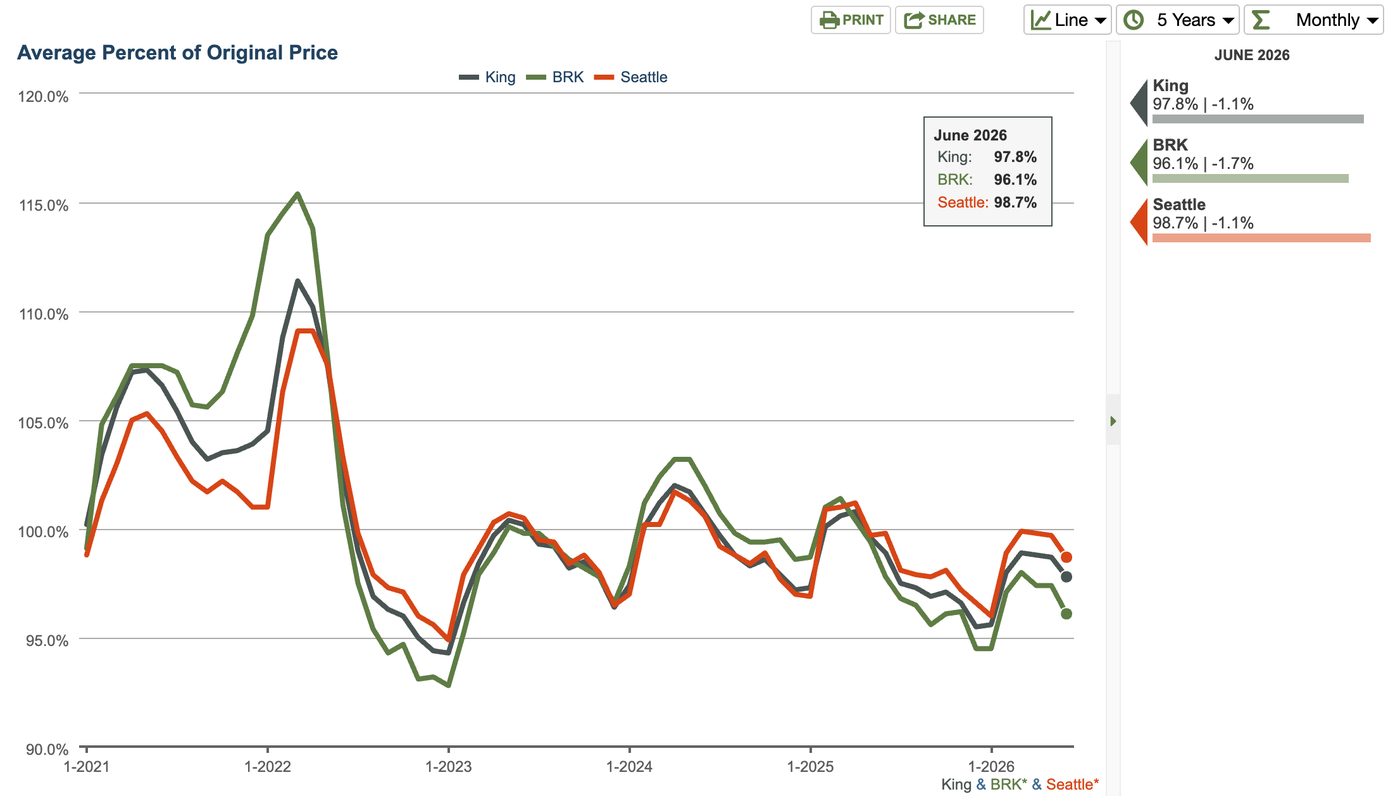
In June 2026, King County's sale-to-list price ratio was 97.8%, down 1.1% YoY. Seattle's ratio was 98.7%, also down 1.1% YoY. (Source: NWMLS / King County / Seattle June 2026 local market data)
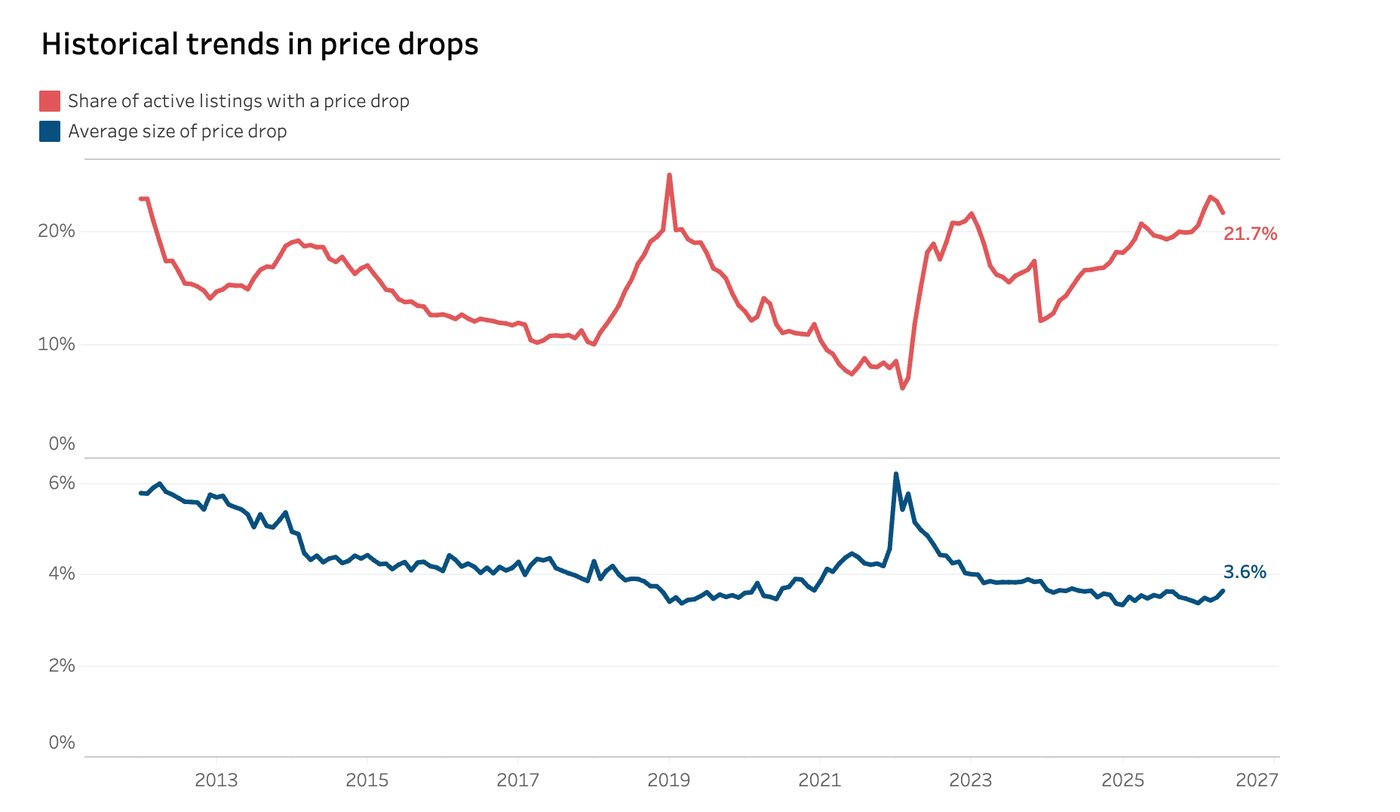
Redfin data shows 21.7% of Seattle metro active listings had price reductions, averaging 3.6% cuts. (Source: Redfin Data Center screenshot / user-generated content) King County's average days on market rose 13% YoY to 26 days; median DOM increased 33.3% to 12 days. (Source: NWMLS / King County June 2026 local market data)
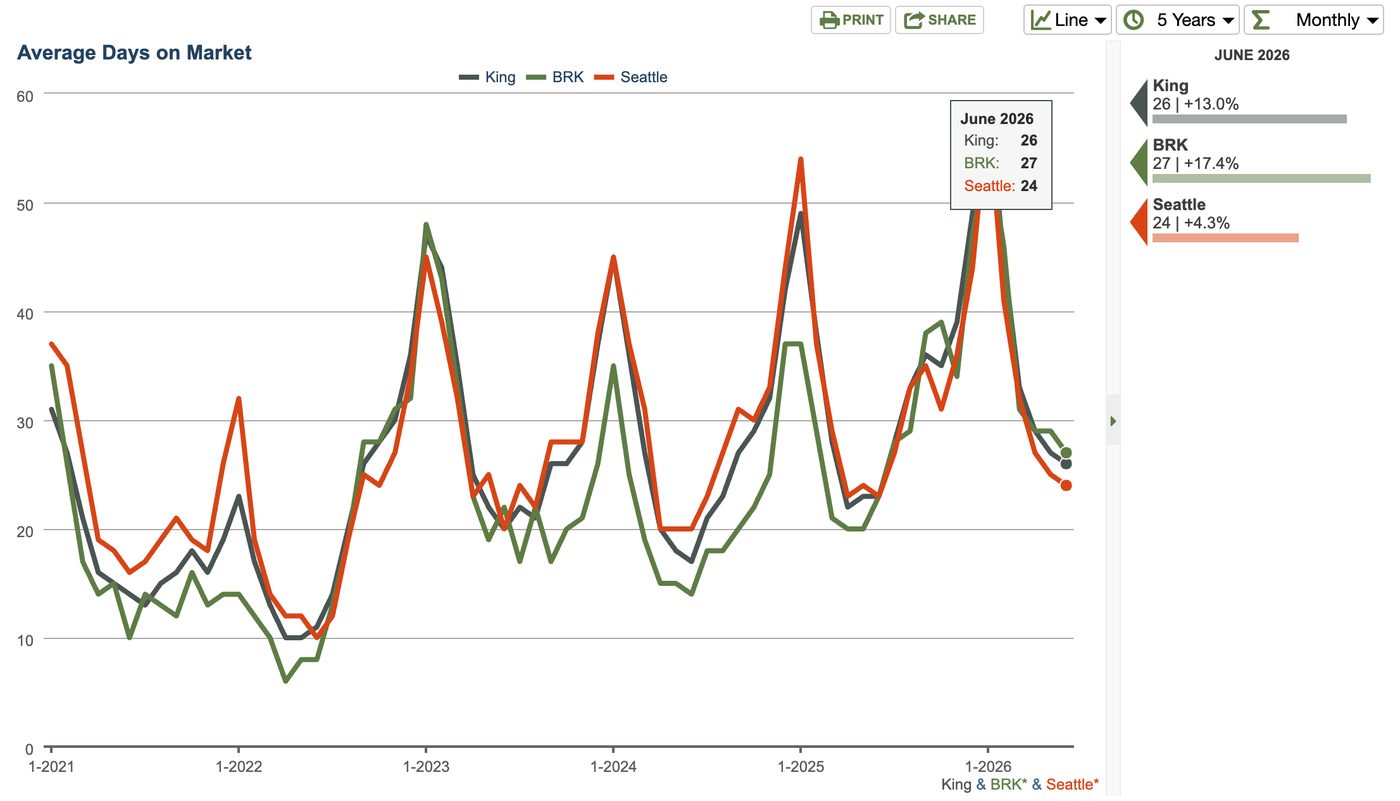
These metrics prove sellers can no longer dictate terms. Extended market time, sparse showings, and weak offers are resetting price expectations.
Buyers beware: Price cuts don't automatically mean value. Some reductions correct initially inflated pricing; others reflect property flaws—poor locations, awkward layouts, deferred maintenance, steep slopes, high HOAs, or limited resale appeal. These "discounts" may remain poor buys.
Effective negotiation now targets homes with intrinsic value where seller expectations misalign with market reality—not arbitrary haggling.
Shift #3: Rates may not fall—don't bank on refinancing
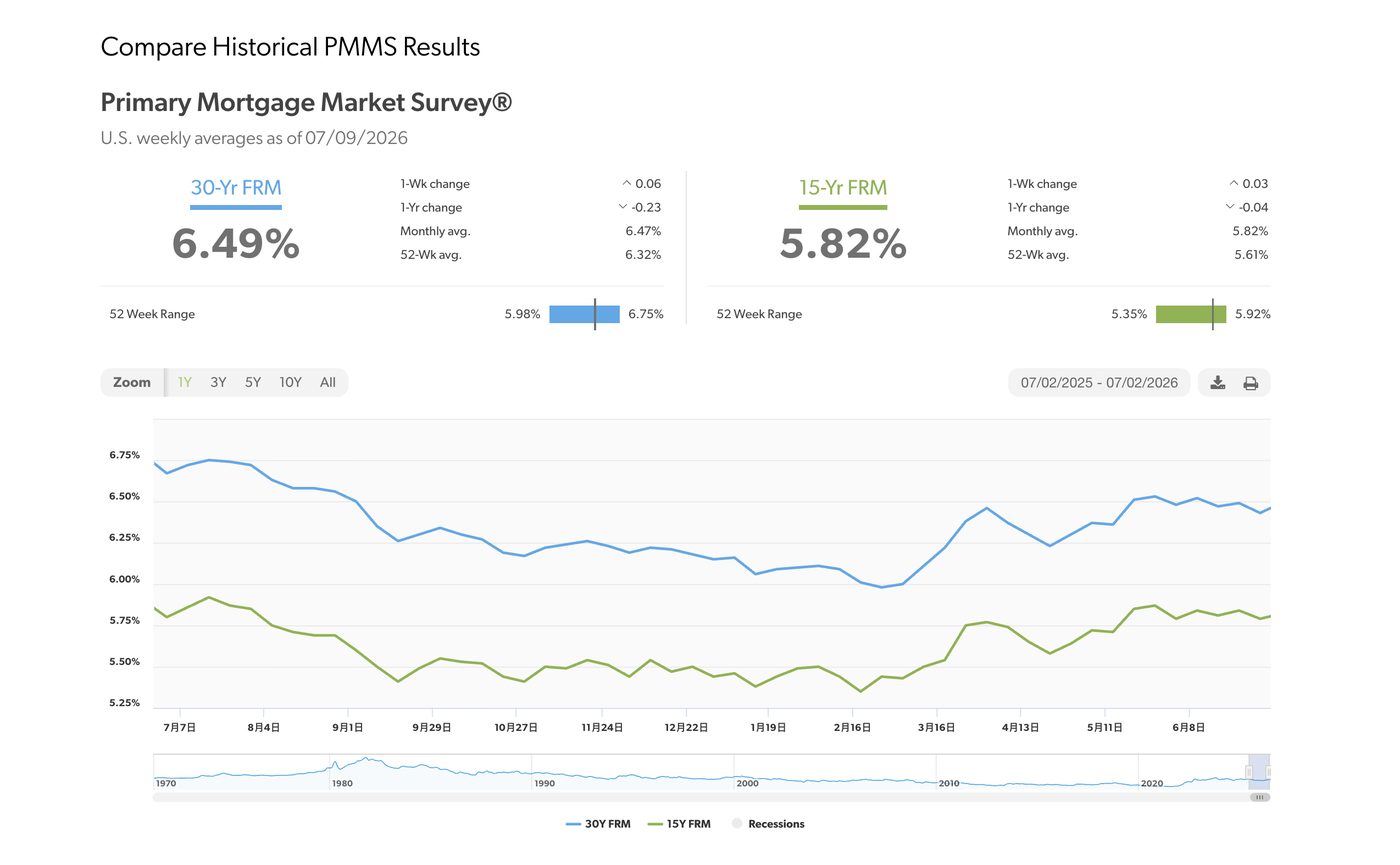
As of July 2, 2026, Freddie Mac's 30-year fixed mortgage rate stood at 6.43%. While down from 6.49% the prior week and 6.67% a year ago, it remains above 6%. (Source: Freddie Mac PMMS)
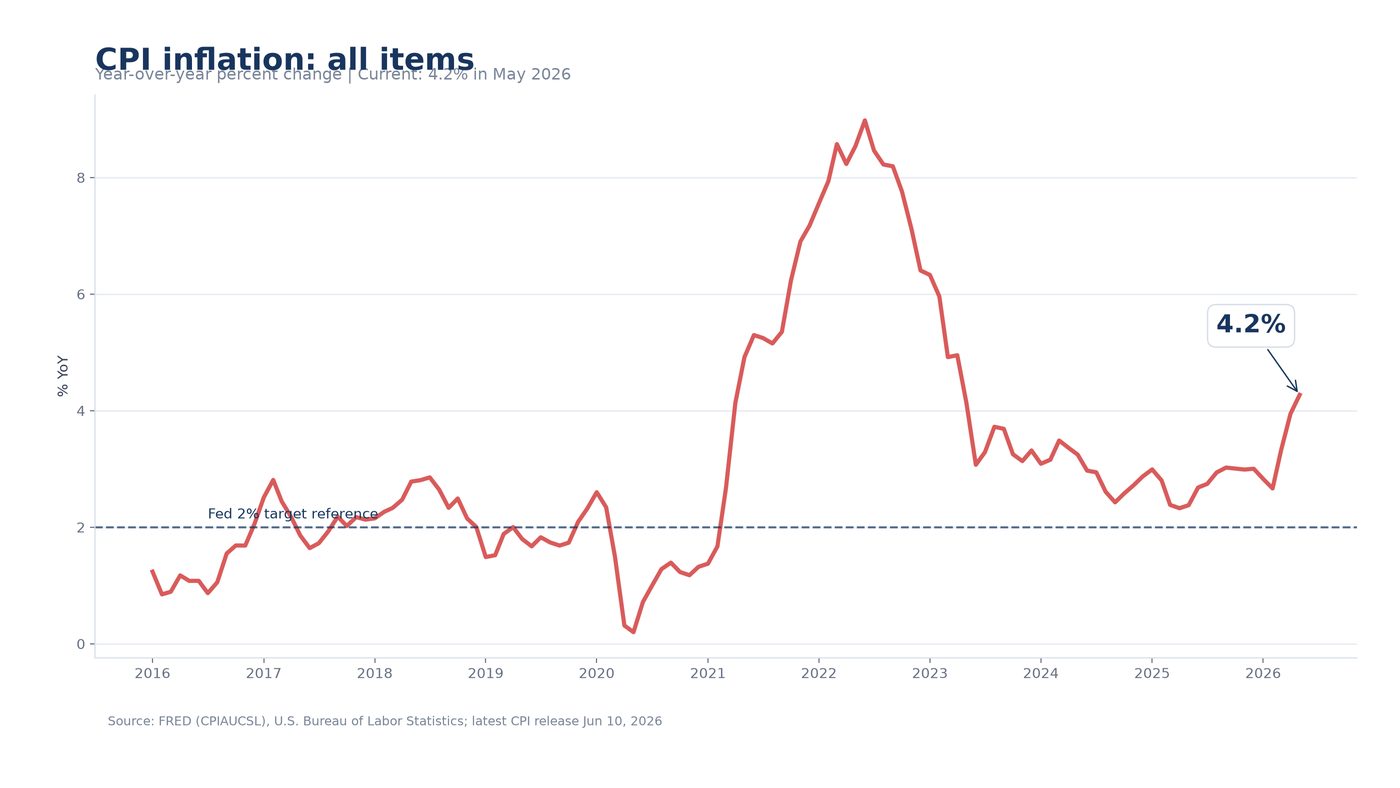
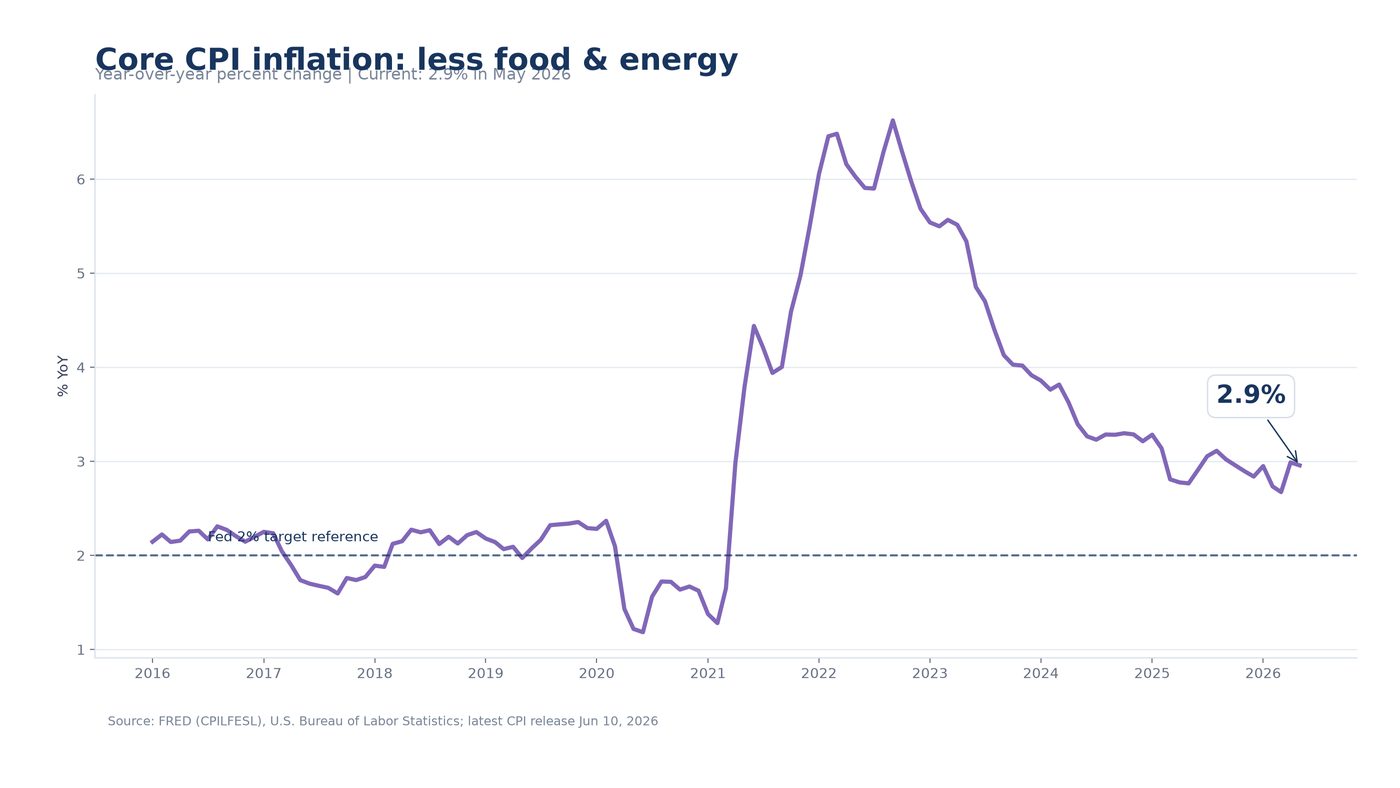
The Federal Reserve maintained its 3.50%-3.75% federal funds target range on June 17, 2026. (Source: Federal Reserve FOMC) Meanwhile, May 2026 BLS CPI showed 4.2% YoY inflation (2.9% core)—still above the Fed's 2% target. (Source: BLS CPI)
Don't assume "rates will drop soon." The prudent view: Rate cuts are possible but shouldn't anchor purchase decisions.
Refinancing may offer future savings—but today's purchase must work at today's rates. Calculate payments using current interest, taxes, insurance, HOA fees, and maintenance costs.
The real risk isn't short-term price swings—it's buying a home that strains monthly budgets, leaving no margin for market shifts, job changes, or life events.
Shift #4: Short-term gains aren't guaranteed—demographics and holding periods matter
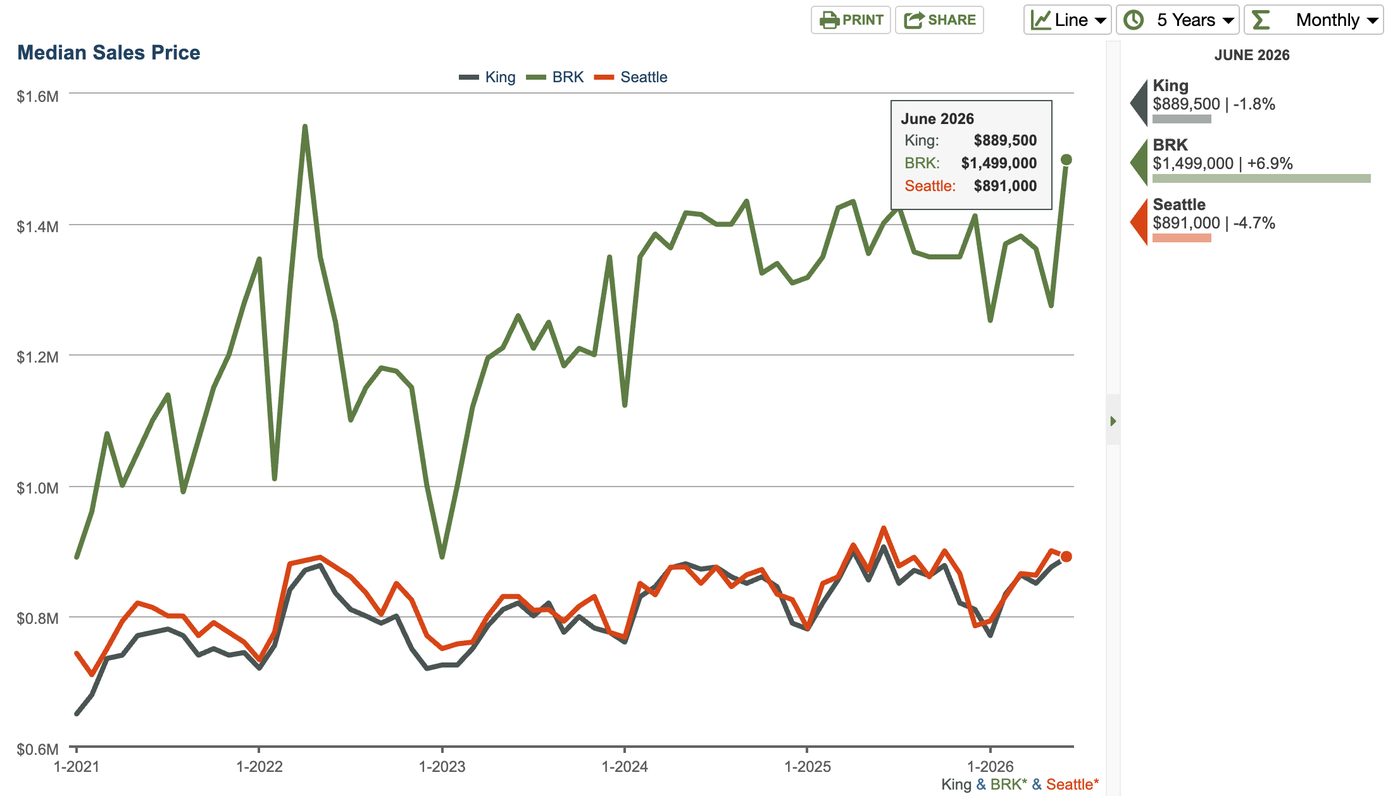
King County's June 2026 median sale price was $889,500 (-1.8% YoY). Average price per square foot fell 4.8% to $534. Seattle averaged $583/sqft (-4.6% YoY); BRK area averaged $723/sqft (-4.4% YoY). (Source: NWMLS / King County / Seattle / BRK June 2026 local market data)
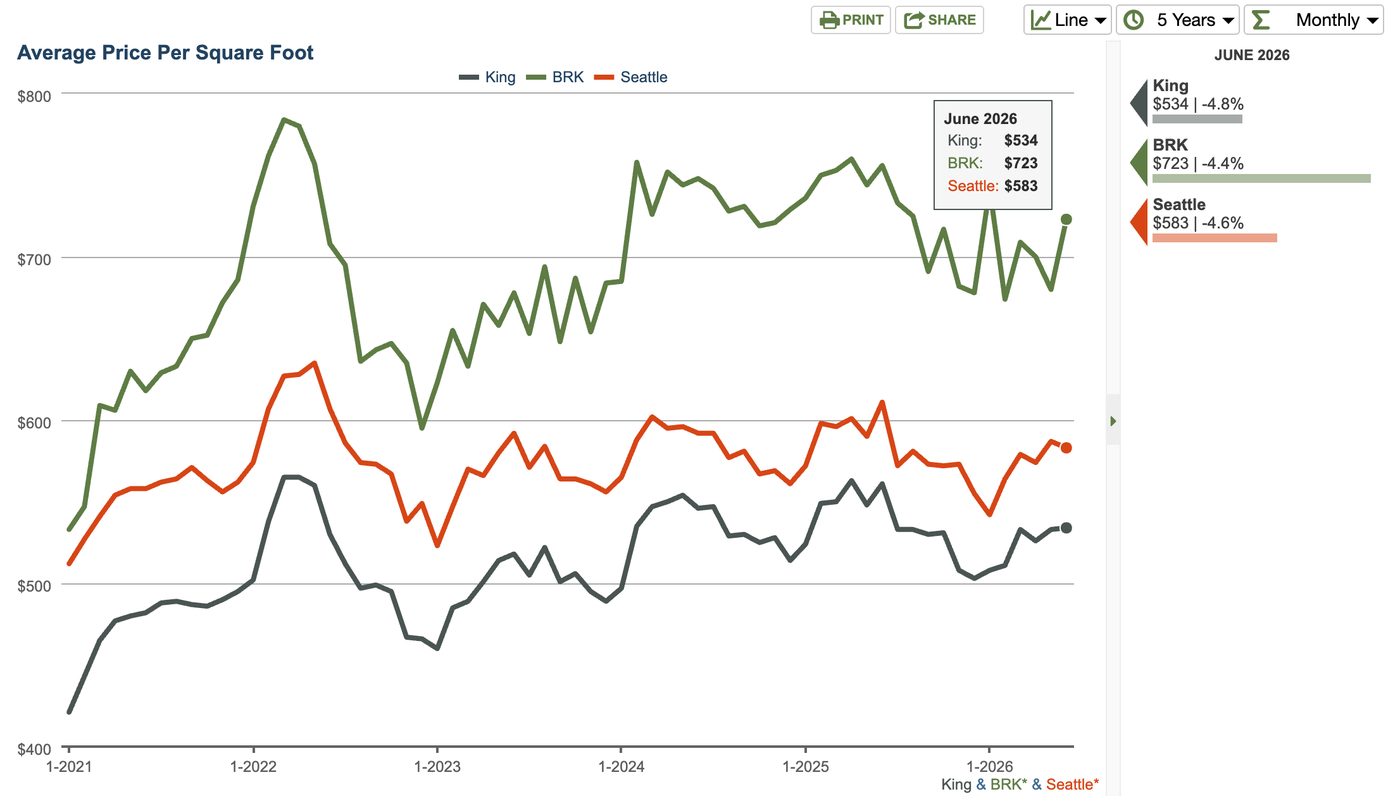
Prices don't always rise. Even long-term Seattle optimism doesn't ensure short-term profits.
Demand dynamics matter: Seattle metro added ~66,666 residents (1.6%) from 2023-2024—primarily from ~64,000 international migrants—while experiencing ~11,000 net domestic outflows. (Source: Axios / Census summary) Redfin migration data shows Seattle as a net outflow source (-26,357 net search migration). While not official census data, this reflects buyer search trends.
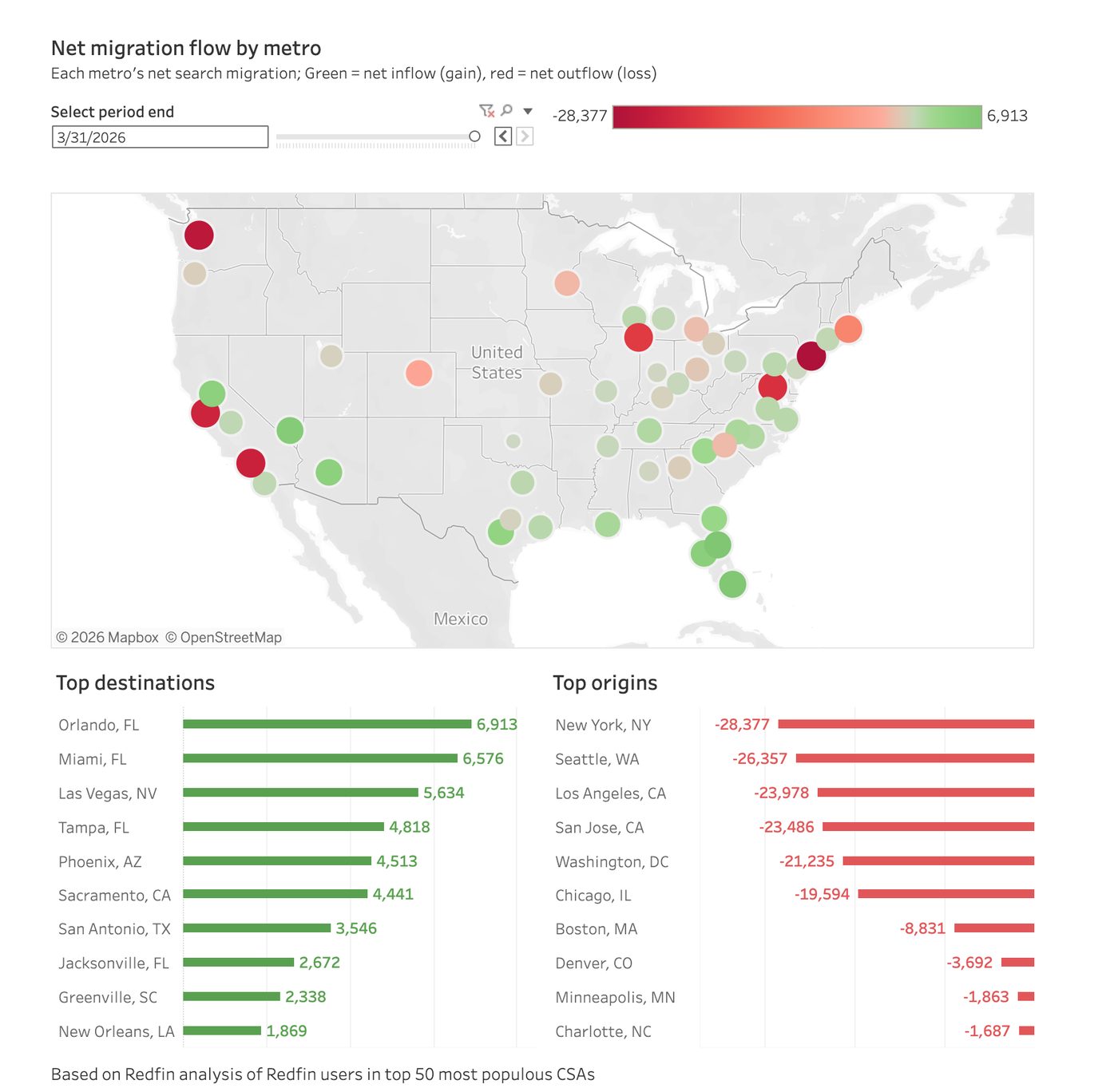
Seattle retains long-term demand—but it's unevenly distributed across neighborhoods, property types, and price tiers.
Ditch the "all Seattle real estate appreciates" mindset. Value retention depends on location, home type, price point, and holding period. For 2-3 year stays, transaction costs, loan fees, and repairs may erase gains.
Shift #5: Growing divergence by location, property type, and price tier
The 2026 market isn't moving uniformly—quality assets shine brighter while flawed properties show more weaknesses.
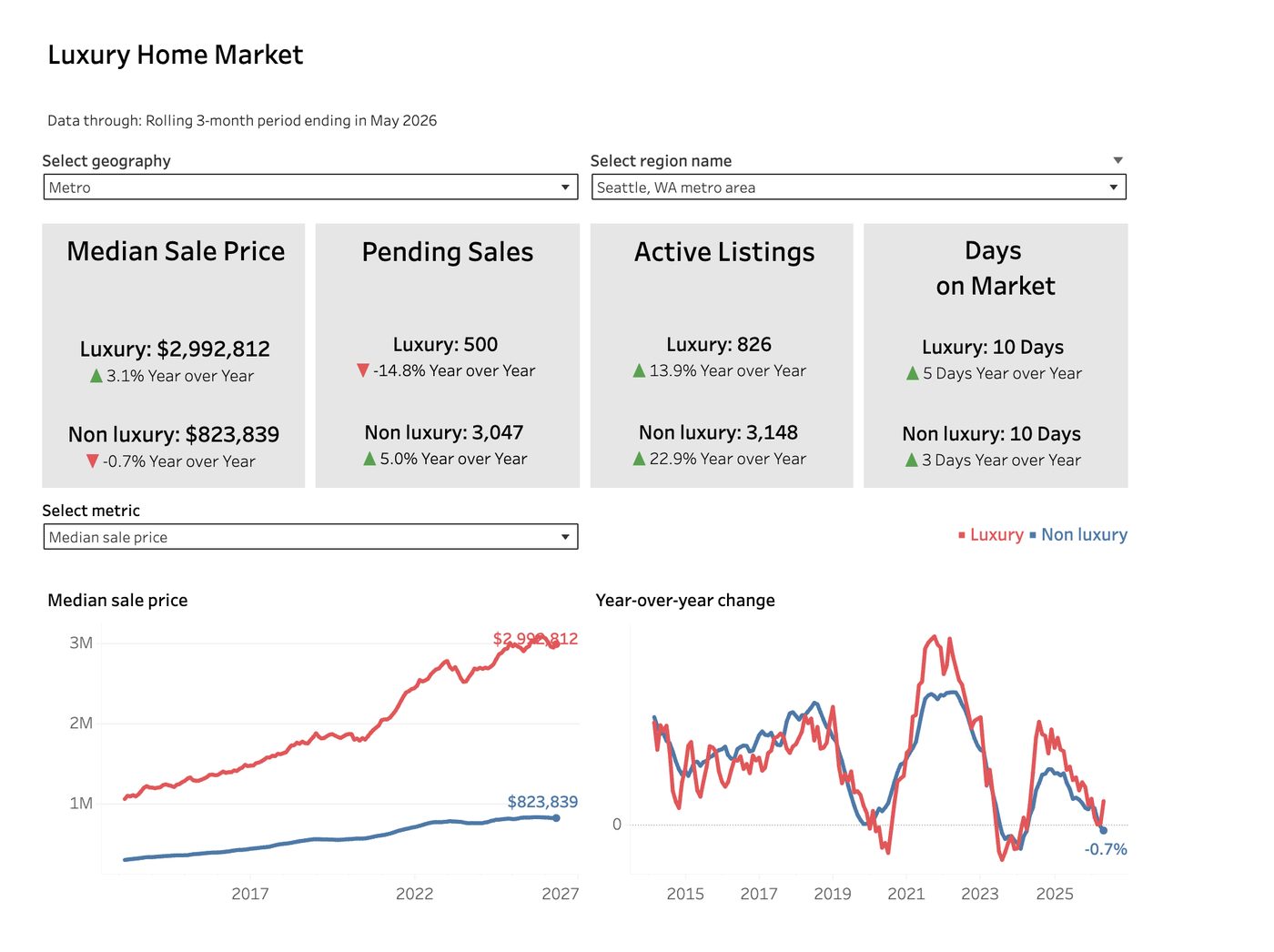
Redfin's Seattle metro luxury data shows 500 pending sales (-14.8% YoY) and 826 active listings (+13.9% YoY). (Source: Redfin Data Center screenshot / user-generated content) High-end prices may not collapse immediately, but demand has softened noticeably amid rising supply.
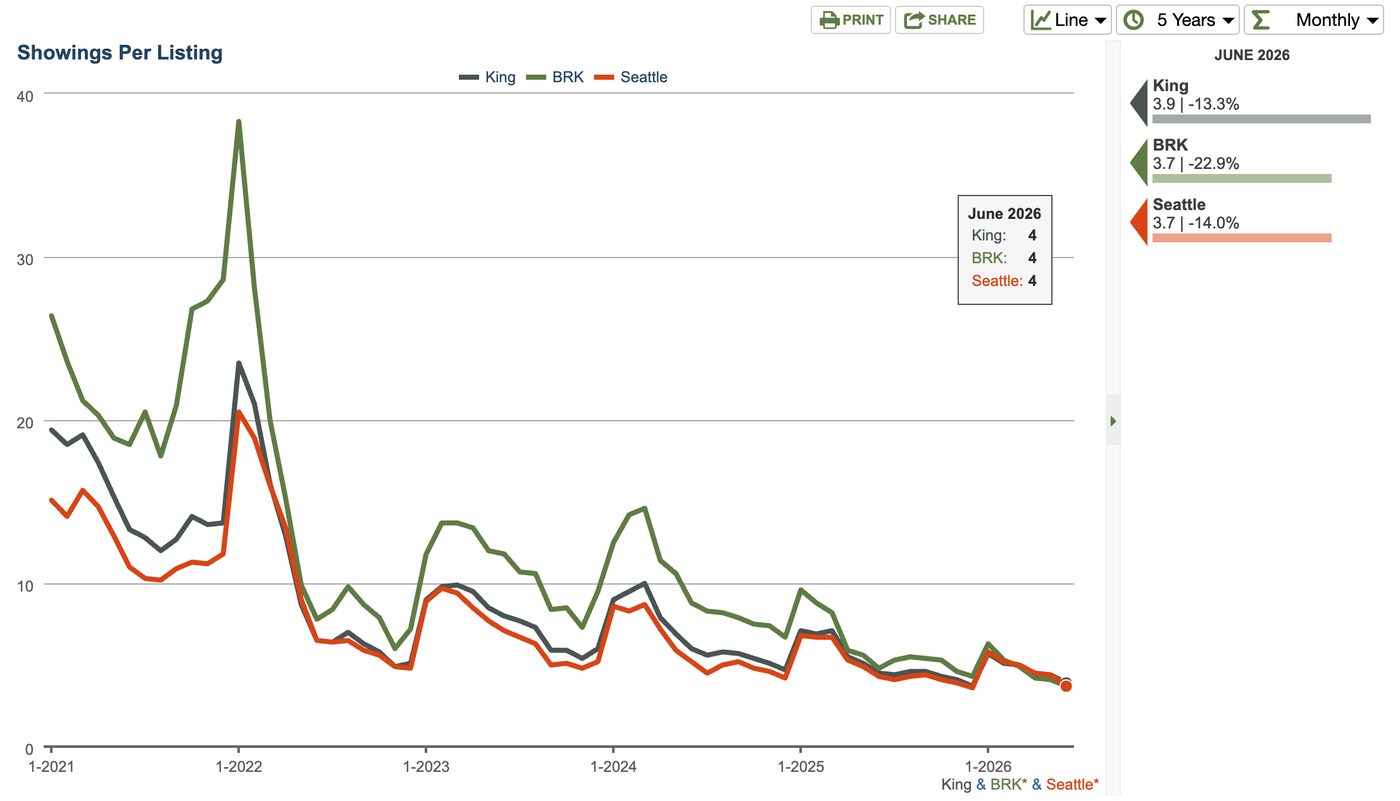
Marketwide, King County averaged 3.9 showings per listing (-13.3% YoY) with 2,348 pending sales (-1.2% YoY). (Source: NWMLS / King County June 2026 local market data) Buyers haven't vanished—they've become more selective.
This year, homes with stronger market support aren't necessarily those that "appear cheap," but rather those that will remain desirable for resale. Think properties in good neighborhoods with convenient commutes, solid condition, functional layouts, no major flaws, reasonably priced compared to peers, and broad future buyer appeal.
Conversely, risks concentrate in certain property types: distant suburbs with inflated prices, condos/townhomes with high HOAs, problematic layouts, homes needing major repairs, luxury properties with narrow buyer pools, or listings still priced at peak-market levels.
How Should Buyers Approach Opportunities This Year?
Buying in Seattle in 2026 isn't about being the boldest or waiting the longest. What truly matters is acquiring quality assets at fair prices.
Focus on four key factors. For those considering new construction or builder incentives, pair this with our Seattle/Eastside New Construction Guide. Relocating from out-of-state or abroad? Refer to our Moving to Seattle/Eastside Guide.
First, tour extensively to develop price sensitivity. Viewing 50 homes versus 5 creates fundamentally different market understanding.
Second, compare all comparable properties in the same area, type, and price range. Abundant alternatives mean greater negotiation leverage; scarce options on truly exceptional homes warrant realistic offers.
Third, analyze price reductions. Is the home genuinely below market value, or merely correcting from overpricing? Does the adjustment reflect seller flexibility or underlying property issues?
Fourth, base decisions on current monthly payments—never assume future refinancing is guaranteed.
Pricing Strategies for Sellers in 2026
This year's critical lesson for sellers: don't anchor to past prices. Premium pricing requires justification. New to selling? Review our Seller FAQ. For quick valuation estimates, use our Home Valuation Tool.
Today's buyers scrutinize both current pricing and reduction histories. Overpricing followed by repeated cuts often raises red flags about the property.
Successful 2026 sellers should study competing listings, recent sales, and their property's strengths/weaknesses. Early market feedback is crucial—limited showings, weak offers, or price/condition concerns demand prompt adjustments.
The Market Requires New Decision Frameworks
Seattle's late-2026 market defies simple "buy/don't buy" binaries. It's a landscape of expanded choices paired with heightened evaluation complexity.
Growing inventory gives buyers more comparison time; softening seller attitudes create negotiation opportunities. Yet interest rates still pressure affordability, and short-term price fluctuations continue. Securing a home ≠ securing the right asset. The true goal: acquiring properties where location, layout, condition, and holding period align at fair prices.
If considering late-2026 purchases in Seattle, Bellevue, Redmond, Kirkland or King County, shift from "Will prices drop further?" to "Does this property justify its price and monthly costs for 3+ year ownership?"
Track local trends via our King County Market Insights and Blog.
FAQ
Is Seattle a Buyer's Market in 2026?
King County's June inventory and months of supply have risen significantly, with Seattle metro sellers outnumbering buyers—creating more buyer-friendly conditions than recent years. However, well-located, properly maintained, and fairly priced homes still attract competition.
Should Buyers Wait for Lower Rates?
Monitor rate trends, but don't base purchases on assumed refinancing. Early July 2026 30-year fixed rates remain above 6%—budget using current payment capacity.
Will Seattle Prices Keep Falling?
Short-term price divergence continues. King County's June median sale price dropped 1.8% YoY, with average price per sqft down 4.8%. However, significant variations exist across areas, property types, and price tiers—never rely solely on market-wide averages.
Which 2026 Seattle Properties Carry Higher Risk?
Overpriced distant suburbs, high-HOA condos/townhomes, major-repair properties, flawed layouts, niche luxury homes, and listings clinging to peak-market pricing face heightened vulnerability.
What Should 2026 Buyers Prioritize?
Focus on payment security, property quality, long-term area demand, comparable alternatives, future resale appeal, and intended holding period. This year's opportunity lies in methodical selection—not blanket assumptions about "bargains."
2023© Maggie Sun | Maggie Real Estate Group | Keller Williams Realty Bellevue
Maggie Sun
Managing Broker | Buy, Sell & Invest Seattle & Bellevue | Maggie Sun Real Estate Group
or another way