
Appraisal-gap coverage is an offer term, not a guarantee of financing or a way to change the appraised value. Work backward from cash available after down payment, closing costs, and reserves; then have your lender and broker review the exact addendum before signing.
What changes when an appraisal comes in low
A lender bases its loan decision on its underwriting and the property valuation, not merely on the price the parties negotiated. A low appraisal can change the cash needed at closing, the financing terms, or the buyer’s options under the signed agreement. The answer depends on the loan program, down payment, contract language, and deadlines.
A capped additional-down-payment promise may make an offer more certain for a seller, but it does not make the buyer’s available funds larger. Ask the lender to model the lower appraisal and recheck the cash-to-close estimate before the offer is submitted.
- Ask whether your lender can rework the loan after a low value.
- Identify which funds are liquid and documented—not expected future stock vesting.
- Keep a separate reserve for repairs, moving, and unplanned closing costs.
Compare a cap with broader appraisal risk
NWMLS maintains forms used in Washington transactions, including an increased-down-payment-for-low-appraisal addendum commonly identified as Form 22AD. The precise rights and notices come from the current executed paperwork; do not assume a capped promise is identical to waiving every appraisal-related protection.
Before using any form, ask your broker and lender: What appraisal outcome triggers the additional funds? What is the maximum additional cash? What notice or response deadlines apply? Can the lender still close under the revised loan terms? Never rely on a generic article to interpret a particular signed contract.
| Structure | Buyer needs to check |
|---|---|
| Additional-cash cap | Exact dollar cap, available funds, loan approval and other contingencies |
| Broader waiver or reduced protection | Potential exposure if the value is lower than expected; review the actual agreement |
| No additional commitment | What financing and appraisal terms remain in place |
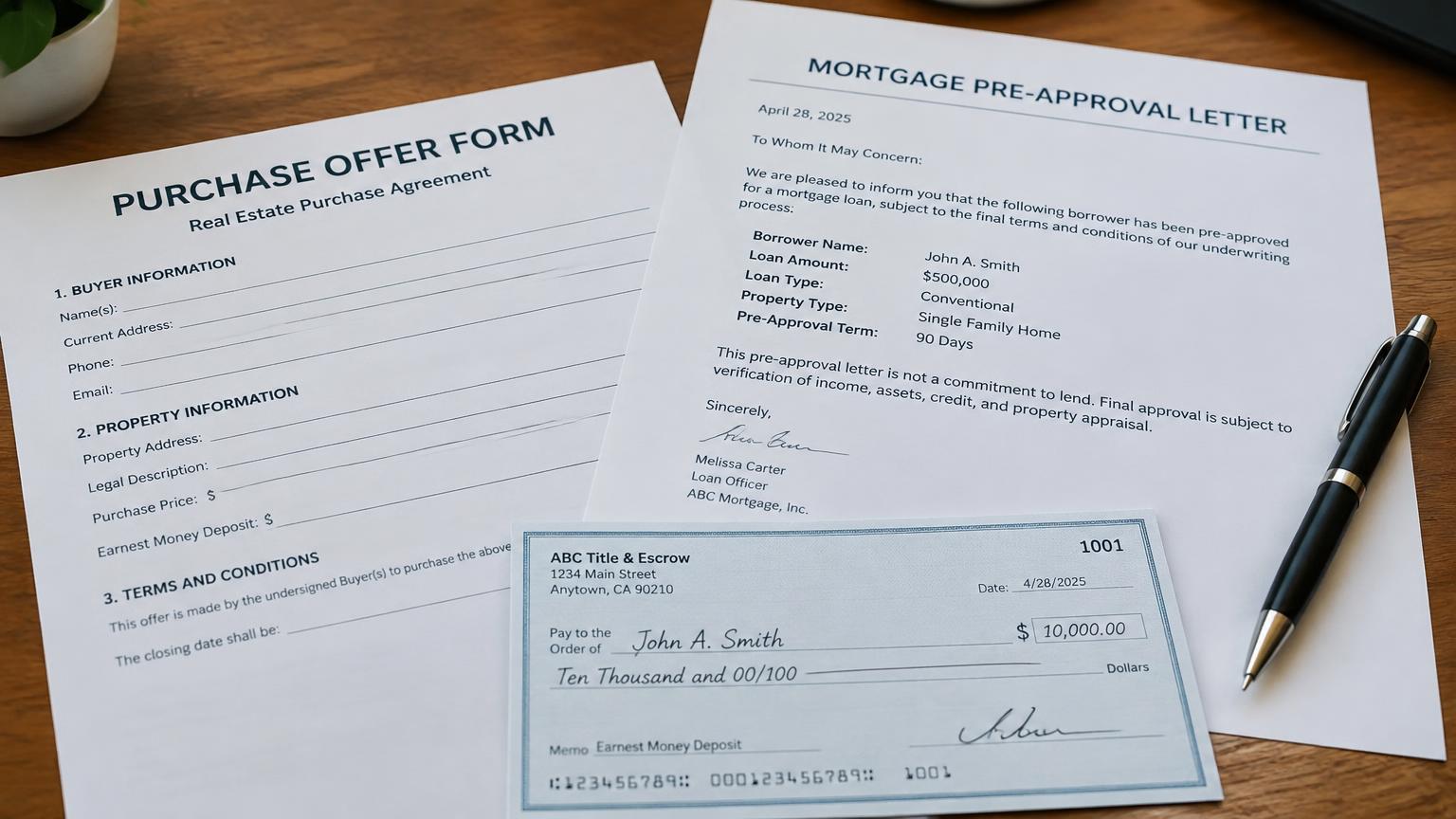
Calculate the cash before choosing a number
Illustration only: suppose a buyer offers $1,100,000, expects an 80% loan-to-value loan, and the appraisal returns at $1,050,000. If the lender continues to lend 80% of appraised value, the estimated loan would be $840,000 rather than $880,000. The cash needed toward the price would be $260,000 rather than $220,000—a $40,000 difference, before closing costs. The real loan may be re-underwritten differently.
A promise to contribute only $25,000 of additional cash is not the same as a guaranteed closing if the modeled need is $40,000. The parties may negotiate a price change or other outcome only as allowed by their contract. Calculate several appraisal values with the lender, rather than assuming the seller will lower the price.
| Illustrative input | Amount |
|---|---|
| Offer price | $1,100,000 |
| Appraised value | $1,050,000 |
| Illustrative loan at 80% of appraisal | $840,000 |
| Buyer cash toward price | $260,000 |
| Difference vs. $220,000 original cash plan | $40,000 (excludes closing costs) |
Build an offer that can actually close
Start with recent comparable sales for the same property type and location; a county-wide median does not value one house. Review condition, seller instructions, competing-offer uncertainty, and whether an escalation clause could increase your price beyond the initial scenario. Set a written walk-away number that works even if the lender appraises below your offer.
For buyers moving from out of state or using equity compensation, ask a CPA about tax effects of sales and ask the lender when proceeds must be documented. Neither an expected RSU vest nor an unsigned transfer is equivalent to cleared funds. Avoid blanket promises that a given percentage of the price is the right gap for every Eastside home.
Frequently asked questions
Is appraisal-gap coverage required in Bellevue?
No universal legal requirement applies to every purchase. A seller may prefer a particular offer structure; buyers should choose terms they can fund and understand.
Does a gap addendum guarantee that the loan closes?
No. The lender still underwrites the borrower and property, and a low valuation can change the loan or cash required.
Can we renegotiate after a low appraisal?
Possibly, but neither side must agree to a new price unless the contract says so. Review notices and deadlines with your broker and legal adviser.
Should I sell stock before writing an offer?
First ask your lender what proof and timing it requires, and a tax adviser about sale consequences. Avoid counting unvested shares as closing cash.
How much coverage is enough?
There is no standard percentage. Model price, likely appraisal range, loan terms, liquid funds, closing costs and reserves for the individual home.
Trace the low appraisal through the actual loan
The purchase contract fixes a negotiated price, while the lender independently evaluates its collateral. If the valuation is lower, ask the lender for a revised loan estimate showing the maximum loan amount and cash to close. The price-appraisal difference alone is not necessarily the amount of extra cash: the lender may calculate against the lower of price or value, and the loan program, mortgage insurance, reserves and underwriting still matter. These are distinct questions from the buyer’s contractual promise to the seller.
For a useful stress test, ask for at least three lender-run appraisal outcomes: at contract price, moderately below it and materially below it. Record the resulting loan amount, down payment, closing expenses and required reserves on separate lines. Do not spend the same cash twice by calling an additional-down-payment commitment both a closing fund and a reserve. The modeling is a buyer exercise, not a prediction of an appraiser’s conclusion.
| Question | Document to use | Decision affected |
|---|---|---|
| How much can the lender fund? | Updated loan estimate or lender calculation | Cash to close |
| How much is contractually promised? | Executed appraisal and financing addenda | Available contract options |
| When must buyer act? | Signed agreement and notices | Response or termination deadline |
Work through the response choices without assuming a price cut
If the lender reports a low value, request the appraisal and confirm whether its factual property details are accurate. A buyer can ask the lender about a reconsideration process when there is concrete comparable-sale or property information, but the lender controls its valuation process. The parties might discuss changing the price or financing structure, yet a seller is not automatically required to reduce the price. A buyer should not assume an appraisal addendum restores a financing protection that was separately changed.
Before agreeing to new terms, compare the extra cash against your pre-set liquidity floor and closing date. Ask the broker to identify each notice requirement and have a lawyer interpret disputed contract language. A transaction-specific review of the current NWMLS forms matters more than any generic percentage rule. The goal is an offer whose worst affordable outcome is understood before it becomes binding.
Sources and further reading
Sources below support the linked general rules and lookup methods. Numerical tables in this article are explicitly labeled hypothetical illustrations, not market statistics or client outcomes. Confirm current forms, fees and transaction-specific advice with the appropriate professional before use.