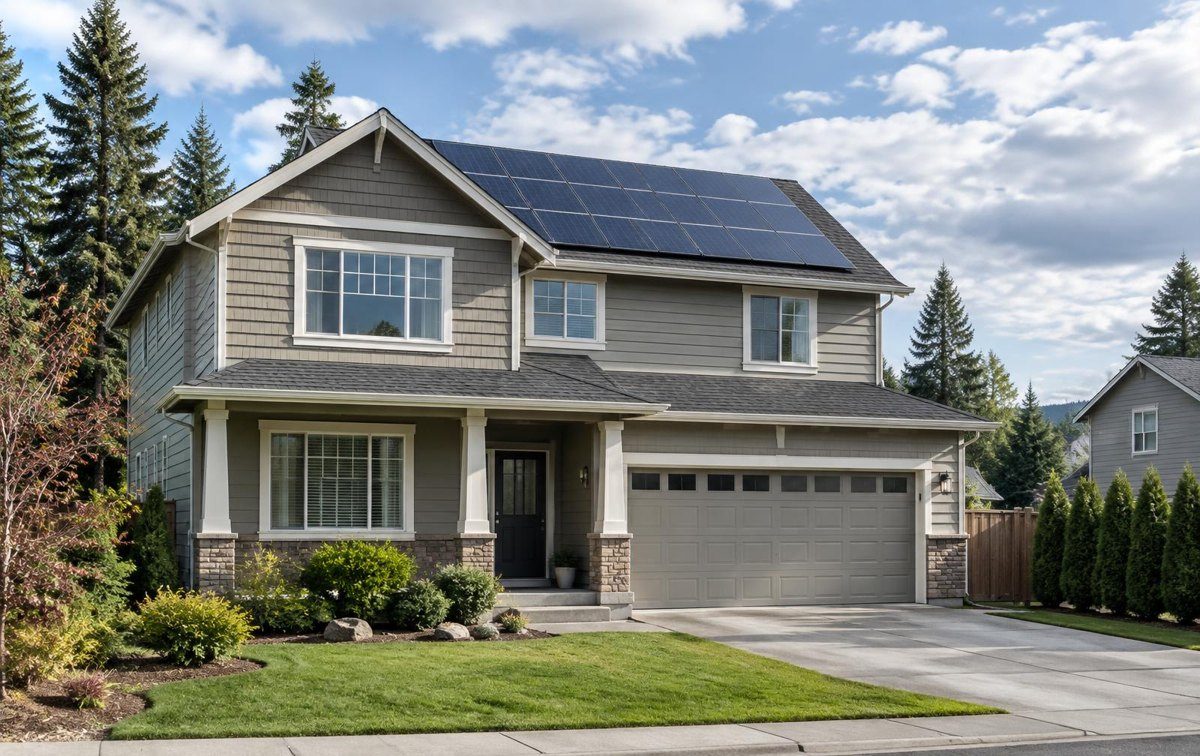
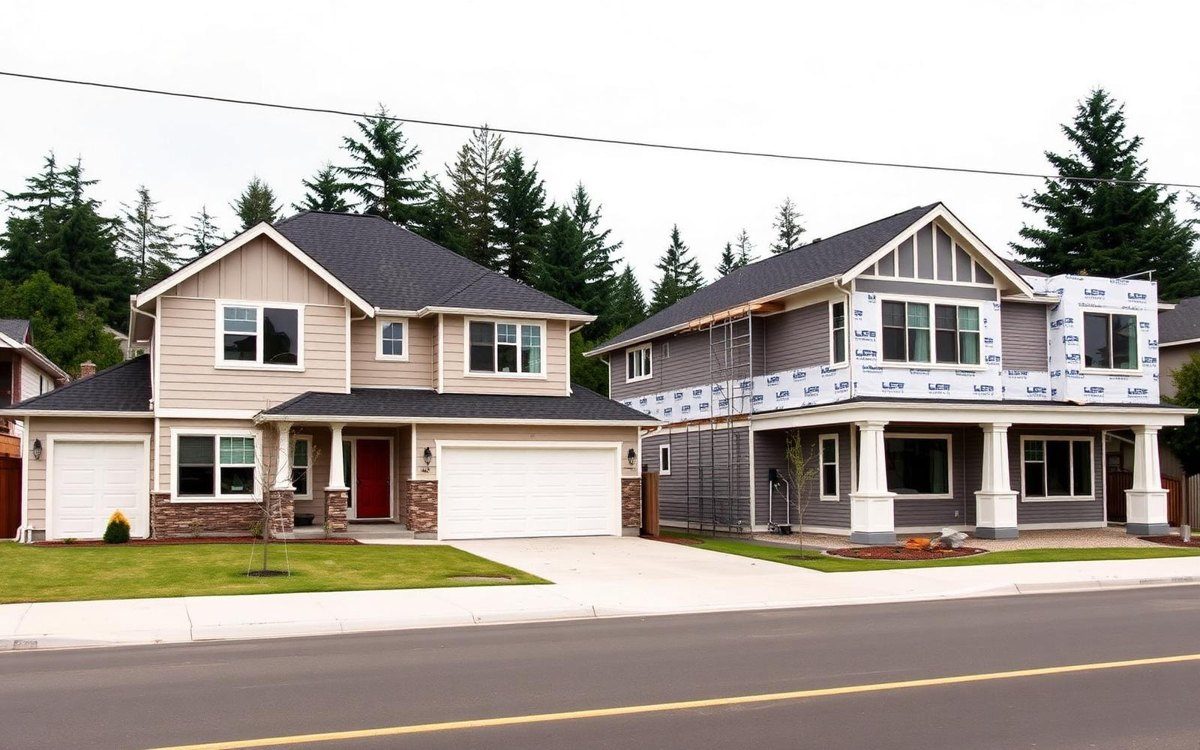
A factual process for comparing commute, condition, land, permits, school boundaries, and affordability without neighborhood stereotypes or appreciation promises.
How do you compare a home you love with a location that does not meet every need?
A beautiful interior does not make every location a good fit for your routines. Equally, a concern about the location should be defined and investigated rather than turned into a label about an entire community. The decision becomes clearer when you separate the house’s changeable features from the address-specific conditions you cannot readily change. Compare those conditions against your own requirements, not a general ranking of people or neighborhoods.
Start with a written description of the concern. Is the commute longer than you can manage, is traffic audible inside the house, is outdoor space limited, or does the property have an uncertain access arrangement? Each question has a different evidence path. “Bad area” does not tell you what to inspect, what to budget for, or what would make the purchase unacceptable. An objective description helps you request useful information without stereotyping residents.
Set non-negotiables before comparing finishes
List the requirements that would remain important even if the house looked different. These might include accessibility, a workable commute, space for a home office, the ability to use the outdoor area as intended, or a monthly budget that leaves room for maintenance. Decide which items are essential, which are preferences, and which could be changed after purchase. That distinction helps prevent a remodeled kitchen from overshadowing a daily constraint you have already identified.
Apply the same criteria to every candidate. If you are comparing two homes, do not evaluate one on its photographs and the other on a worst-case scenario. Gather comparable evidence, identify unknowns, and record the condition under which each would remain acceptable. A preference can be subjective; the supporting observations should still be accurate. You do not need to prove that a location is universally desirable to decide whether it suits your own needs.
Agents should not steer housing choices on the basis of protected characteristics. Federal fair-housing regulations address conduct that restricts housing choices because of race, color, religion, sex, disability, familial status, or national origin. Avoid using residents’ identities or household composition as a shortcut for judging suitability, safety, appreciation, or belonging. Ask for property facts and apply your criteria consistently.
Investigate the address, route, and daily environment
Visit at times relevant to your intended routine, when access is permitted and safe. A quiet weekend viewing may not reveal weekday traffic, nearby loading activity, or the difficulty of entering a driveway during your commute. Test the route you expect to use rather than rely only on a generalized travel-time estimate. Record the date, time, route, and observed conditions; these observations describe a visit, not a guarantee of future traffic.
For noise, distinguish what you observed from what a seller, map, or listing description claims. Listen from the rooms you expect to use, including with windows in the position relevant to your comfort. A general home inspection is not a specialized environmental or noise assessment: Washington’s inspection limitations exclude certain environmental assessments. If the issue is decisive, obtain qualified advice about the appropriate evaluation instead of assuming a standard inspection answers it.
Check practical access to the facilities you actually use. Measure distance, route options, opening hours where relevant, and whether the trip can be made in the way you intend. A map pin near the home does not establish convenient access. Likewise, a nearby proposed development is not the same as an operating service. Separate existing conditions from plans, and check the planning authority’s records when future changes matter to your decision.
Verify land, permits, and physical constraints
A parcel map is a research starting point, not a substitute for a survey or title review. Confirm the legal parcel, access rights, easements, recorded restrictions, and any unresolved boundary question with the appropriate documents and professionals. Total lot area does not tell you how much land is buildable or available for a particular use. Setbacks, slopes, easements, environmental constraints, and local requirements can overlap; simply subtracting one restricted area from the total can produce a misleading answer.
Use the King County property-information tools to locate assessment and parcel records, then identify which other documents are needed. Assessed value is not a guarantee of sale price, and a tax record does not prove every improvement is permitted. For a Seattle property, the SDCI project and property research tools can help locate permit information. For a property in another city, use that jurisdiction’s records rather than assume Seattle’s tools apply.
If an addition, converted garage, rental use, or future construction is part of your reason to buy, verify that specific plan. Ask what approval or documentation exists and what remains unresolved. A seller’s statement that “there is plenty of room to expand” is not a permit determination. Seek the relevant authority’s or professional’s guidance before treating an unapproved possibility as usable living area or future income.

Separate attractive presentation from maintainable condition
Inspect the systems and building envelope as well as the finishes. Fresh paint and staged furniture can improve presentation without establishing the condition of the roof, drainage, heating, plumbing, or structure. Washington’s home-inspection standards describe a visual, non-exhaustive inspection. Where a concern falls outside that scope, ask for an appropriate specialist’s assessment and identify what access is available.
For each planned improvement, distinguish necessity from preference. A repair affecting safe operation belongs in a different category from a desired countertop replacement. Obtain written scopes and estimates for consequential work, with qualifications and remaining unknowns. Do not assume that renovation cost is recovered dollar for dollar in resale value. A finish that you enjoy may be valuable to you without producing an equivalent increase in the eventual selling price.
Photographs and a virtual tour can help you shortlist properties, but they should not be treated as proof of present condition. Verify room dimensions, layout, light, access, and material features through the available documents and appropriate on-site review. This is particularly important when online presentation influences your first impression. A home that photographs well may still have a practical limitation that only becomes apparent when you consider how you would use it.
Check school boundaries without assuming household preferences
If school assignment matters to your decision, verify the exact address through the district’s official tool and confirm unclear results with the district. Bellevue city limits and Bellevue School District boundaries are not interchangeable. The district’s school locator is an appropriate starting point for addresses it serves. Boundary maps and assignment policies may change, so record when you checked them and ask about the relevant school year.
Do not infer that every buyer with children wants the same school arrangement or that buyers without children do not care about schools. Ask which specific services, programs, assignment rules, or commute requirements matter to the buyer. A ranking cannot promise admission, a particular experience, or future appreciation. Keep this step a factual verification task, not a prediction about what a type of household will prefer.
Compare two candidates using the same evidence
| Factor | Candidate A | Candidate B |
|---|---|---|
| Daily travel | Route tested; record conditions | Same method and relevant time |
| Noise and access | Observation and specialist questions | Observation and specialist questions |
| Condition and repair cost | Reports, estimates, and unknowns | Reports, estimates, and unknowns |
| Land and intended use | Title, permits, and approvals | Title, permits, and approvals |
| Total affordability | Verified housing costs and reserve | Verified housing costs and reserve |
| Unresolved deal-breaker | What must be clarified before proceeding? | What must be clarified before proceeding? |
For resale considerations, ask for comparable transaction evidence for similar properties and limitations in the sample. Do not use a citywide statistic to guarantee the future performance of one address. The eventual market, property condition, and buyer demand are uncertain. If the purchase works only when appreciation reaches a specific unverified figure, revisit the financial plan. This article does not assign an investment return or forecast neighborhood price growth.
Make the trade-off explicit before making an offer
Write the purchase decision as a conditional statement: the home meets your essential requirements if specified inspections, documents, and costs are satisfactory. That makes it easier to distinguish a manageable compromise from a fundamental mismatch. Preserve appropriate contractual protections while gathering the information. A lower price can change affordability, but it does not remove an easement, shorten a commute, or resolve an unknown structural condition.
The team’s published seller guide describes reviewing property condition and comparables rather than applying a city median to an individual home. That method is relevant when checking a future resale assumption, but it does not establish which community you should choose or promise appreciation. Request evidence relevant to the actual address and distinguish a documented observation from an opinion about your priorities.
Frequently asked questions
Should I always choose location over the house?
No universal rule resolves the trade-off. Define the location concern, identify what can and cannot change, and compare the options against your actual requirements and budget.
Can a remodel guarantee better resale value?
No. Obtain estimates and relevant comparable evidence, but distinguish enjoyment value from a guaranteed financial return.
Does the advertised school district settle the question?
No. Verify the exact address through the official district tool and confirm current assignment policies for the school year that matters to you.
Can an agent tell me who would fit into the area?
Housing guidance should use objective property information and your stated requirements, not protected characteristics or assumptions about residents.
Sources and scope
- Federal fair-housing regulations
- inspection limitations
- King County property-information tools
- SDCI project and property research tools
- home-inspection standards
- district’s school locator
- published seller guide
Sources checked in October 2026. This guide does not assert current local market statistics or a guaranteed result. Signed agreements, current rules, and property-specific professional advice govern individual transactions.