Buying New Construction vs Existing Home: Pros, Cons & Costs
Buying new construction vs an existing home is not only about age. It is about cost, timing, location, repairs, financing, and future value. Some buyers want fresh finishes and fewer early repairs. Others want a mature Bellevue, Kirkland, or Redmond neighborhood with stronger long-term location value.
Quick Answer: Should You Buy New Construction or an Existing Home?
New construction is usually better if you want modern systems, builder incentives, and warranty coverage.
An existing home is usually better if you want a mature location, faster closing, and clearer neighborhood history.
From our experience helping buyers in Bellevue, Kirkland, and Redmond, many clients first prefer new construction. But after comparing homes, some choose an older home because school access, commute, and lot value matter more.
If you are still planning your next move, review our home buying process.
New Construction vs Existing Home: Side-by-Side Comparison
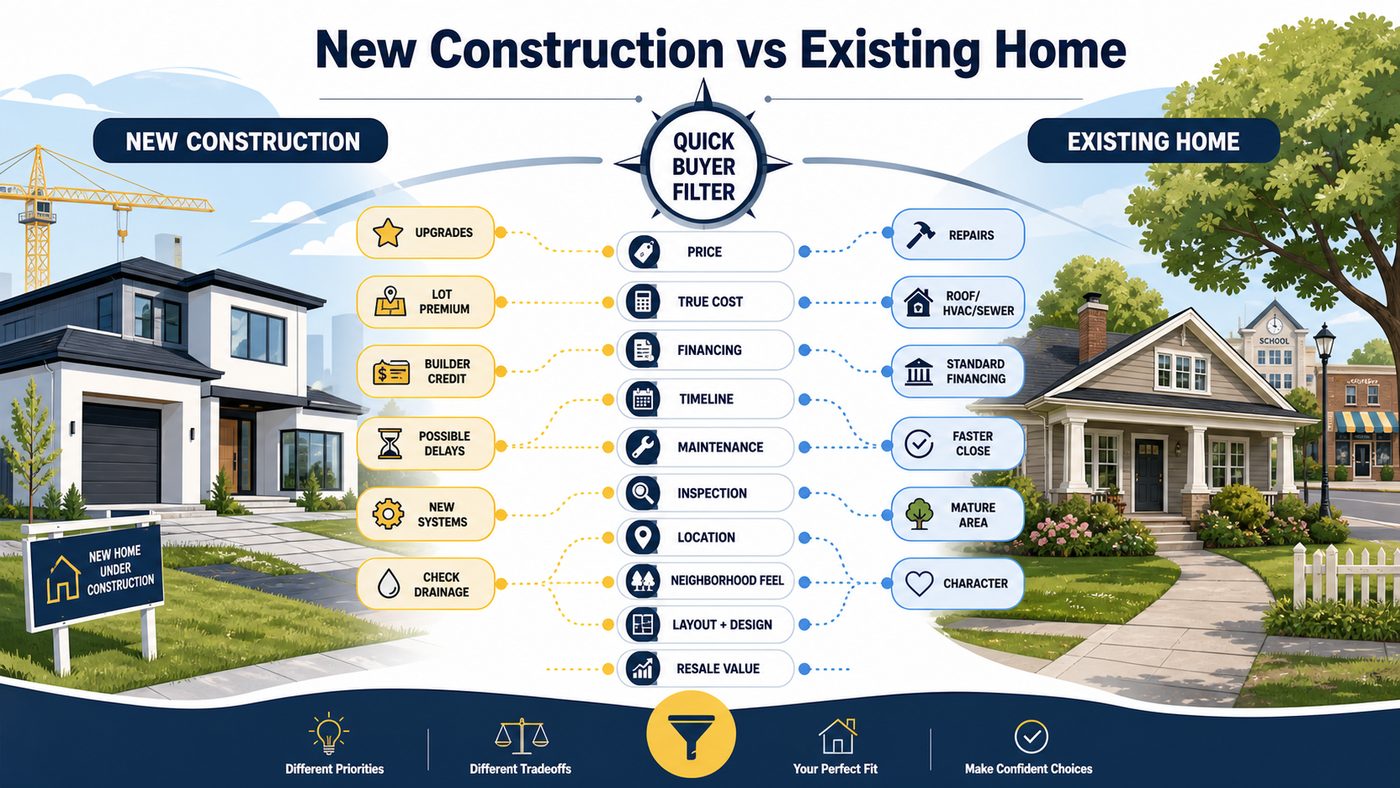
The biggest differences are price, true cost, financing, timeline, maintenance, location, and resale value.
Use this table as a quick filter before you tour homes.
| Comparison Factor | New Construction Home | Existing Home |
| Price | Often has a higher base price. Upgrades and lot premiums can add more. | Often has a lower list price. Repairs can change the real cost. |
| True Cost | May include upgrades, landscaping, appliances, blinds, fencing, HOA fees, and rate-lock costs. | May include roof, HVAC, sewer, plumbing, electrical, or remodel costs. |
| Financing | Builder lenders may offer rate buydowns or closing cost credits. Compare terms carefully. | Financing is usually more standard. It is easier to compare lenders. |
| Timeline | Can be delayed by permits, weather, labor, materials, or construction schedule. | Usually closes faster after contract. The timeline is often clearer. |
| Maintenance | Major systems are new, so early repair risk is lower. | Repairs depend on age, condition, and past maintenance. |
| Inspection | New does not mean perfect. Check drainage, grading, systems, and finishes. | Check roof, sewer, foundation, moisture, electrical, plumbing, and HVAC. |
| Location | Often in newer communities, edge areas, or infill projects. | Often in mature neighborhoods near schools, jobs, transit, and shopping. |
| Neighborhood Feel | The community may still be developing. Trees and amenities may take time. | You can see traffic, neighbors, trees, schools, and daily routines. |
| Layout & Design | Usually offers open layouts, larger kitchens, smart features, and newer systems. | May have more character, but layouts can feel dated. |
| Resale Value | Can be strong, but may compete with newer builder phases. | Can be strong if location, lot, school access, and condition are good. |
New construction is not automatically the better investment. In Bellevue, Kirkland, and Redmond, a well-located older home can outperform a newer home in a weaker location.
When Buying New Construction Makes More Sense
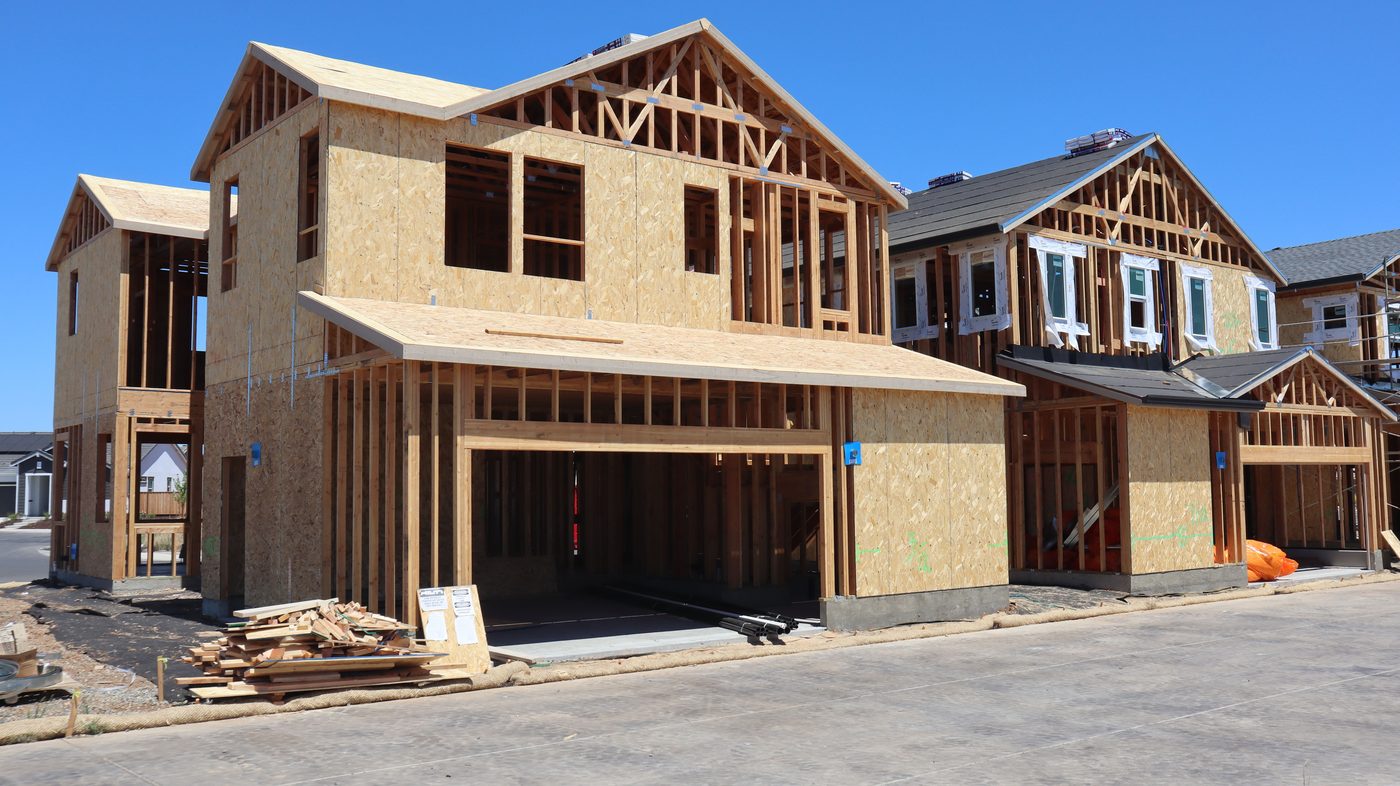
New construction makes more sense when you want newer systems, builder incentives, and simpler early ownership.
It also works better if your move-in date is flexible.
For a deeper local guide, read our Seattle and Eastside new construction home buying guide.
You Want a Modern Layout and Lower Immediate Maintenance
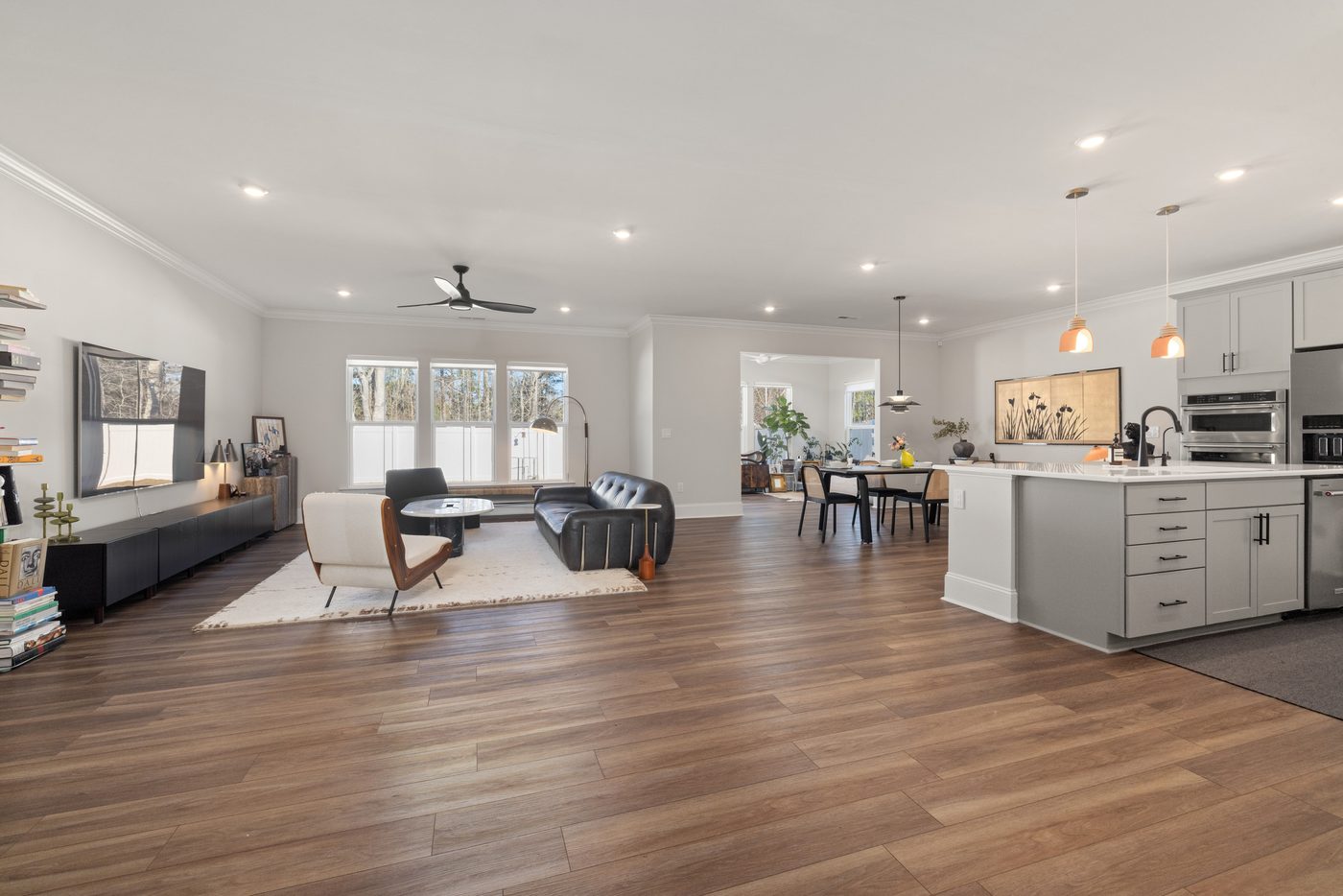
New construction is usually better for buyers who want modern layouts and fewer early repair surprises. Buyers often like open kitchens, larger primary suites, smart wiring, and newer HVAC systems.
Newer homes may also use better windows, insulation, appliances, and HVAC systems. ENERGY STAR says certified new homes are built for stronger efficiency and comfort (Source: ENERGY STAR, 2026).
We have seen buyers assume a brand-new home means zero problems. That is not always true. Drainage, grading, finishes, and upgrade costs can make a big difference.
We often see buyers focus heavily on the model home. They may underestimate lot position, upgrade packages, and future neighborhood development. These factors can affect long-term satisfaction and resale value.
You Have a Flexible Move-In Timeline
New construction is a better fit when buyers can handle delays. Construction schedules can change because of permits, labor, weather, and materials.
This matters if your lease ends soon. It also matters if school timing is important.
In newer communities around Sammamish and Bothell, buyers should watch HOA rules, commute patterns, and nearby services. A beautiful new home can feel different if daily errands still take time.
Builder Incentives and Upgrade Options Matter to You
New construction can be attractive when builder incentives lower your monthly payment. Some builders offer rate buydowns, closing cost credits, or upgrade credits.
This matters more in 2026 because new-home pricing is more competitive. In Q1 2026, the median new single-family home price was $403,200, close to the existing-home median of $404,300 (Source: NAHB, 2026).
Do not only compare the incentive amount. The CFPB recommends reviewing the Loan Estimate and Closing Disclosure before closing (Source: CFPB, 2026).
You Prefer Warranty Protection
New construction is often better for buyers who want warranty support during early ownership. A builder warranty can help with certain repairs after closing.
But warranty coverage is not unlimited. Buyers should know what is covered, what is excluded, and how claims work.
When Buying an Existing Home Makes More Sense
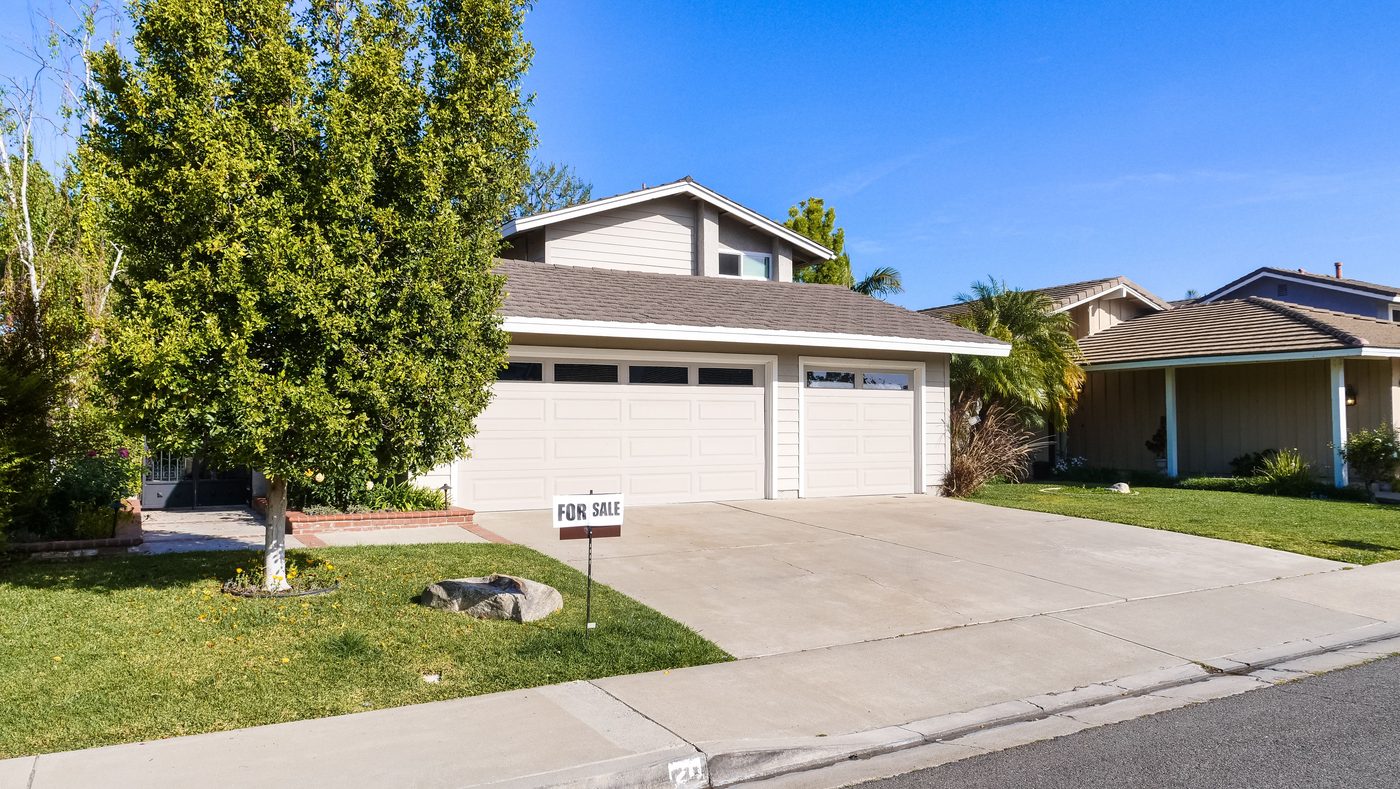
An existing home makes more sense when location, speed, and neighborhood maturity matter most.
It also fits buyers who want to see the exact home before deciding.
If you want to compare active homes, start with our Seattle and Eastside home search.
You Need to Move Quickly
An existing home is usually better for buyers who need a faster and clearer closing timeline. Once you are under contract, closing is often more predictable.
This helps buyers with lease deadlines, school timing, or relocation plans. You can inspect the real home and plan your move sooner.
You Want a Mature Neighborhood
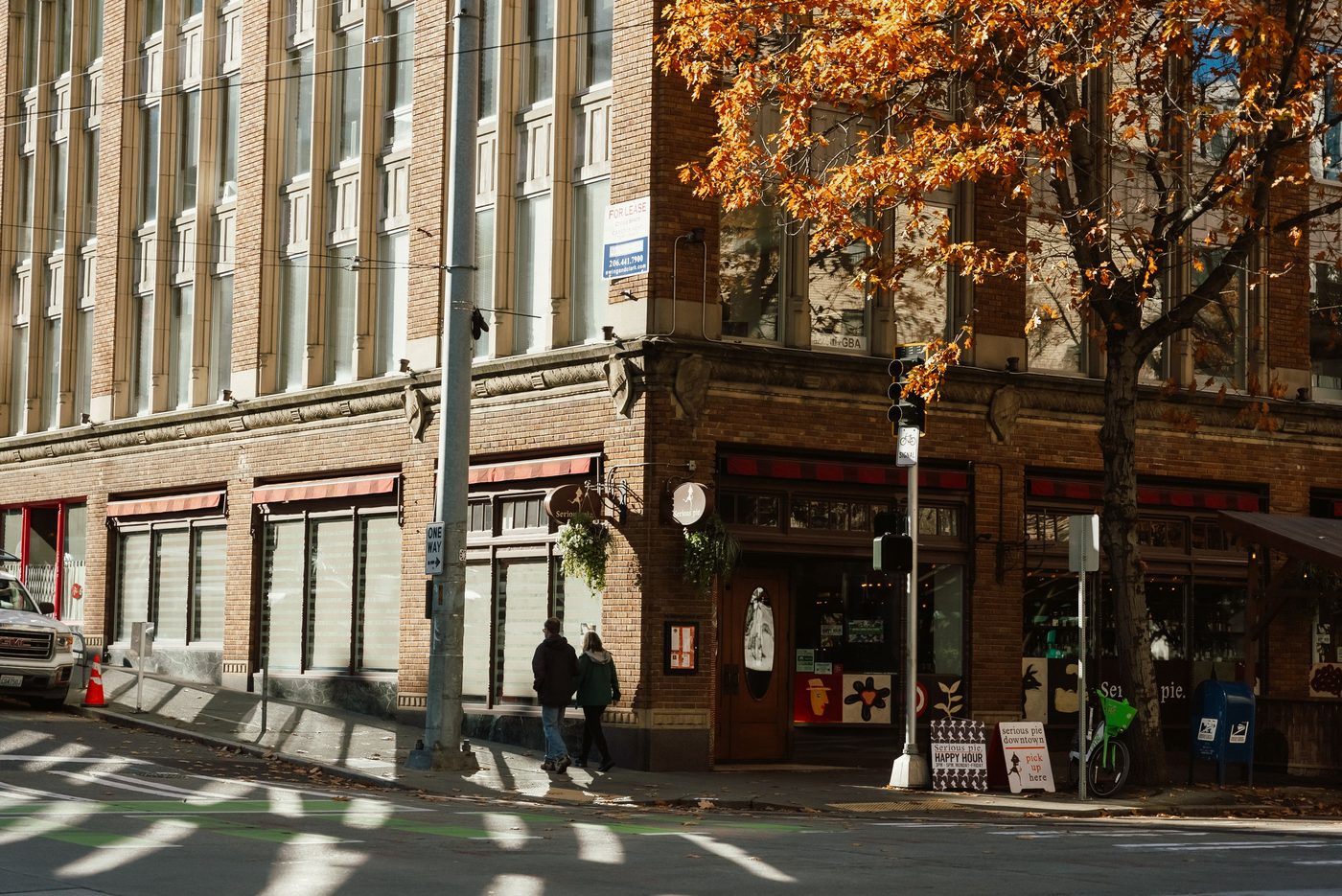
Existing homes are often better for buyers who care about established neighborhood feel. You can see the trees, traffic, nearby shops, parks, and school patterns.
In Eastside markets like Bellevue and Kirkland, buyers often choose older homes for lot size and school access. Many also value proximity to jobs over newer finishes.
You Want More Location Choices

Existing homes are usually better when location is your top priority. New detached homes need available land, which is limited in many Eastside areas.
This matters near strong schools, Microsoft, Downtown Bellevue, and Kirkland waterfront areas. In these places, location can drive demand more than age.
You Want to See the Actual Home Before Buying

An existing home gives buyers more certainty before they write an offer. You can judge light, noise, storage, yard space, and street feel.
This lowers uncertainty. You are not relying only on a model home, floor plan, or brochure.
You See Value in Renovation Potential
An existing home can be better if you are comfortable improving it over time. You may update the kitchen, bathrooms, flooring, paint, yard, or systems.
In competitive Eastside neighborhoods, buyers sometimes choose older homes for this reason. They can improve the property over time while keeping an established location.
Cost Difference: Purchase Price Is Only Part of the Story
The cheaper home is not always the cheaper choice.
Compare the full cost, including upgrades, repairs, financing, HOA fees, and monthly payment.
| Cost Area | New Construction Risk | Existing Home Risk |
| Purchase Price | Base price may not include upgrades or lot premiums. | List price may look lower, but repairs can add up. |
| Closing Costs | Incentives may require using the builder lender. | Costs are usually easier to compare across lenders. |
| Repairs | Early repairs are usually lower, but defects can still happen. | Roof, HVAC, sewer, plumbing, and electrical costs may appear sooner. |
| Monthly Payment | Rate buydowns may help for a short time or longer term. | Lower price may help, but repairs and utilities can offset savings. |
| HOA / Community Fees | New communities may have HOA dues and future rule changes. | Older HOAs may have reserves, assessments, or maintenance issues. |
Many buyers underestimate the cost of completing a new home. We often remind clients to budget for blinds, landscaping, fencing, and upgraded appliances.
In June 2026, the median new-home sales price was $398,300 (Source: FRED/U.S. Census and HUD, 2026). Existing homes reached $440,600 in June 2026 (Source: FRED/NAR, 2026).
If you are selling before buying, start with a realistic value check. Our home value tool can help you estimate your next budget.
Buyer Decision Framework: Which One Is Right for You?
The right choice depends on the trade-off you prefer.
Use these questions to connect the home type with your real life.
| Question | If Yes, Lean New Construction | If Yes, Lean Existing Home |
| Do you need to move quickly? | No | Yes |
| Do you want newer systems and fewer early repairs? | Yes | No |
| Is location your top priority? | Maybe | Yes |
| Are you comfortable with renovation or updates? | No | Yes |
| Do builder incentives matter to your budget? | Yes | Maybe |
The better choice also depends on your life stage. A family with school-age children may prioritize an established neighborhood and shorter commute.
A first-time buyer may prefer lower maintenance and modern layouts. There is no one-size-fits-all answer.
If you need to sell one home before buying another, timing matters. Our home selling process explains how we prepare, price, and launch listings.
Conclusion
New construction can fit buyers who want newer systems, incentives, and warranty coverage. Existing homes can fit buyers who value location, speed, and mature neighborhoods. Across Bellevue, Redmond, Kirkland, and Sammamish, both choices can work. The key is matching the home to your budget, lifestyle, and future plans. For local guidance, contact us now.
FAQ
Is it better to buy a new construction or older home?
Yes, either can be better depending on your needs. New construction fits buyers who want newer systems, while older homes often fit buyers who value location.
Are new construction homes more expensive than existing homes?
No, not always. In 2026, national new-home and existing-home prices have been very close, but local pricing can vary.
Do you need an inspection for a new construction home?
Yes, you should inspect a new construction home. New homes can still have drainage, grading, installation, or finish problems.
What are the biggest regrets when buying new construction?
Yes, buyers often regret overpaying for upgrades or underestimating delays. Some also regret choosing a poor lot or not understanding warranty limits.
What should buyers check before buying an older home?
Yes, buyers should check roof, sewer, foundation, drainage, electrical, plumbing, HVAC, moisture, permits, and remodel quality. These items can affect both budget and negotiation.
Maggie Sun
Managing Broker | Buy, Sell & Invest Seattle & Bellevue | Maggie Sun Real Estate Group
or another way