
Last reviewed October 26, 2026.
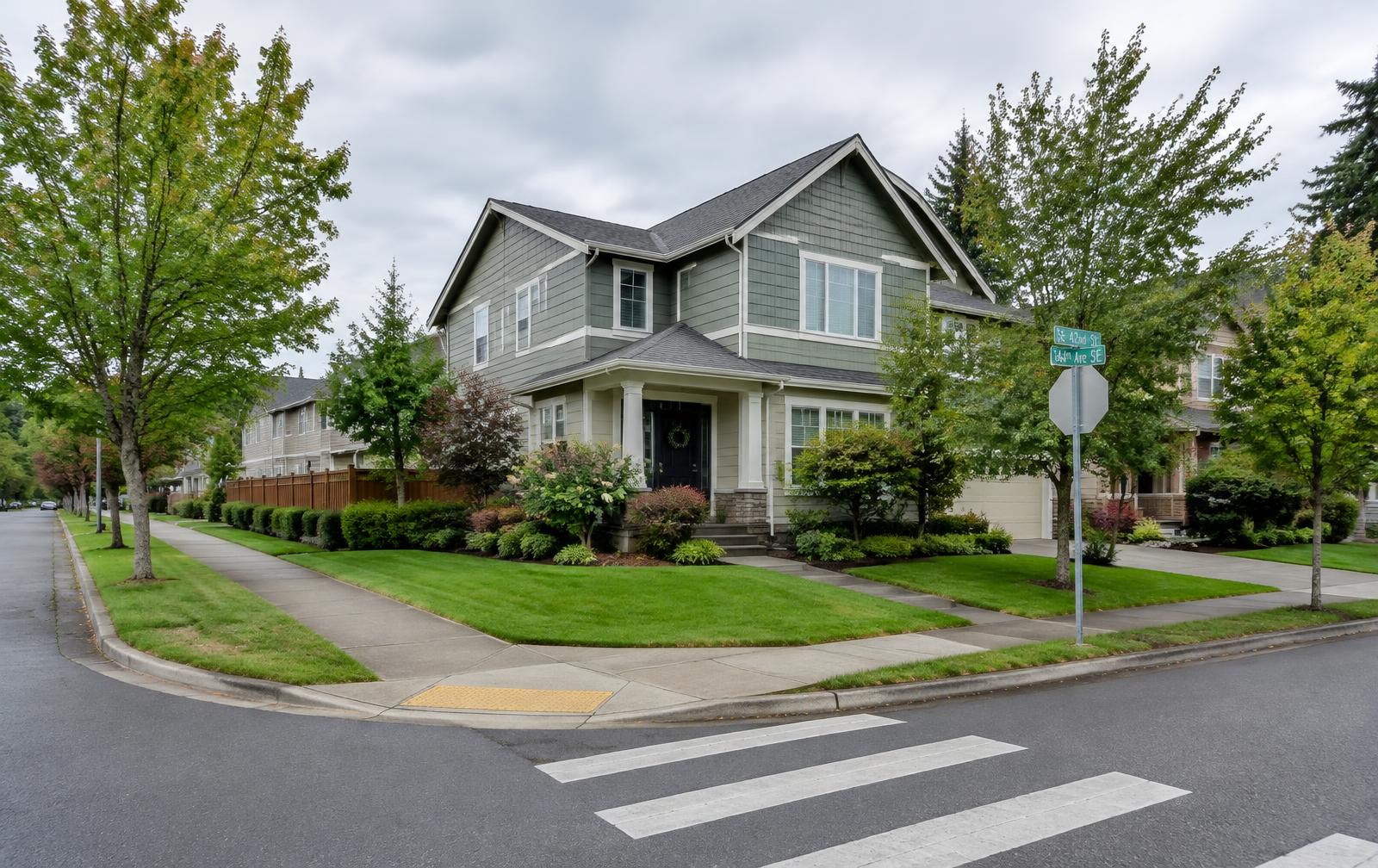
A corner lot faces two streets. AI-generated illustration; not a specific property.
Short answer: Corner lots usually offer more light, a sense of space and easier access, but they come with more street exposure, less privacy, extra sidewalk frontage to maintain and sometimes stricter setbacks. Whether a corner adds or subtracts value depends on the street, the lot shape and who the likely buyers are.
A corner lot can be the best house on the block or a hard sell, and the difference usually comes down to traffic and layout. This guide explains the common pros and cons, the zoning and maintenance issues to check, and how corner lots tend to be valued. It applies to Seattle and Eastside cities, but local codes differ, so check the specific jurisdiction.
Pros of a corner lot
- More light and openness. With fewer neighbors directly beside the home, windows often get more daylight.
- Sense of space. The lot may feel larger, and some corner lots are physically larger.
- Access options. Two street frontages can allow a side-entry garage, a separate path to a backyard or more street parking.
- Curb appeal. A well-kept corner home is highly visible.
- Development flexibility. On some lots, two frontages can make a lot split or added unit more practical, subject to zoning.
Cons of a corner lot
- Traffic and noise. Cars stop, turn and accelerate at intersections, and headlights may sweep across windows.
- Less privacy. More of the yard is visible from the street.
- More sidewalk to maintain. Many cities make adjacent owners responsible for sidewalk upkeep; Seattle's transportation department, for example, describes property owners' responsibility for adjacent sidewalks.
- Setbacks and sight triangles. Corner lots can have two front-yard setbacks and limits on fences, hedges and structures near the intersection so drivers can see.
- Security perception. Some buyers feel more exposed with two open sides.

Busy corner vs quiet corner
Location within the neighborhood matters more than the corner itself. On a corner lot along a busy arterial, traffic noise typically lowers value and slows a sale for ordinary home buyers. For a builder or developer, the same lot can be attractive because two street frontages sometimes allow a lot split or a better driveway and unit layout. The same feature can be priced very differently by these two buyer groups, so ask which group is likely to compete for the home. A corner of two quiet residential streets, by contrast, often carries little or no penalty and may be preferred by buyers who value light and space.
Zoning and maintenance checks
- Look up the zoning and setbacks for the parcel with the city's planning department
- Ask whether fences, hedges or additions are limited near the intersection
- Check who maintains sidewalks, planting strips and street trees, and their condition
- Check snow and leaf responsibilities if the city requires owners to keep sidewalks clear
- Review any HOA rules on fencing, landscaping and parking
- If you plan to add a unit or split the lot, have a land-use professional review feasibility before you buy
How corner lots are valued
There is no reliable universal premium or discount for corner lots, and we do not publish one. Appraisers and buyers compare a corner home with recent sales of similar homes nearby and adjust for traffic, privacy, lot size and usability. When you evaluate a corner home, ask your broker for comparable sales that include both corner and interior lots on similar streets, and pay attention to how long the corner homes took to sell.
| Feature | Tends to help value | Tends to hurt value |
|---|---|---|
| Street type | Two quiet residential streets | Busy arterial or bus route |
| Lot shape | Usable, level yard | Small, steep or awkward yard |
| Privacy | Mature landscaping, fencing allowed | Yard fully exposed, fencing restricted |
| Access | Side-entry garage or alley | Driveway near the intersection |
Corner lot vs interior lot vs cul-de-sac
| Corner lot | Interior lot | Cul-de-sac | |
|---|---|---|---|
| Light and openness | Often more | Typical | Varies with lot shape |
| Traffic past the home | More, from two streets | Moderate | Usually least |
| Privacy | Usually less | Typical | Often more in back, less in front |
| Sidewalk frontage | Two sides | One side | Often small |
| Yard shape | Can be irregular | Usually regular | Often wedge-shaped |
No layout is better for everyone. The table is a starting point for comparing homes that otherwise fit your needs.
Questions to ask before you buy
- How busy are both streets at rush hour and during school runs?
- Is there a bus stop, stop sign or traffic signal at the corner?
- What setbacks and fence rules apply to each frontage?
- Who maintains the sidewalks, planting strips and street trees?
- Have there been any issues with cars cutting across the yard?
- How did recent corner-lot sales nearby compare with interior lots?
Who a corner lot suits
Corner lots tend to suit buyers who value daylight, a garden or extra parking, and who are comfortable with more street activity. They are less suited to buyers who want maximum privacy or quiet, or who have young children and a busy road. Visit at rush hour and in the evening before you decide.
Frequently asked questions
Are corner lots worth more?
Not automatically. A corner on quiet streets may sell as well as or better than an interior lot, while a corner on a busy road often sells for less to ordinary buyers. Compare recent nearby sales.
Do corner lots have higher property taxes?
Property taxes are based on the assessor's valuation of the land and improvements. A larger corner lot may be assessed higher, but being on a corner is not a tax category by itself.
Who is responsible for the sidewalk on a corner lot?
In many cities, including Seattle, adjacent property owners are responsible for maintaining sidewalks. Check your city's rules.
Can I put up a tall fence on a corner lot?
Often with limits. Many codes restrict height near intersections and in front-yard setbacks. Check the city code and any HOA rules.
Sources
- Seattle Department of Transportation: sidewalk repair and property owner responsibility
- King County iMap / Parcel Viewer
- Seattle SDCI: Permits
This article is general information, not legal, tax or lending advice. Rules and program terms change; confirm details with the relevant professional and the current official source. Last fact-checked October 26, 2026.
About the author
Maggie Sun, Managing Broker, leads Maggie Real Estate Group, a Bellevue-based bilingual (English and Mandarin) team serving buyers, sellers and investors across Seattle and the Eastside.
Related guides
- Corner lots and living near a school: pros and cons (guide hub)
- Splitting a double lot before selling
- Dream house vs location trade-offs