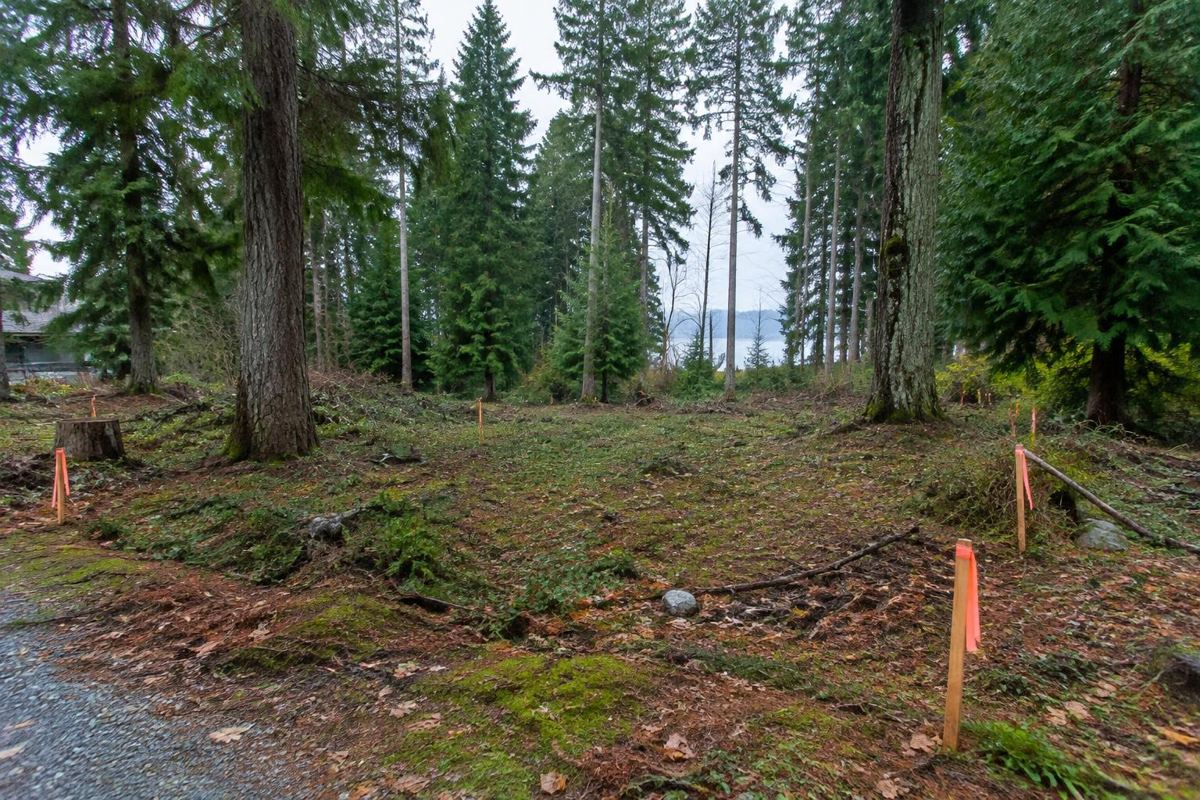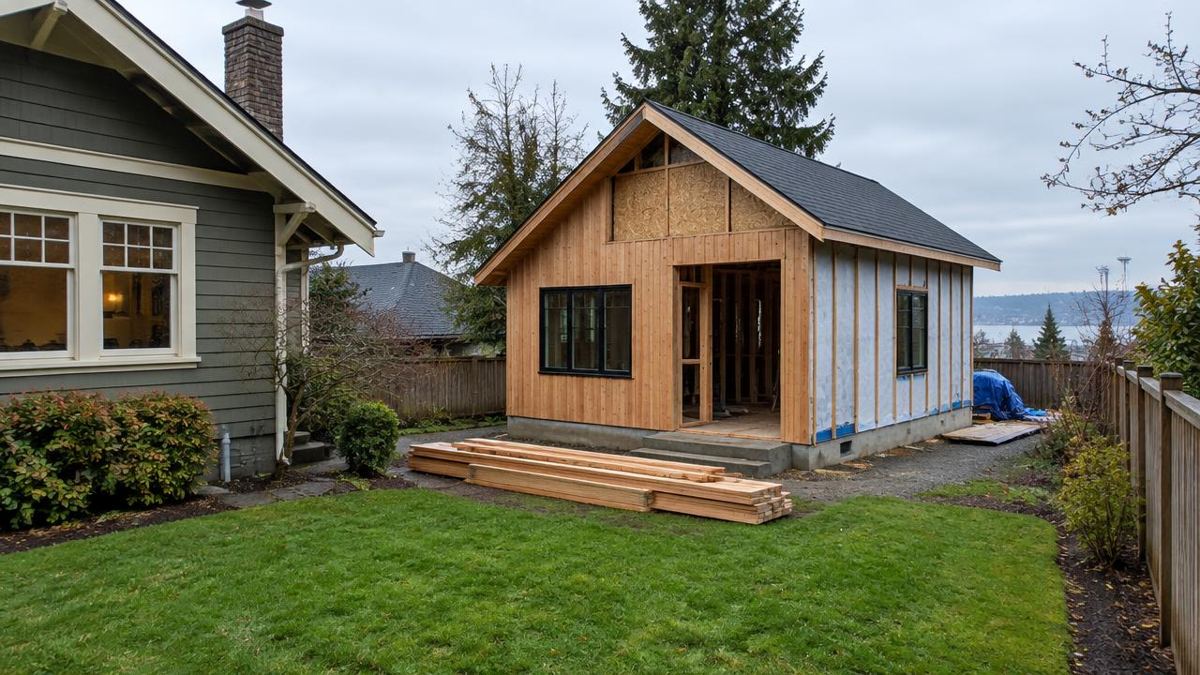
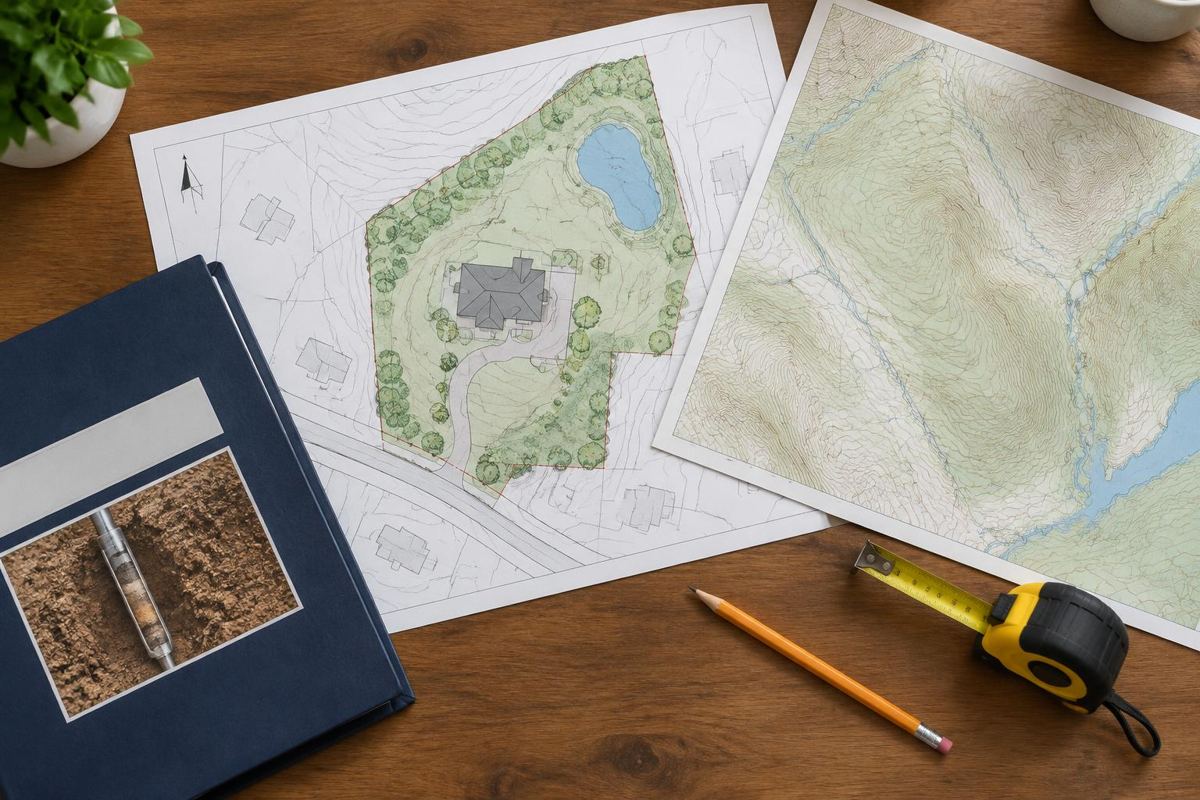
Short answer: Raw land generally lacks some or all of the access improvements, utility connections and approvals needed to build. Improved land has completed some of that work. Improvements can reduce particular unknowns, but they do not remove all development risk or guarantee that older approvals remain valid. Test legal lot status, zoning, access, water, wastewater and critical-area limits for your intended house.
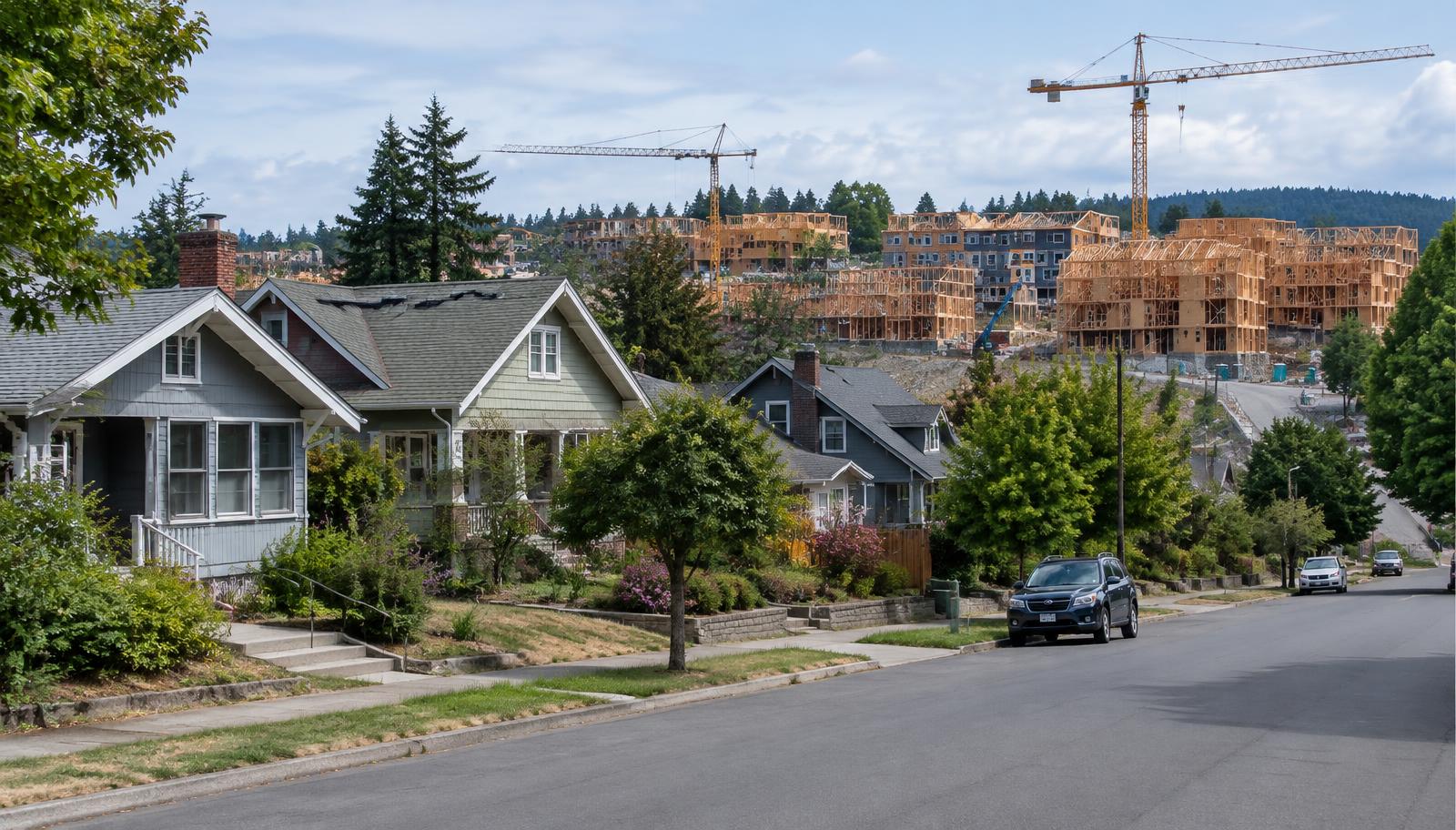
Vacant land listings often use "buildable," "build-ready" or "shovel-ready" loosely. Those words are marketing, not approvals. The most useful way to compare lots is to ask how much of the path from bare ground to building permit has already been completed, and by whom. That is the real difference between raw land and improved land.
Raw land vs improved land
| Raw land | Improved land | |
|---|---|---|
| Typical condition | No road frontage improvements, no utility connections, often wooded or sloped | Some combination of road, water, sewer, power, stormwater, or a recorded plat |
| Main unknowns | Access, water source, wastewater, critical areas, whether it can be divided | Connection fees, remaining design limits, HOA or plat conditions |
| Time before building | Longer; studies and possibly land use approvals first | Shorter if the plat and utilities are already approved |
| Price per lot | Usually lower | Usually higher, because someone already paid for the improvements and approvals |
| Financing | Harder; fewer lenders | More options, especially with a builder and construction loan |
Neither type is better in general. Raw land can suit a buyer with time, cash reserves and tolerance for uncertainty. Improved land suits a buyer who wants to start construction soon. The mistake is paying an improved-land price for a lot that still has raw-land unknowns.
What "buildable" actually requires
In practice, a lot is buildable for you when each of the following is true for the specific house you plan. If any one fails, the lot may still be usable, but only after extra cost, time or a different design.
1. It is a legal lot
Some parcels on the tax rolls were never created through a legal subdivision. Washington's subdivision law, RCW 58.17, sets the rules for plats and short plats. Ask the city or county whether the parcel is a recognized legal lot; some jurisdictions offer a lot status or legal lot determination.
2. Zoning allows your use and size
Zoning controls whether a single-family home (and sometimes an accessory dwelling unit) is allowed, plus setbacks, lot coverage, height and tree rules. Read the code for the exact zone shown on the parcel, and confirm with planning staff when the rules are unclear.
3. There is legal and physical access
A lot that touches a public road has frontage; a lot behind another parcel needs a recorded access easement. The preliminary title report will show recorded easements. A worn path or neighbor's permission is not the same as recorded legal access.
4. Water and wastewater are available
You need a water source the jurisdiction will accept, either a water district connection or an approved well, and a way to handle wastewater, either public sewer or an approved on-site septic system under WAC 246-272A. Get availability letters or a septic designer's opinion in writing.
5. Critical areas leave enough usable area
Wetlands, streams, steep slopes and their buffers can limit the usable building envelope. Ask a qualified consultant to map the constraints and test the proposed house footprint. A wetland does not establish the same outcome on every parcel, and previous permits do not guarantee current approval. Verify the jurisdiction’s parcel-specific requirements rather than treating total acreage as buildable area.
How to check buildability step by step
- Screen online. Use the county GIS viewer (in King County, iMap) for zoning, sensitive areas and utilities.
- Ask the listing broker for documents. Request any survey, plat, prior permit, septic design, critical area report or utility letters the seller already has.
- Read the seller disclosure. For unimproved residential land, sellers provide the statement required by RCW 64.06.013, unless exempt.
- Talk to the jurisdiction. Many cities and counties offer pre-application meetings where staff flag code issues for a specific parcel.
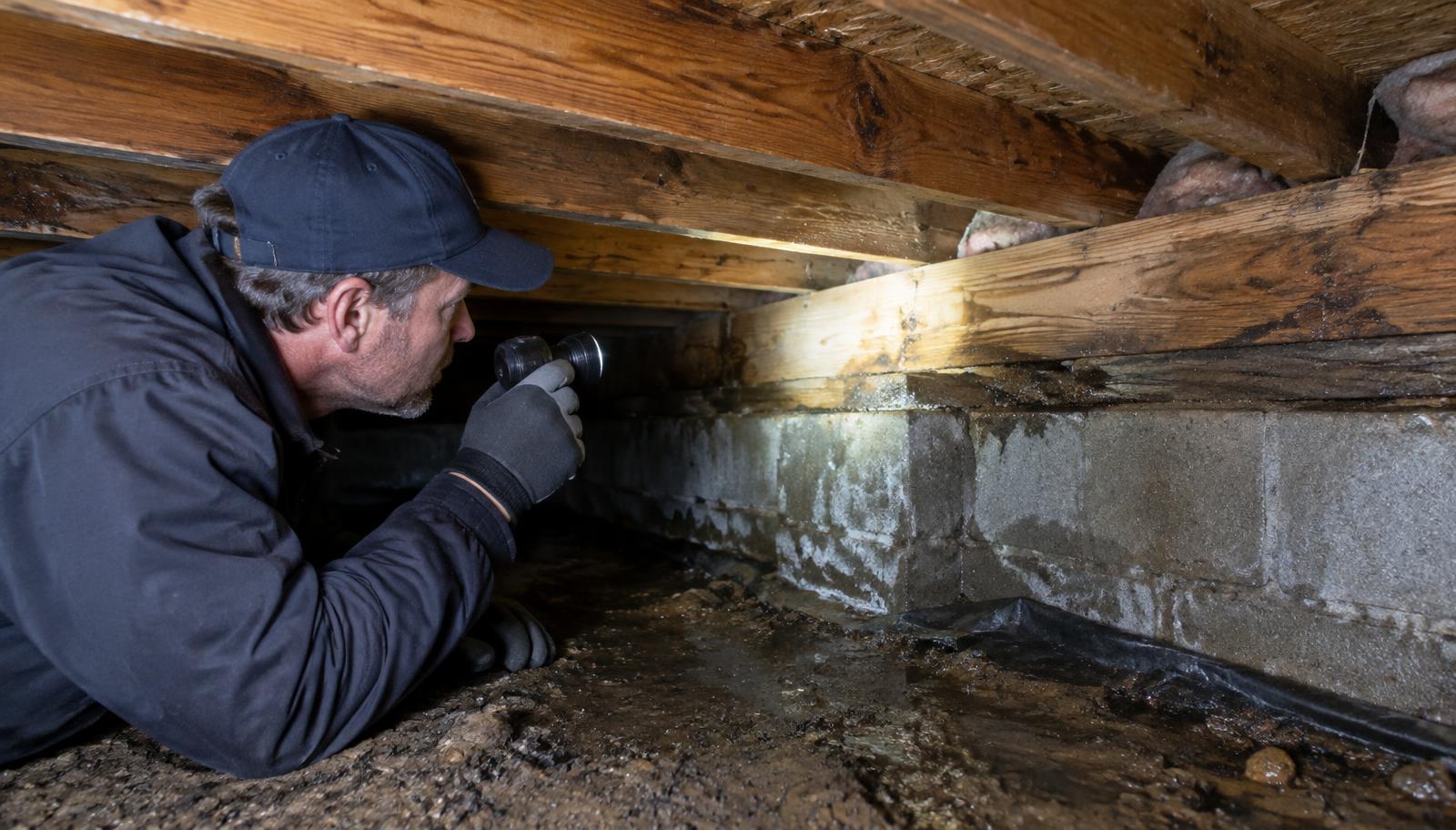
- Hire consultants inside your feasibility period. A surveyor, geotech or wetland specialist and septic designer give you written answers you can rely on.
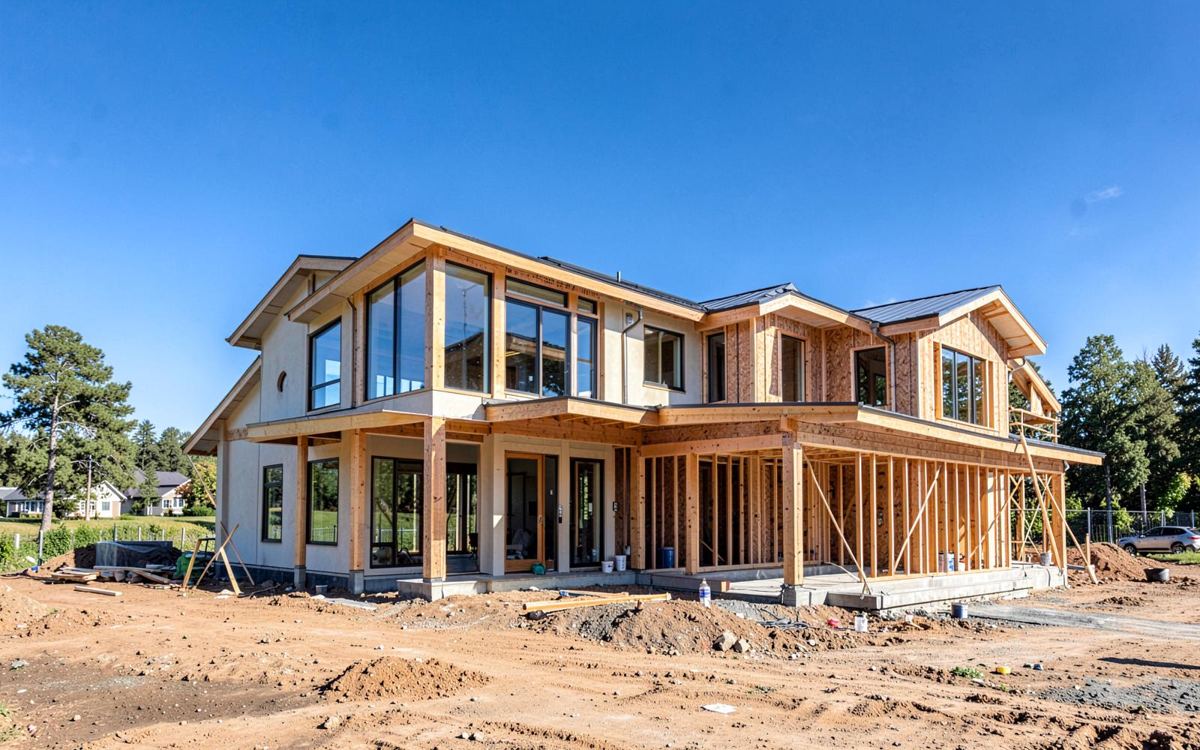
- Price it. Ask a builder for a preliminary budget that includes site work and connection fees.
Price comparisons: compare total cost, not list price
A lower-priced raw lot can end up costing more than an improved lot once access, utilities and studies are added. When you compare two parcels, line up each one's list price plus the quoted cost of what it still needs: utility extensions and connection charges, driveway and grading, studies and permits. Public median land prices are not a reliable shortcut here, because land sales are few and vary widely by size, topography and utilities. If you want to see recent comparable land sales for a specific area, ask a broker to pull closed NWMLS land sales with the same zoning and utility status.
Holding costs and taxes to plan for
Vacant land still carries property tax and, if financed, interest. Current-use classifications have specific eligibility and withdrawal or removal consequences. RCW 84.34.108 addresses additional tax, interest, penalties and exceptions for removal from open-space classification; timber classifications may involve different rules. Request the parcel’s classification history and a written estimate from the county assessor before changing its use. FIRPTA is a separate foreign-seller withholding issue; see the IRS guidance.
Red flags that call for a pause
- No recorded access easement for a landlocked parcel.
- Mapped wetland, stream or steep slope over much of the lot.
- "Septic approved" with no written design or approval date.
- Seller unwilling to allow a feasibility contingency.
- Parcel created by deed rather than by plat, with no lot status confirmation.
Questions to ask the listing broker about a vacant lot
Before you spend money on consultants, a short list of questions to the listing broker can tell you whether a lot is closer to raw or improved, and whether the seller has already paid for useful work. Ask for written answers or copies of documents, not verbal summaries.
- Is there a recent boundary or topographic survey, and can you share it?
- Has the lot ever had a building permit, land use approval, short plat or boundary line adjustment? What are the file numbers?
- Are water and sewer at the property line? If not, how far away are they, and has the seller requested availability letters?
- Has any septic design or soil evaluation been done? When, and was it approved by the health department?
- Are there any critical area reports, wetland delineations or geotechnical studies?
- Are there recorded easements, private road maintenance agreements, covenants or HOA rules?
- Why is the seller selling, and has the lot been under contract before? If a prior buyer terminated during feasibility, ask what was found.
The last question is often the most revealing. A lot that has failed feasibility for previous buyers may still work for your plan, but you should know which issue stopped them before you invest in the same studies.
Frequently Asked Questions
Is raw land a good investment?
It can be, but unleased, non-operating land held for future use generally has no recurring operating income while taxes and financing costs continue. Some land can generate rent or business income. Evaluate permitted use, remaining development costs, approvals and the holding period rather than relying on list price.
How do I know if a lot has been perc tested?
Ask the seller for a written septic design or soil evaluation and the health department approval, with dates. Approvals can expire or rules can change, so confirm status with the local health jurisdiction.
Can I get a mortgage on vacant land?
Standard 30-year home mortgages are generally for completed homes. Buyers usually use a land loan, a construction-to-permanent loan, cash, or other assets. Ask lenders for written terms.
What makes land "improved"?
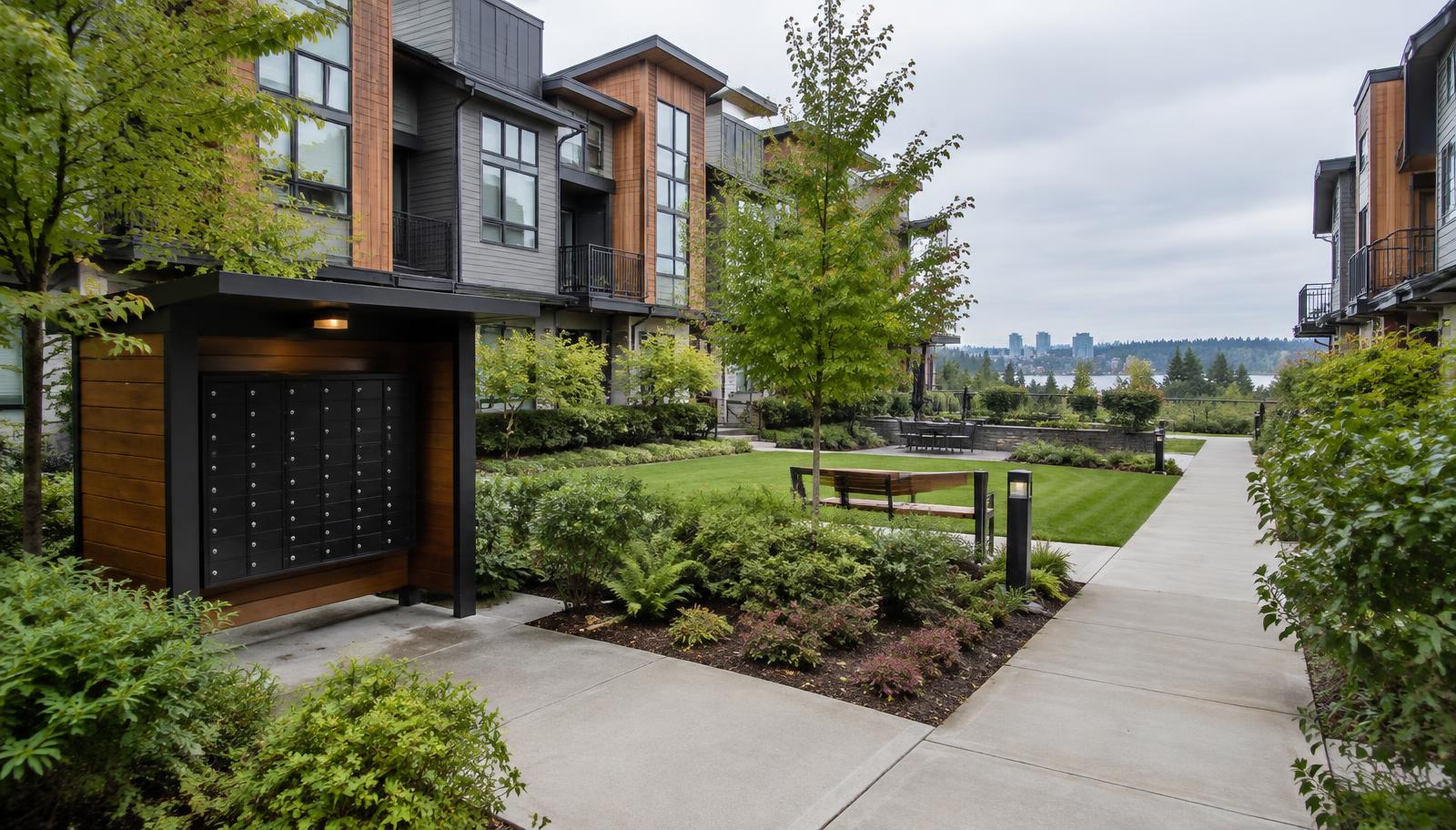
Any work that moves it toward building: road access, utility connections, stormwater facilities, a recorded plat, or approved permits.
Sources and Further Reading
The official sources below explain the legal, tax, permitting and financing points discussed here. Rules apply to specific transactions and can change. Confirm the applicable requirements before acting. The numeric examples are illustrative unless a dated source is stated.
- RCW 58.17 – Plats, subdivisions, dedications
- RCW 64.06.013 – Unimproved residential real property disclosure
- WAC 246-272A – On-site sewage systems
- King County iMap
- IRS – FIRPTA withholding
- RCW 84.34.108 — Open-space classification removal, additional tax and exceptions
Comparing a raw lot with an improved one?
Discuss your property and goals with the team. Contact Maggie Real Estate Group. Confirm the scope of any brokerage service before proceeding; lending, engineering and tax decisions belong with the relevant qualified professionals.
Related Guides
- Topic hub: Buying land to build a house in Washington
- Buying a home with Maggie Real Estate Group
- Buying Land in Washington State: How to Buy a Lot and Build a House
- Land Feasibility Study: What to Check, Who Does It and How to Decide
About the Author
Maggie Sun, Managing Broker, leads Maggie Real Estate Group, serving buyers and sellers in Seattle and the Eastside in English and Mandarin. This guide is general information, not legal, tax or lending advice; consult a Washington real estate attorney, CPA or licensed loan officer for your situation.
Last updated: November 2026.